
A large broad-crowned tree stands on a dry grassy ridge overlooking a wide open plain at sunrise or sunset, with a pale orange and blue sky above.Hand off my repair

AC blowing warm air in Claremore, OK

Send it once and finding someone is no longer on you.

Your air conditioner is running, maybe running hard, and what comes out of the vents is room temperature or close to it. In Claremore this time of year that's not something to wait out. Summers here run long and muggy, and a system blowing warm air usually means it's not actually cooling, not that it's just struggling to keep up.

A few things cause this. The charge could be low. The compressor could have failed. Airflow across the indoor coil could be blocked enough that the air has nowhere to pick up cold from. Sometimes it's simpler, a condensate switch that's shut the system down to protect against an overflow, which can look like warm air blowing instead of no air at all. None of these sort themselves out. The unit will keep running and keep costing you power while it does nothing for the house.

What you need is someone who works on this equipment in Rogers County every summer and has seen what usually goes wrong with it in weather like this. Send the request through and that search becomes someone else's job instead of yours. You're not getting handed a list of names to call and vet yourself. One licensed, local contractor gets your information, the kind who already knows what tends to fail on these systems after a few years of Oklahoma summers, and takes it from there.

That's the part that's done once you send it. No more figuring out who's reputable, who's local, who actually answers the phone. You've made the call to get help, and from here the finding is off your plate. The button below is what moves this along.

Warm air from the vents usually comes down to one of a few things. The compressor outside, the part that actually cools the air, may have shut off or failed while the indoor fan keeps running, so you feel air movement with none of the cold behind it. A low refrigerant charge from a leak can do the same thing, and so can a dirty outdoor coil that cannot shed heat the way it needs to, especially after a long stretch of Oklahoma summer running the system hard. A clogged filter can starve the system of airflow until it can't keep up. Sometimes it is simpler: a thermostat set to "on" instead of "auto" runs the fan nonstop whether the compressor is working or not. Any of these can leave a system running up your bill while doing little to cool the house, and in Claremore's heat that gap gets noticed fast. The fix depends on which one it is, and that takes a look at the actual unit.

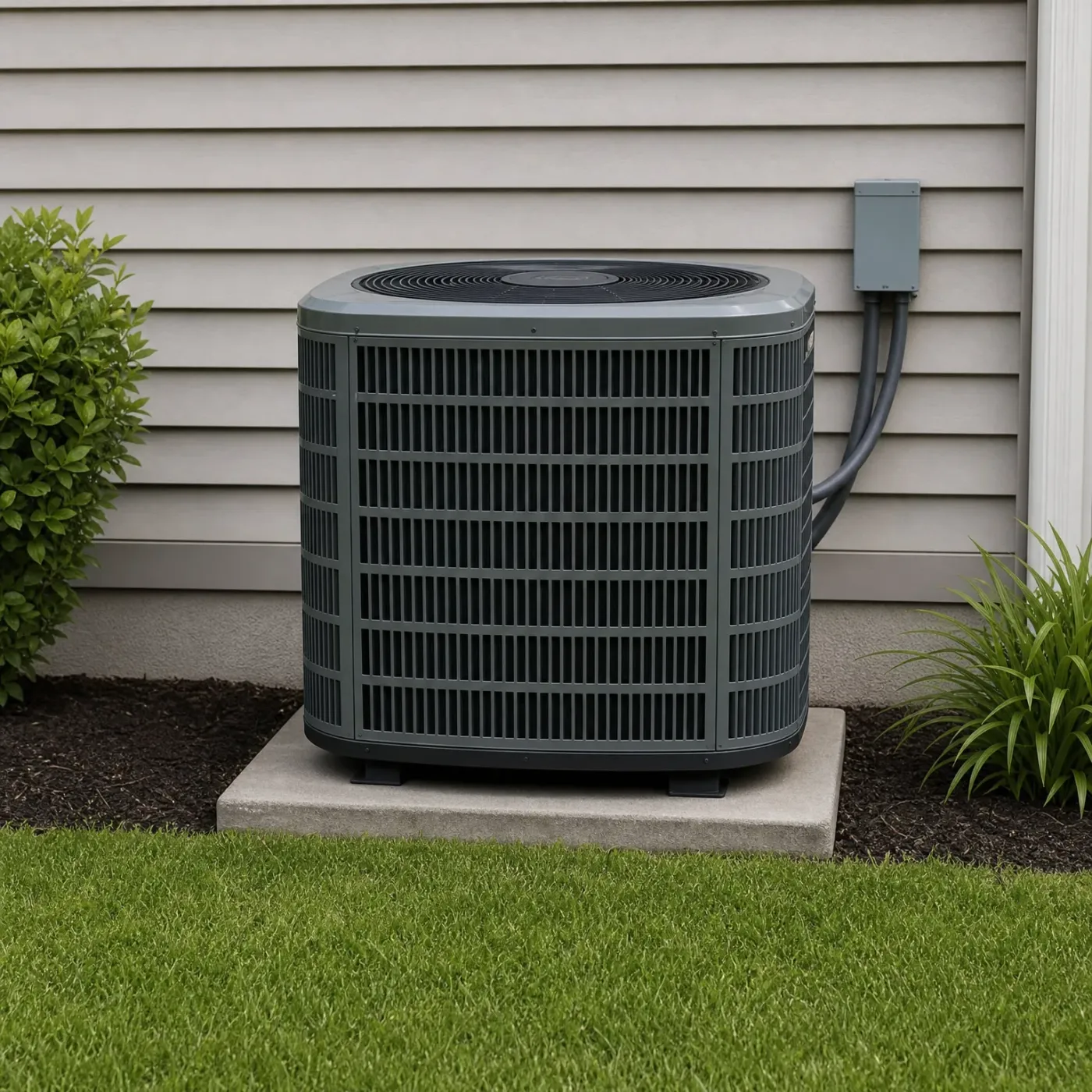
A gray outdoor air conditioning condenser unit on a concrete pad beside a house with horizontal lap siding, with a wall-mounted electrical disconnect box and refrigerant lines, shrubs, mulch and lawn around it.
A clean condenser with clear space around it moves heat outside the way it's built to, keeping cold air coming from your vents.
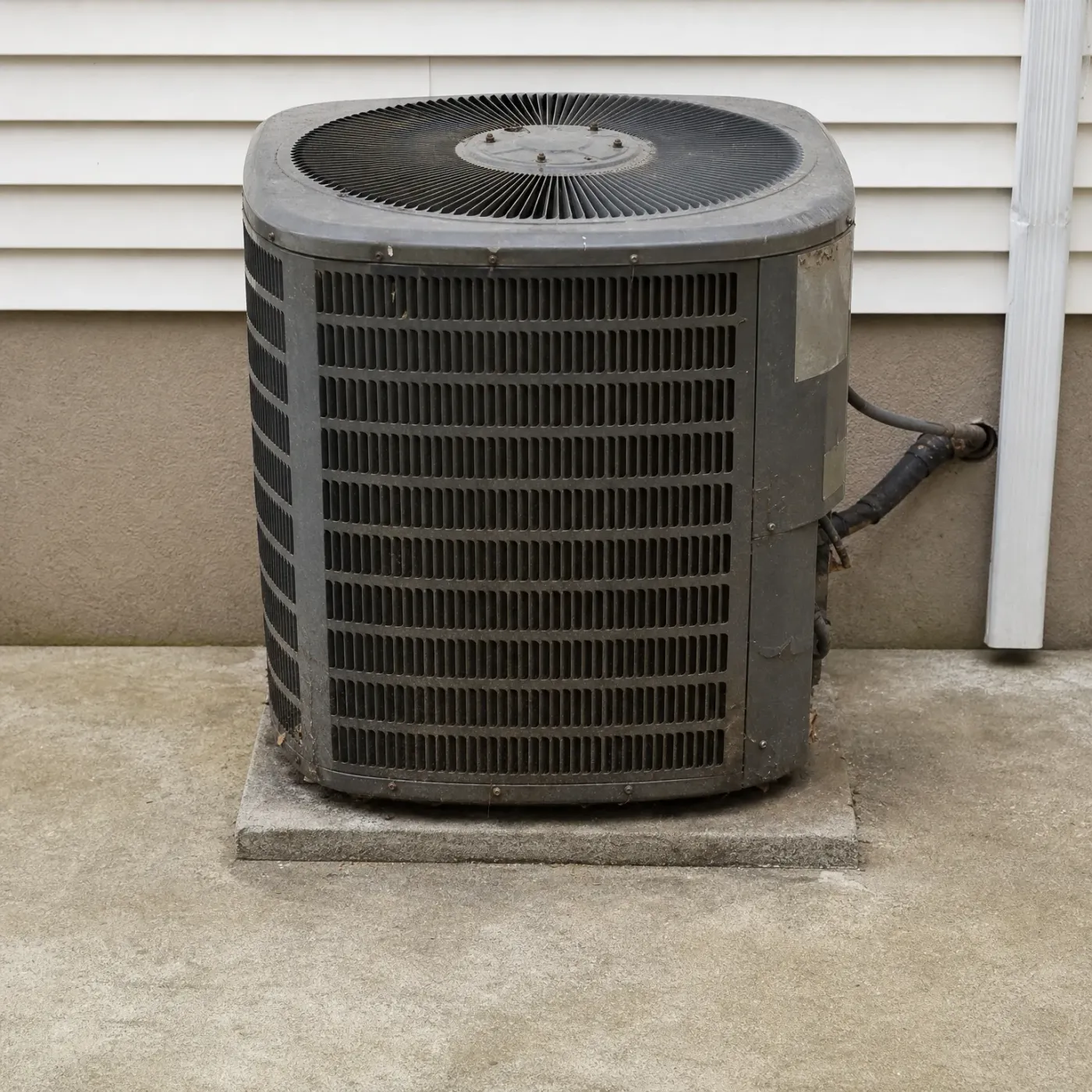
An outdoor air conditioner condenser unit on a concrete pad beside a house wall with stucco lower section, horizontal siding above, and a white downspout to the right.
Years of dirt packed into the fins and a refrigerant line that's been leaking slowly often end in warm air and a system working for nothing.
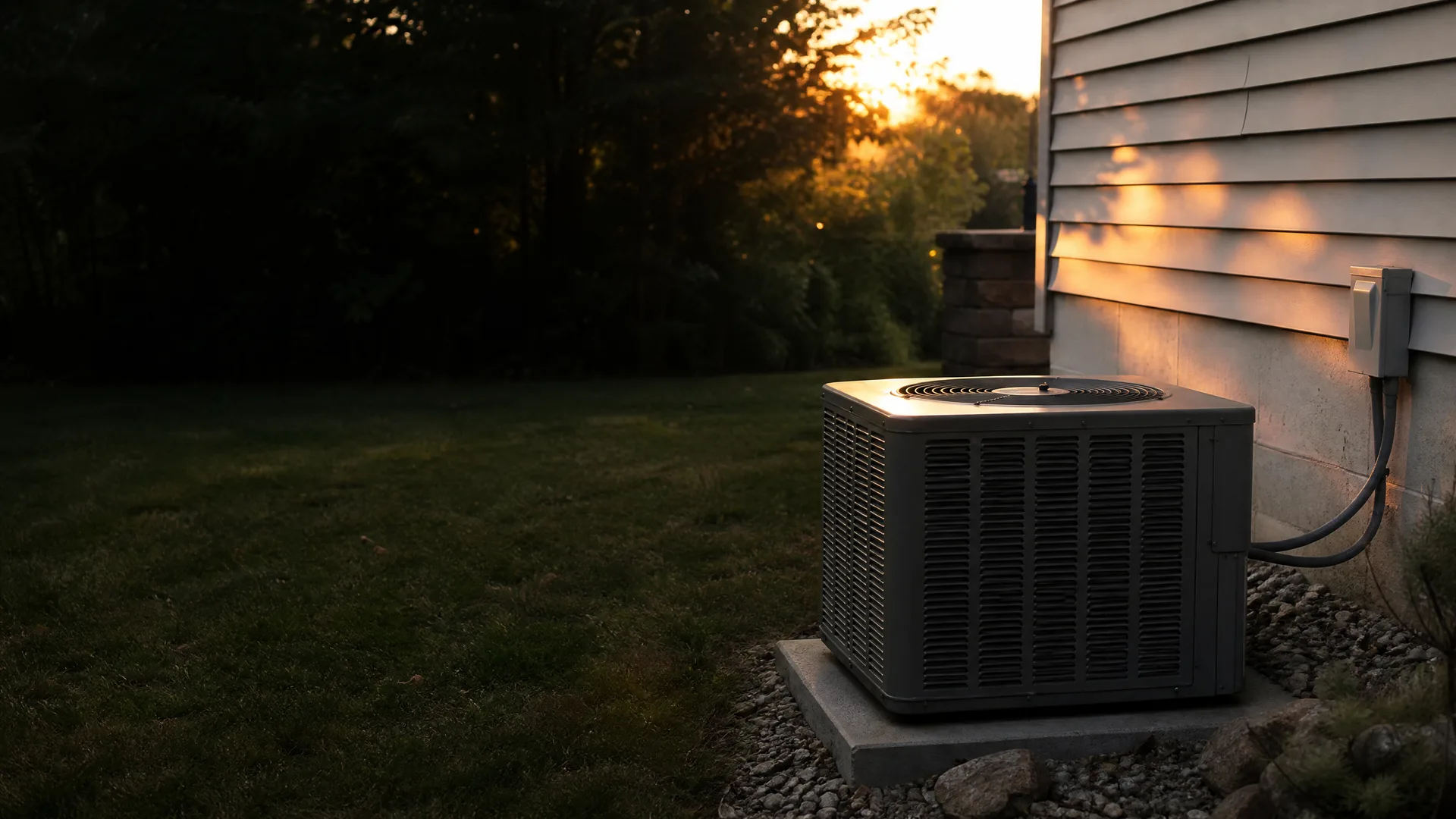
An outdoor air conditioning condenser unit on a concrete pad beside a house with horizontal lap siding, with a gravel bed, refrigerant lines and an exterior electrical disconnect box on the wall, and a lawn and trees at sunset in the background.

You're out back around seven, grass still warm underfoot, and the condenser is just sitting there. No hum, no fan turning. You crouch down and feel for air off the top grille and there's nothing moving at all. Inside, the thermostat still reads two degrees above setting, climbing. Through the kitchen window you can see your spouse standing near the vent with a hand up, waiting on air that isn't coming. The sun's low over the fence line, that gold light settling on the yard, and the only sound is a dog barking a few houses down. You already know this isn't a five-minute fix. You pull out your phone and start the form right there in the grass.

Done looking for an air conditioner pro

A condenser that's quit or a refrigerant line that's been leaking for months isn't something you diagnose standing in the yard. You can see the fan isn't turning. You can't see whether the compressor tripped on its own protection or burned out, or whether the charge is low by a pound or by half. Guessing wrong means paying for a part that wasn't the problem, and in a Rogers County summer, every day spent guessing is another day of muggy air sitting in the house. A contractor who works on these systems all summer has likely already seen this exact failure a dozen times this month, on units the same age as yours, and knows which of the usual causes to check first. That's the difference between someone opening the panel without a plan and someone who's narrowed it down before the truck is even in your driveway. Send the request and let someone who does this every day take it from here.

Why the fan still runs

The indoor blower and the outdoor compressor are two separate motors on two separate switches. A problem that trips the compressor, a tripped safety, a bad capacitor, a seized motor, doesn't touch the blower at all. So the blower keeps pulling air across a coil that's no longer cold, and that air comes out the vents at whatever temperature your house already is. It's not a weak version of cool air. It's just air, moved by a fan that still works fine, over a coil that's stopped doing its job.


What the breaker tells you

Check the breaker for the outdoor unit before anything else. If it's tripped, that's the compressor drawing more current than it should, usually a sign it's struggling to start or already failed. If it's not tripped and the outdoor unit still isn't running, the problem is more likely in the thermostat wiring, a control board, or a safety switch that's shut the compressor down on purpose to protect it. Either way, this tells a contractor where to start looking before they've even opened the panel.

Cooling runs May through September

Five months of that is on your system right now. From May through September it barely gets a break, and a compressor that's struggling or a slow refrigerant leak doesn't heal itself between now and the next hot stretch. Warm air in June is a sign of something that'll still be wrong in August.

NOAA nClimDiv 1991-2020

A system low on refrigerant can still cool some. You'll get air that's cooler than the room, just not as cold as it should be, and it may take hours longer to bring the house down to temperature.

A system that's lost its charge entirely or lost the compressor puts out nothing but what the blower pulls through the vents. That air sits at whatever temperature your house already is, no matter how long it runs.

A woman with her hair in a bun sits wrapped in a beige knitted blanket on a couch, holding a sleeping child against her chest in a warmly lit room with a lamp and houseplant in the background.
An older woman with short gray hair in a cream cable-knit turtleneck sweater smiles while looking to the side in a wooden kitchen, with a round loaf of bread on a board in the foreground and a lit candle by a dark window.

Warm Air, Narrowed Down

  • Warm air from the vents almost always traces back to the outdoor compressor or the refrigerant charge, not the blower.
  • A compressor that has shut off or failed still leaves the indoor fan running, which is why you feel air but no cold.
  • A slow refrigerant leak shows up first as air that's cooler than the room but never as cold as it should be.
  • May through September puts five months of steady load on your system with no real break in between.
  • A tripped safety switch, a bad capacitor, or a seized motor all stop the compressor without stopping the blower.
  • Catching this now, rather than waiting out a hot stretch, keeps a smaller fix from turning into a bigger one.

What it comes down to is this: your blower moving air doesn't mean your system is cooling, and in Claremore right now that distinction matters. The compressor outside does the actual cooling. The indoor fan just moves whatever air is there, cold or not, which is why a dead compressor still feels like a working AC for the first few minutes. A tripped safety switch, a failed capacitor, a seized motor, a leak that's been losing refrigerant slowly for months, all of them can stop the compressor while the blower keeps running like nothing's wrong. The difference shows in how the air feels. No cooling at all points to the compressor itself, either tripped or failed outright. Air that's cooler than the room but not cold enough points to a system running low on charge, one that's still working but losing ground. Either way, the fix is on the outdoor unit, not the vents or the thermostat. Waiting doesn't help either case. A compressor under strain doesn't recover on its own, and a slow leak doesn't seal itself. With May through September running long here, the load on your system only lets up for part of the year, and whatever's wrong now is still wrong tomorrow, just further along. A technician who checks the compressor, the capacitor, and the refrigerant charge can usually tell you within the hour which one you're dealing with.

A woman with long light-brown hair in a gray knit sweater sits in a living room looking off to the side, with a sectional sofa, houseplant, lamp, wooden table and large windows behind her.
A woman in a chunky gray turtleneck sweater sits indoors looking off to the side, with a blurred dining table, chairs, pendant lamp and window behind her.
A woman in a cream knit sweater with her hair in a bun stands near a window, looking off to the side, with a gray sofa, houseplant and open kitchen with pendant lights blurred behind her.
A woman with long brown hair in a cream knit sweater stands near a window, looking to the side, with a white sofa, shelving, and a hallway visible behind her.

Air Conditioner Repair

It's off your list after this

A licensed pro who works in Rogers County gets your request.

A black-framed smartphone standing upright against a plain light gray background, its screen filled with solid green.
Step 1 of 3: Equipment