AC leaking water inside in Stillwater, OK

Get an air conditioner pro

Water showing up around your indoor unit or dripping from the ceiling isn't something to wait out, especially with a Stillwater summer stretching on for months. It usually means the drain line is clogged or the pan is overflowing, and the longer it sits, the more it can damage the floor, the ceiling below it, or the unit itself. You don't have to figure out which it is on your own. Answer a few questions about your system and what you're seeing, and you'll be matched with a contractor in the Stillwater area who takes on jobs like this. From there, the contractor reaches out to you directly. No more searching through listings or guessing who actually works on this kind of problem nearby. Once you send the form, that part is off your plate. You get to stop worrying about finding the right person and let someone who knows the equipment take it from here.

Why is my AC leaking water inside my house?

Water pooling near the indoor unit or spreading across the ceiling is alarming, especially when you don't know where it's coming from. You just want it to stop before it ruins your flooring or drywall. With a Stillwater summer keeping the AC running for months at a time, this isn't a one-off problem either. It helps to know what's actually causing it and whether it's something that needs attention right away.

It's almost always a clogged drain line or a full drain pan

Your air conditioner pulls a lot of moisture out of the air as it cools, and that water is supposed to run out through a drain line to the outside. When that line clogs with algae or dirt, the water backs up into the drain pan and spills over into your house instead. A cracked or rusted pan causes the same thing even with a clear line. With Payne County summers running long and humid, that drain line stays busy for months straight, which gives algae more time to build up and clog it than in a place where the AC only runs occasionally.

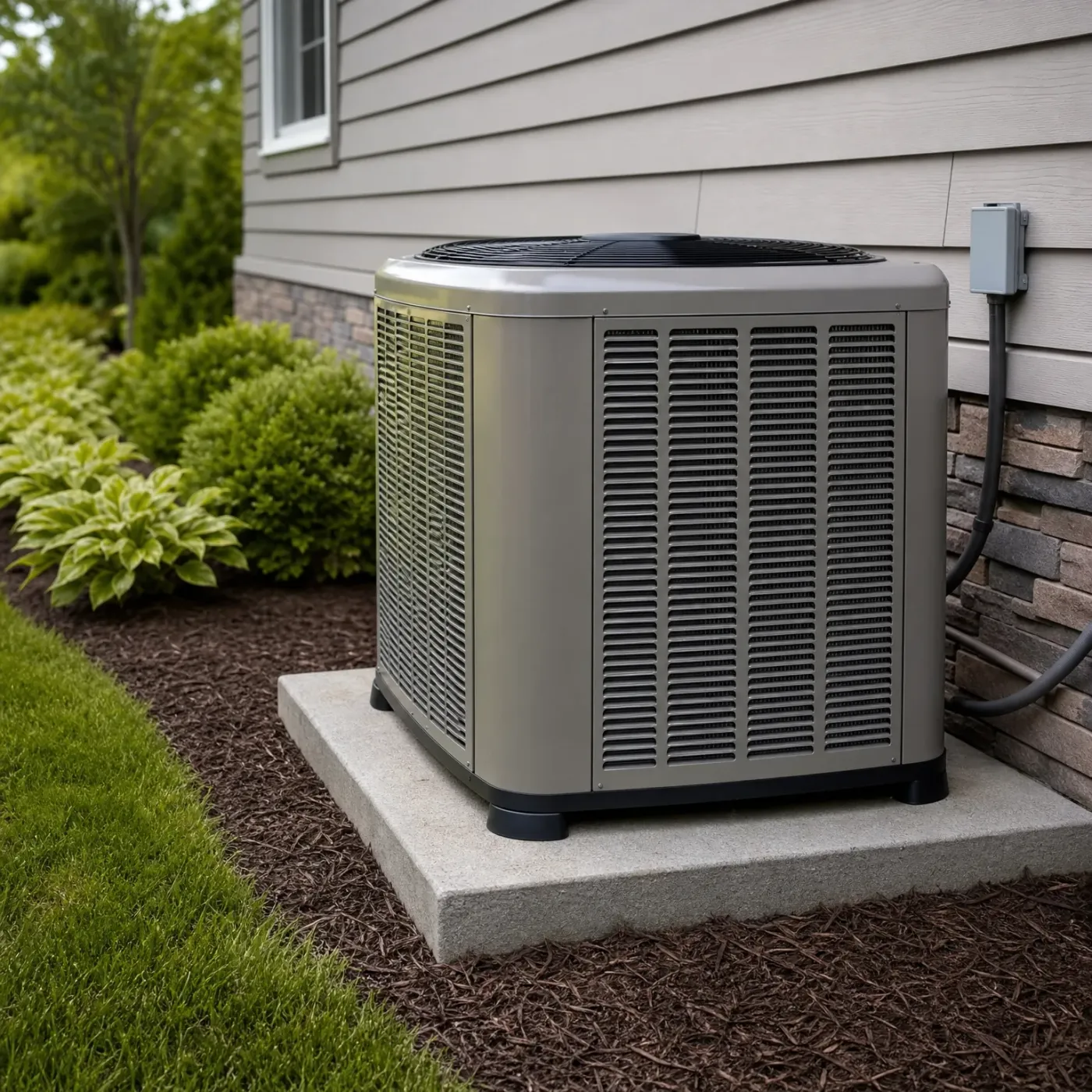
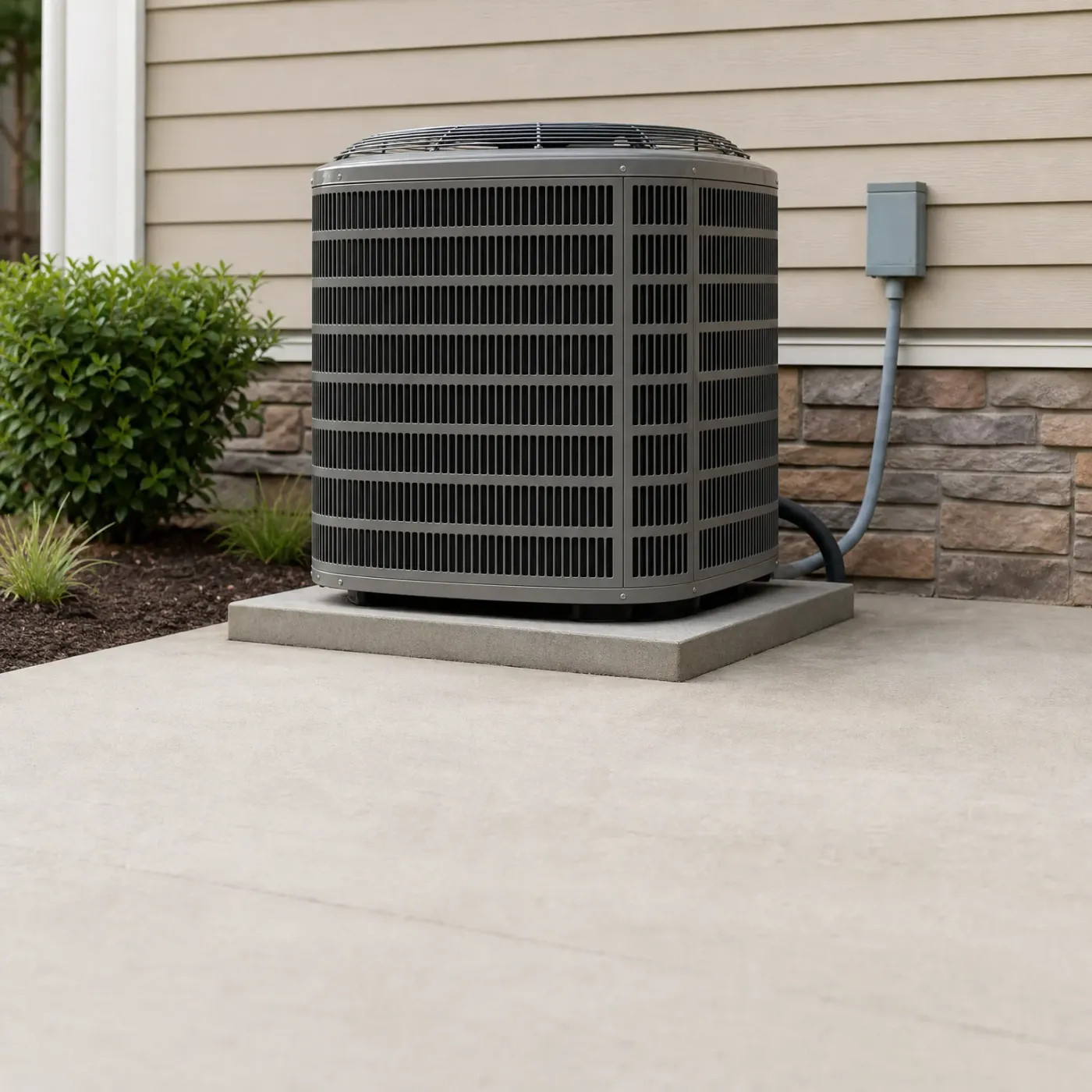
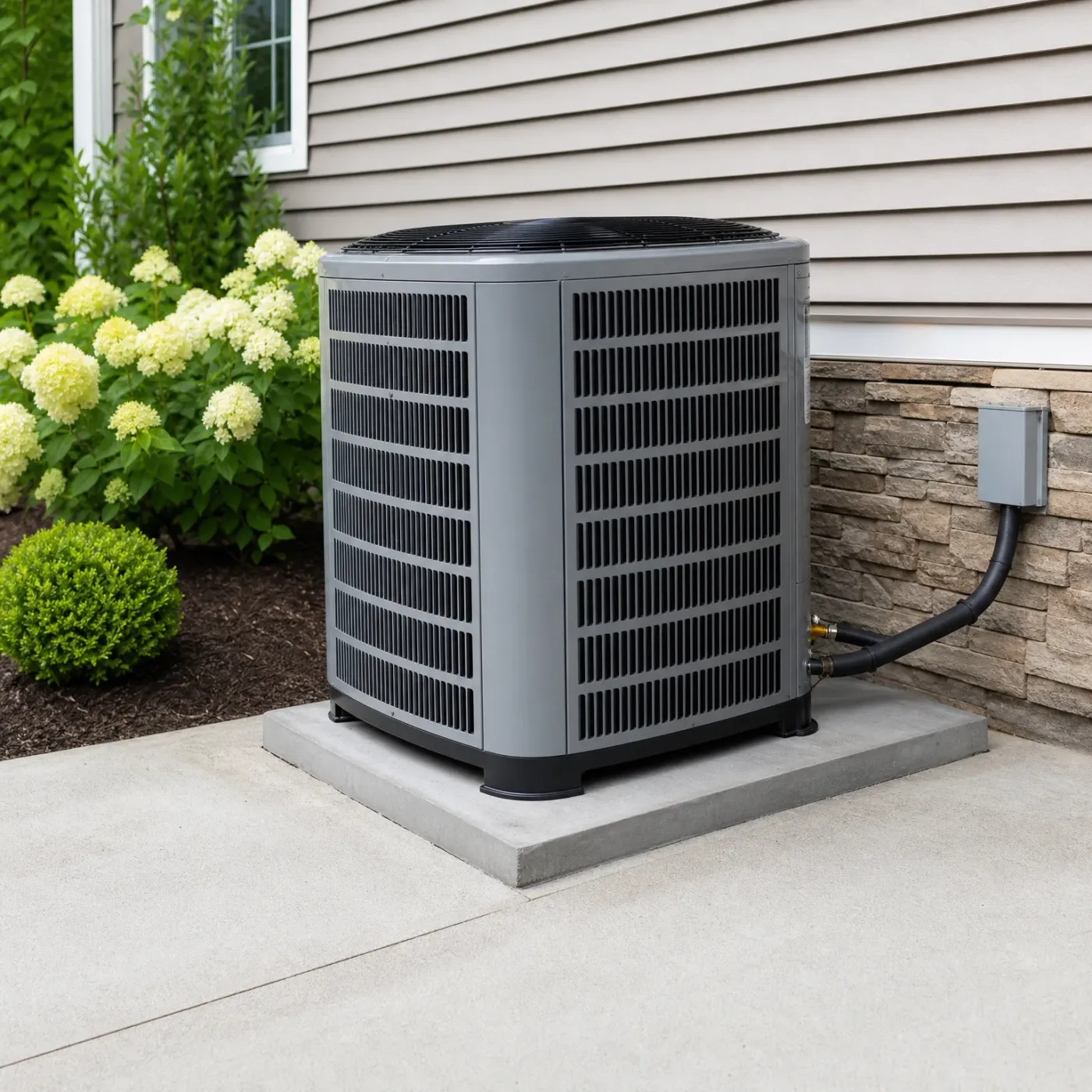
A gray outdoor air conditioning condenser unit on a concrete pad beside a house with horizontal siding and a stone veneer base, with refrigerant line and electrical disconnect box on the wall and flowering shrubs to the left.

Draining the way it should

This condenser sits clean on its pad, and the line running into the wall is doing its job. Condensation forms on the indoor coil and drains outside through the condensate line, not into your ceiling. Nothing pools, nothing backs up, and the pan stays dry.
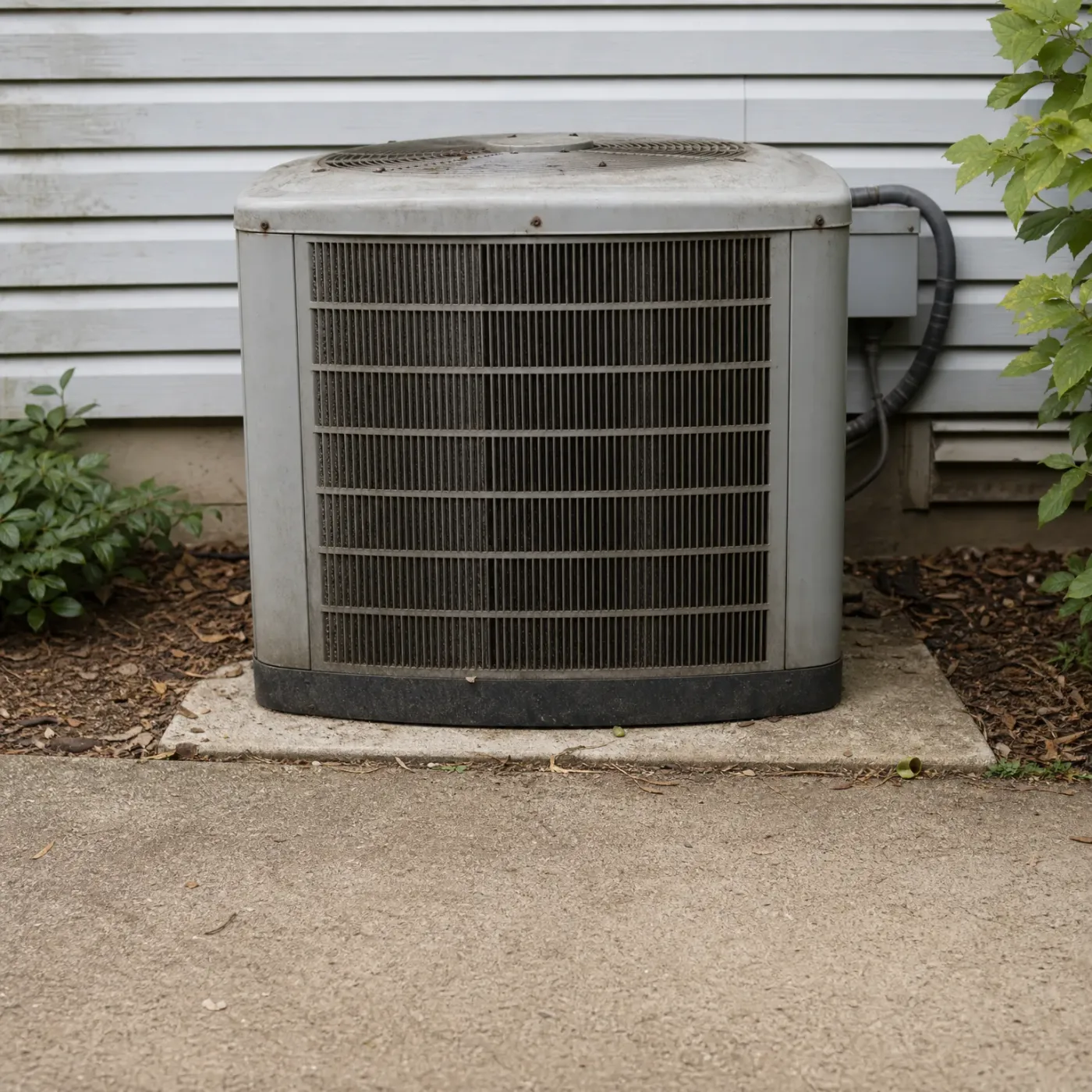

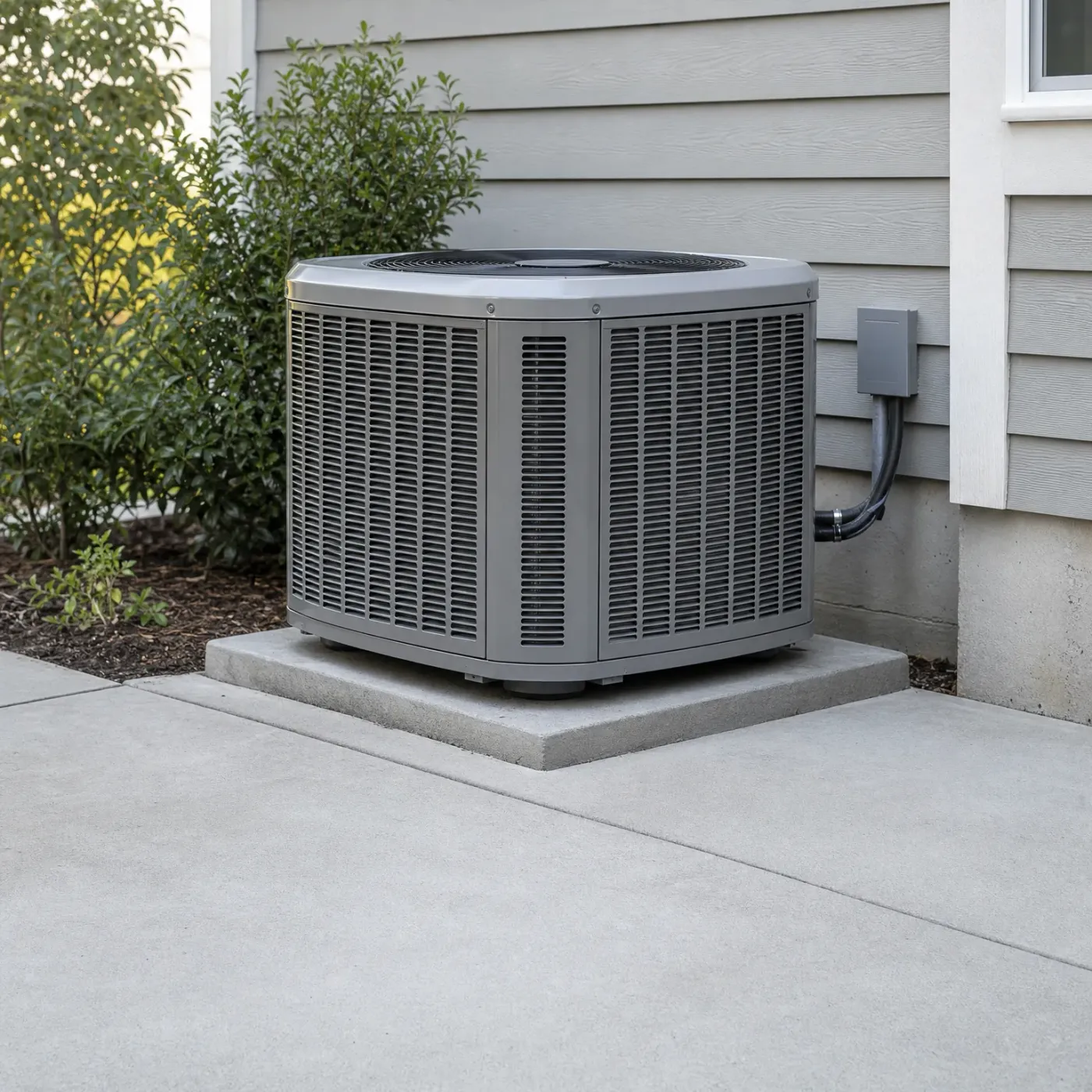
An outdoor air conditioner condenser unit on a concrete pad beside a house with light gray horizontal siding, with mulch and green shrubs on either side and a concrete walkway in the foreground.

Clogged and overflowing

Dirt and grime built up on this unit's fins over time, and the same buildup happens inside the condensate line and pan you can't see. Algae and debris clog the line, the pan fills past its edge, and water finds its way into your ceiling or down your wall instead of outside.

A woman in a gray turtleneck sweater stands near a window with snow outside, in a dimly lit living room with a lit Christmas tree, table lamp, sofa and bookshelf.
A woman in a cream knit sweater with her hair in a bun stands in a dimly lit living room looking out a large window at snow-covered evergreen trees, with a lamp, sofa, framed picture and lit candle behind her.
A woman in a thick gray knit sweater stands beside a window looking out at falling snow, with a dimly lit living room containing a lamp, sofa, string lights and a candle behind her.
A woman in a gray turtleneck sweater stands in a dimly lit room with a lit table lamp, framed picture and sofa, looking toward a window with snow outside.

Why the clog happens so often

The condensate line is narrow, usually three quarters of an inch wide, and it slopes just enough for water to creep along it instead of rushing through. Algae and mold grow in that slow moving water, and dust pulled through the coil adds to the buildup. Over months that film narrows the pipe until water backs up instead of draining. A long Stillwater summer gives the line more months to grow that buildup than a short one would, since the system runs for most of it.

What the pan is actually for

Underneath the indoor coil sits a drain pan, built to catch whatever the condensate line doesn't carry away. It is a backup, not a second drain, and it has no pump or slope of its own to move water anywhere. When the line clogs, water fills the pan instead, and once it's full it has nowhere to go but over the side. A cracked or rusted pan skips that step entirely and lets water reach the floor below it right away.

A bearded man in a plaid flannel shirt stands indoors looking out a window at snow-covered conifers, with a ceramic mug on the wooden sill and wooden cabinets behind him.
A bearded man in a navy T-shirt sits on a light-colored couch indoors, smiling while looking down at a laptop screen in the foreground, with a framed picture and a potted plant blurred behind him.

Inside the indoor unit, condensation forms on the coil and drips into a shallow pan below it. From there it's supposed to run down the drain line and out, usually to a spot outside or into a floor drain. Most systems have a float switch sitting in that pan or in the line itself, and its only job is to cut the AC off if water rises past a safe level. When that switch works, you lose cooling but you don't get a flooded ceiling. When it's stuck, missing, or bypassed, the pan keeps filling and water finds somewhere to go, usually down through the ceiling below. The drain line itself often runs through a P-trap, and if that trap dries out or clogs, air gets pulled backward instead of letting water drain forward. None of this requires the line to be blocked, either. A pan that's cracked or rusted through will leak on its own, and a coil buried in ice or dirt can shed water faster than even a clear line can carry it away.

What's actually happening inside the unit

  • Water enters the condensate pan under the indoor coil and should leave through the drain line before it collects anywhere else.
  • A float switch sits in the pan or the line on most systems and is built to shut the AC off when water rises too high.
  • If that switch is missing, stuck, or wired around, the system keeps running even after the pan fills past its edge.
  • The drain line usually ties into a P-trap, and a dry or clogged trap lets air pull backward instead of letting water flow out.
  • A cracked or rusted pan will leak even with a clear drain line, since the water finds the break before it reaches the drain at all.
  • Warm, humid air hitting a dirty or iced-over coil melts and drips faster than a clogged line can carry the water away.
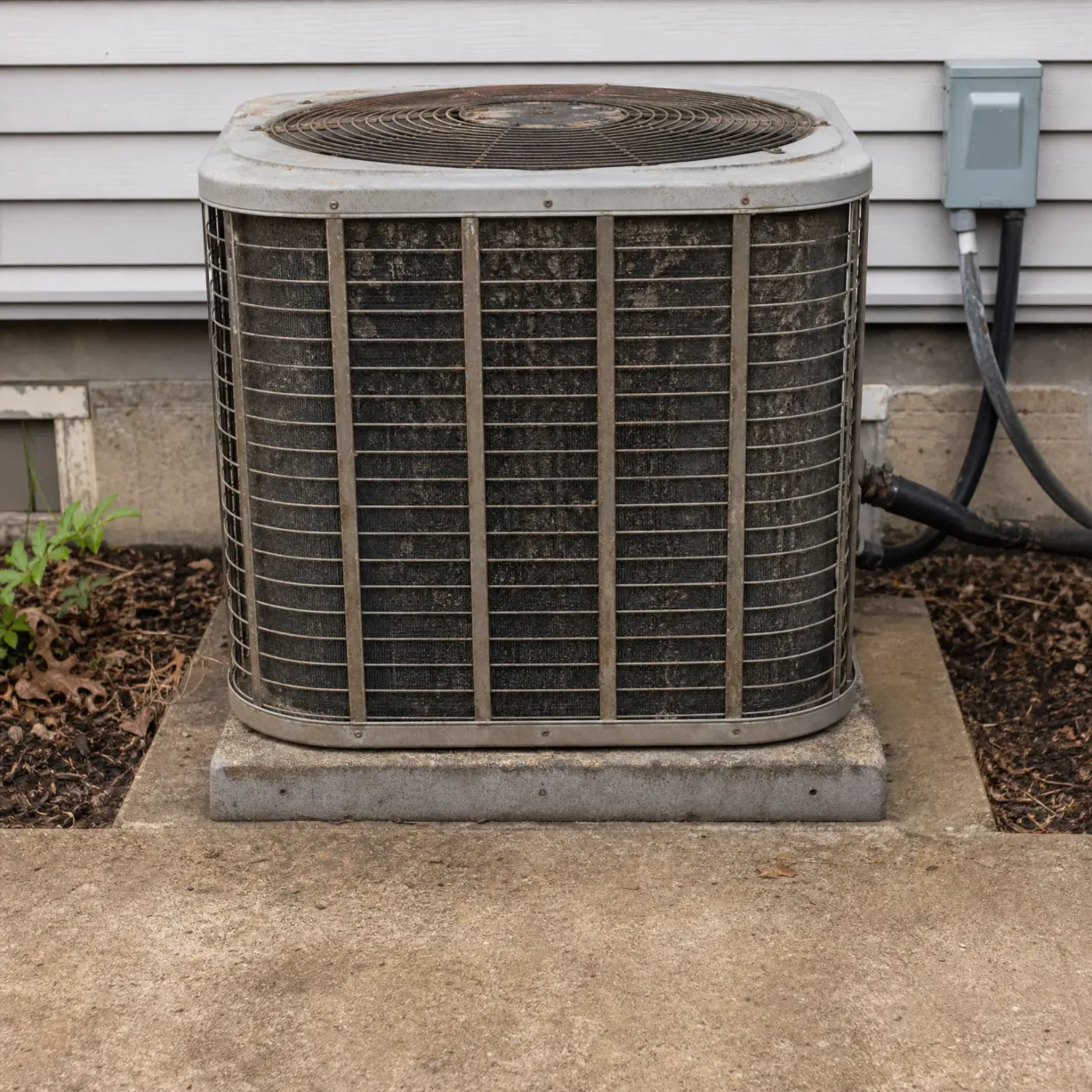
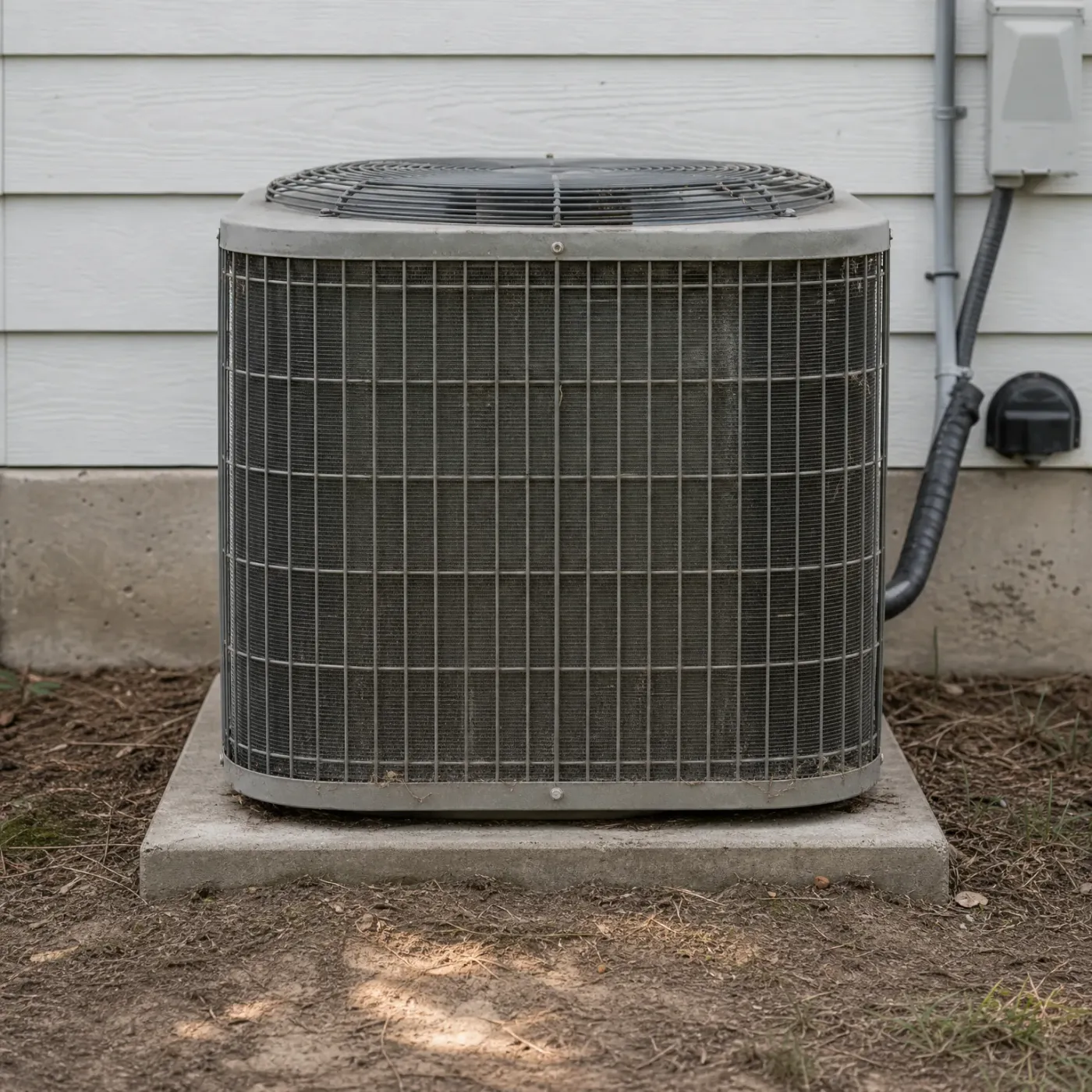
A weathered outdoor air conditioning condenser unit on a concrete pad beside a house with light horizontal siding, an electrical disconnect box and conduit on the wall, and mulched soil on either side.
Before you get your air conditioner repair
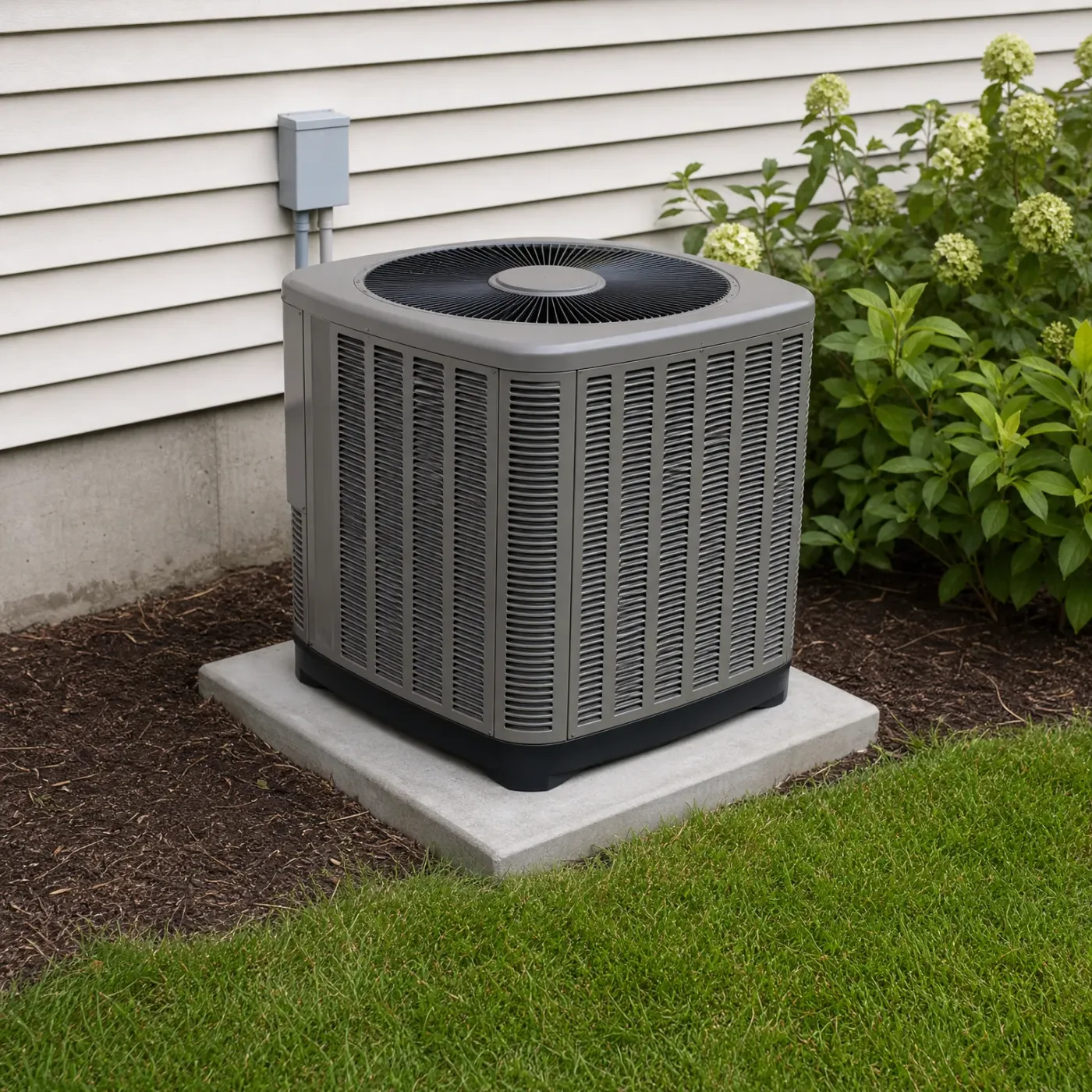
A gray outdoor air conditioner condenser unit on a concrete pad beside a house with horizontal vinyl siding, surrounded by mulch, flowering shrubs, and lawn.
After you get your air conditioner repair
An outdoor air conditioning condenser unit on a concrete pad beside a house with horizontal siding and stone veneer, with a gray electrical disconnect box and conduit on the wall and shrubs and mulch nearby.

Get matched with an air conditioner pro in Payne County

Once you send the form, finding a pro is off your list.

A Payne County pro who repairs air conditioners gets your request.

Hand it off

No charge to send it. You decide if you hire them.

A gray outdoor air conditioner condenser unit on a concrete pad beside a house with horizontal lap siding, with a wall-mounted disconnect box and conduit to its right and shrubs to the left.
The pad is clean, the connections are tight, and water goes where it should instead of finding its way inside.
An outdoor air conditioning condenser unit on a concrete pad beside a house with horizontal lap siding, with a conduit and electrical disconnect box on the wall at right.
Dirt on the coil guard and a unit left to age are the kind of conditions that let a drain line clog and back up indoors.
  1. Warm air passes over the indoor coil and drops its moisture there.

  2. Condensation collects in the drain pan beneath the coil.

  3. Water runs from the pan into the condensate line.

  4. The line carries water out through the drain to the outside.

What are you noticing right now in your house

Look near the indoor unit first. A damp spot on the carpet or a puddle on the closet floor usually shows up before anything else does. If the unit sits in the attic or a closet above living space, you might see a brown ring on the ceiling drywall instead, or a soft spot that gives a little when you press it. Sometimes it's a musty smell before you see anything at all, which means water has been sitting somewhere for a while. If the drip keeps going, that ceiling stain spreads and the drywall underneath can soften and sag. Left long enough, standing water also gives mold a place to start, especially in a house running the AC hard through a Stillwater summer.

A two-story gray horizontal-siding house with gabled roof and covered entry, fronted by a lawn, trees, a wet concrete walkway and sidewalk, and a wet street in low sunlight.

That mugginess you feel all summer has a number behind it. Payne County's dew point averages 66°F through June, July and August, according to NOAA climate data, and that's the kind of air your AC has to wring moisture out of all day long. The more water it pulls from the air, the more it sends down that condensate line, so a muggy stretch is exactly when a slow clog turns into a real backup. If your system's been leaking during a run of sticky days, that's not a coincidence.

NASA POWER T2MDEW

Wait It Out or Get It Fixed

Keep running it

  • Water finds the same path out of the pan each time, so the leak will keep showing up at that same spot.
  • A float switch may already be shutting the system off when the pan fills, which means your AC is cycling off on hot days without you knowing why.
  • Standing water under the coil gives algae a place to keep growing, so the clog that caused this will likely return.
  • Drywall and subfloor soak up water slowly, and damage underneath may not show on the surface for weeks.
  • If the drain pan has a crack, every cycle adds a little more water to wherever it's leaking.

Get it repaired

  • A contractor can clear the condensate line so water has a clear path outside again instead of backing up indoors.
  • Checking the pan for cracks or rust tells you whether it needs patching or replacing along with the clog itself.
  • Resetting or testing the float switch confirms the AC will shut off correctly if water ever rises again.
  • Once the line is clear, the system goes back to draining outside the way it was built to.
  • Getting it looked at now means you're not guessing whether the next hot stretch brings the same puddle back.
A gray outdoor air conditioning condenser unit on a concrete pad beside a house with horizontal siding and a stone veneer base, with a wall-mounted disconnect box and conduit, next to a shrub bed and a concrete patio.

The condenser outside, doing its job

This unit sits clean on its pad, vents clear, disconnect box mounted and wired tight. A condenser in this shape isn't the source of water showing up inside. That water traces back to the drain line and pan on the indoor side.

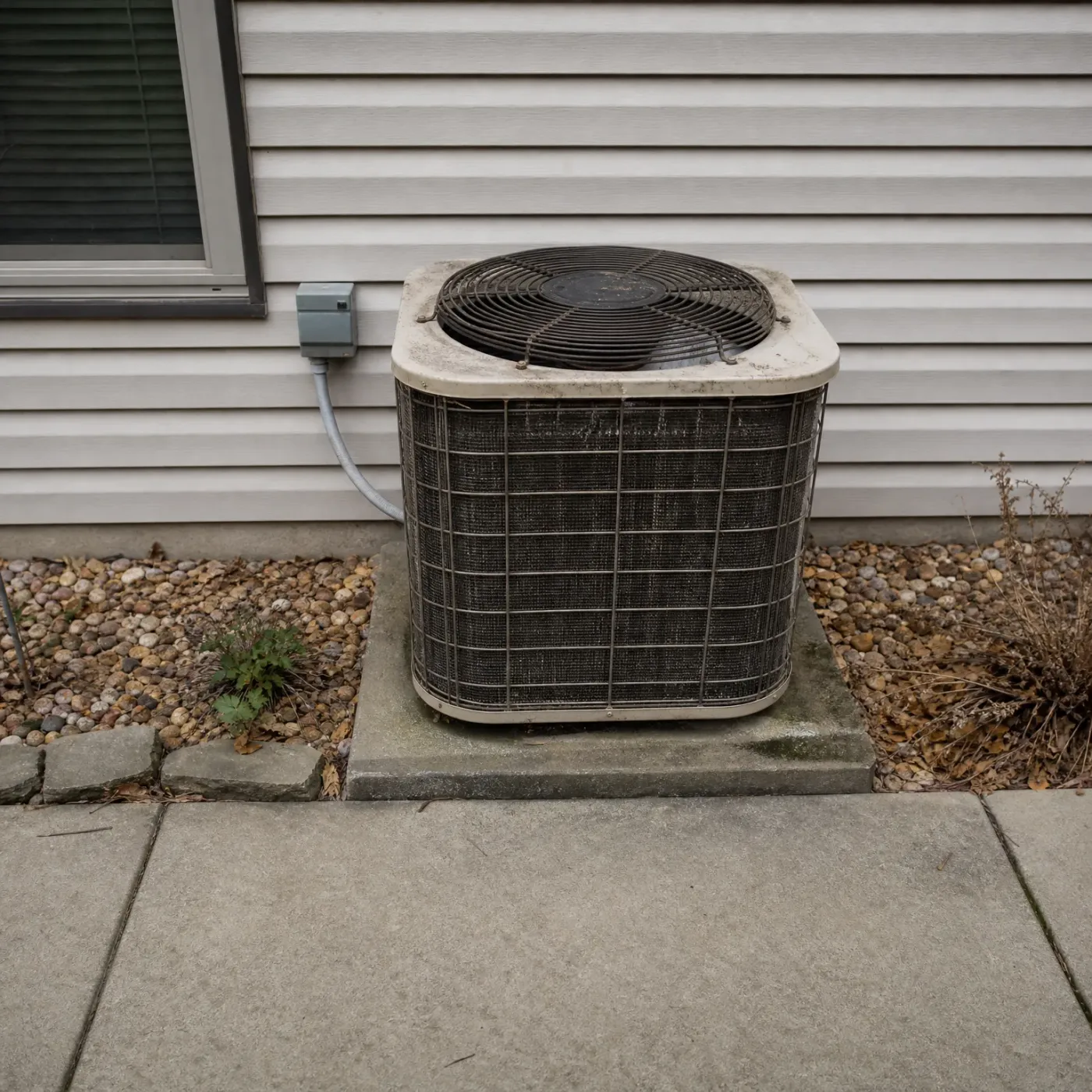
An outdoor air conditioner condenser unit on a concrete pad beside a house with light gray vinyl siding, with a gray electrical disconnect box and conduit on the wall, gravel beds and dried plants nearby, and a concrete sidewalk in the foreground.

A condenser left to sit

Gravel, dried weeds, a housing gone dull from years outside. None of that causes an indoor leak by itself, but a unit this old has had more chances for the drain line to clog or the pan to rust through.

Cooling runs May through September

Five months of cooling means five months of condensation draining off that indoor coil, month after month. That's a lot of chances for the line to clog or the pan to overflow before fall finally slows the system down.

NOAA nClimDiv 1991-2020

A clogged drain line or an overflowing pan is almost always the reason water is showing up where it shouldn't, and it's not something that clears up on its own. The water traces back to the indoor coil and the drain system under it, not the condenser outside. Left alone, that same spot keeps getting wet, the float switch may keep shutting your AC off on the hottest days, and the water sitting against your floor or ceiling does more damage the longer it's there. Once you send the form, you're done hunting for who to call. A contractor who handles this in Stillwater gets matched to you and reaches out, and from there it's a straightforward fix: clear the line, check the pan, get the system draining outside the way it's supposed to. You don't have to figure out which part failed or track down who's available. That part is off your plate now.

A gray outdoor air conditioner condenser unit sits on a concrete pad beside a house with horizontal lap siding, with shrubs and bare soil to the left.

A local pro for your air conditioner repair

Step 1 of 3: Equipment