

Grass clippings and dirt block airflow fastest in summer
A coil packed with debris can't release heat, so the system runs long and still blows warm air. Checking it takes a minute.
When your AC runs but the air coming out isn't cold, the first thing to check is the outdoor unit. If the fan isn't spinning or the coil is caked in dirt and grass clippings, the system can't move heat out of the house no matter how long it runs. Summers in Yukon get long and sticky, and a unit that's been pushed hard since spring is a common place for a weak capacitor or a refrigerant leak to show up first. Another frequent cause is a frozen evaporator coil, often from low airflow or low refrigerant, which actually blocks cooling even though the system sounds like it's working. If your thermostat is set correctly and the filter is clean but the air still isn't cold, something inside the system needs a trained eye. Left alone, a struggling AC usually works harder and cools less, which shows up as higher bills and more strain on the compressor.
Warm air inside pulls through the return vents into the system
Indoor evaporator coil should absorb heat as air passes across it
Refrigerant carries that heat out to the compressor in the outdoor unit
Outdoor fan has to pull air through the coil to release the heat




A coil packed with debris can't release heat, so the system runs long and still blows warm air. Checking it takes a minute.
If the outdoor fan isn't turning, refrigerant never cools back down. The compressor can overheat and shut itself off to protect the unit.
You've probably noticed the thermostat says it's running, but the rooms stay warm past dinner and into the night. Maybe you hear the outdoor unit humming but the air from the vents feels barely cool, not cold. Some rooms upstairs might feel worse than others. If this keeps up through a stretch of 95 degree afternoons, it's not just uncomfortable. A system that runs constantly without cooling still pulls power the whole time, and strain on the compressor from running nonstop can turn a simple fix into a bigger repair.
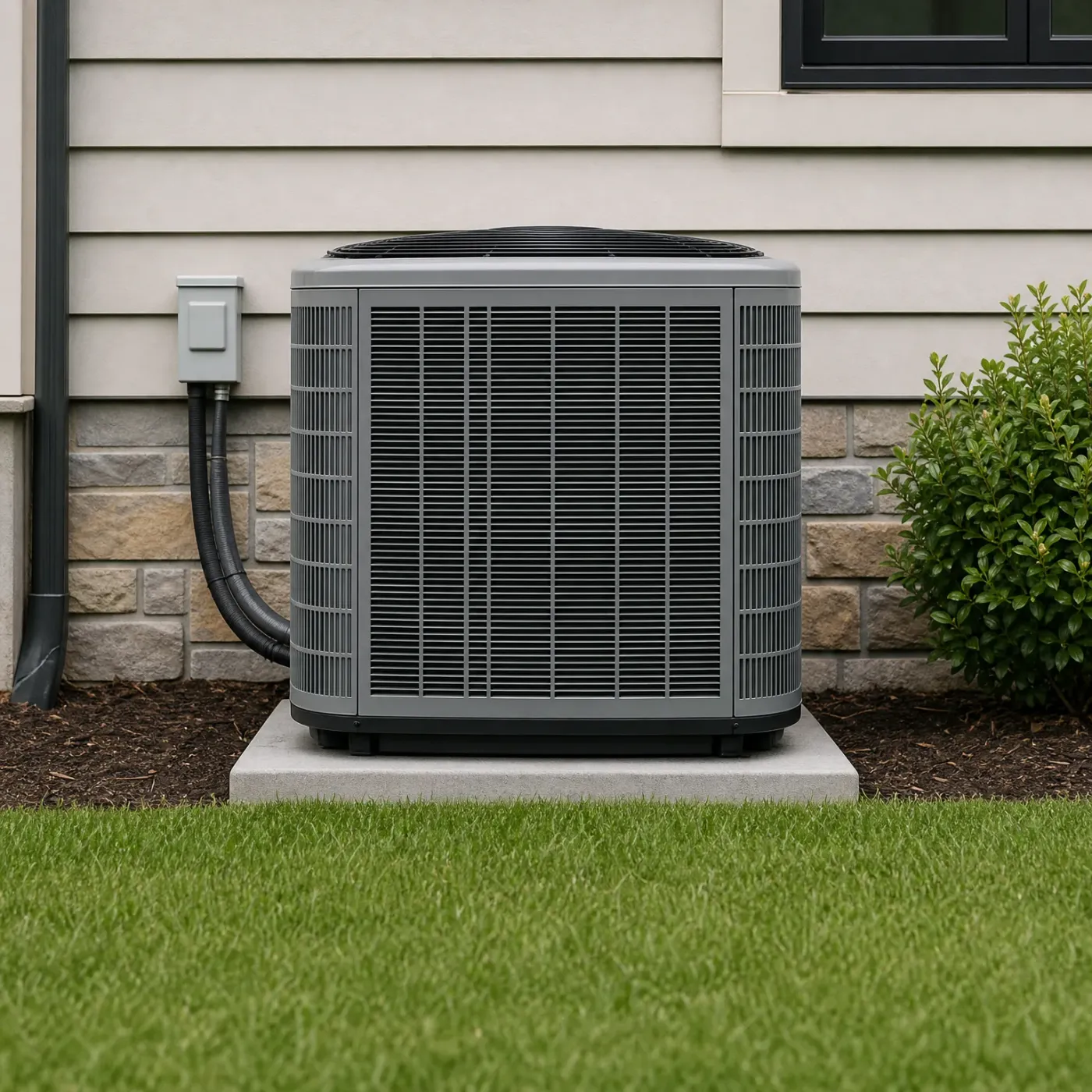
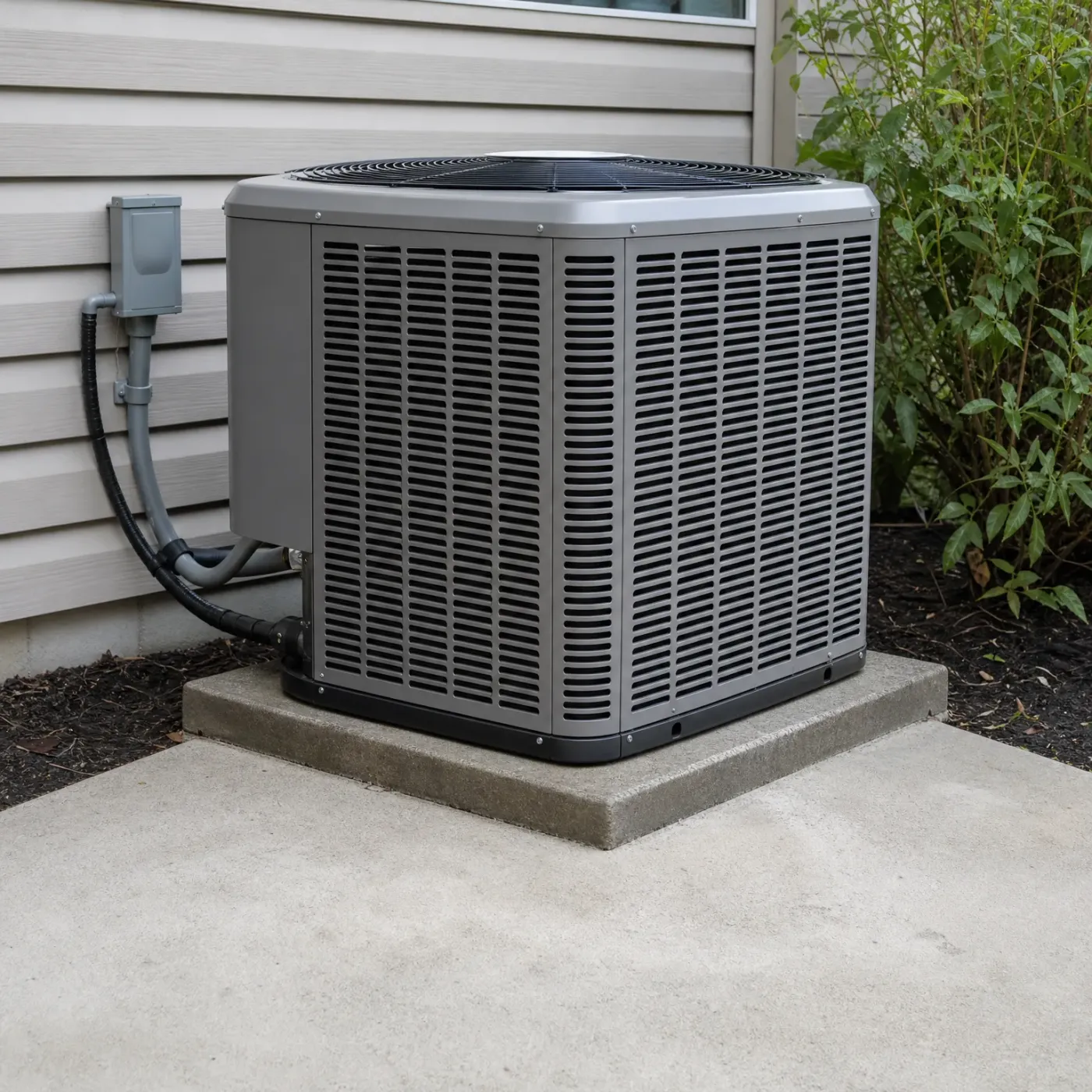
The cabinet is free of grass clippings and leaves, and you can see a few inches of open space on every side. The fan spins freely and the coil behind the mesh is clean, so heat has somewhere to go.
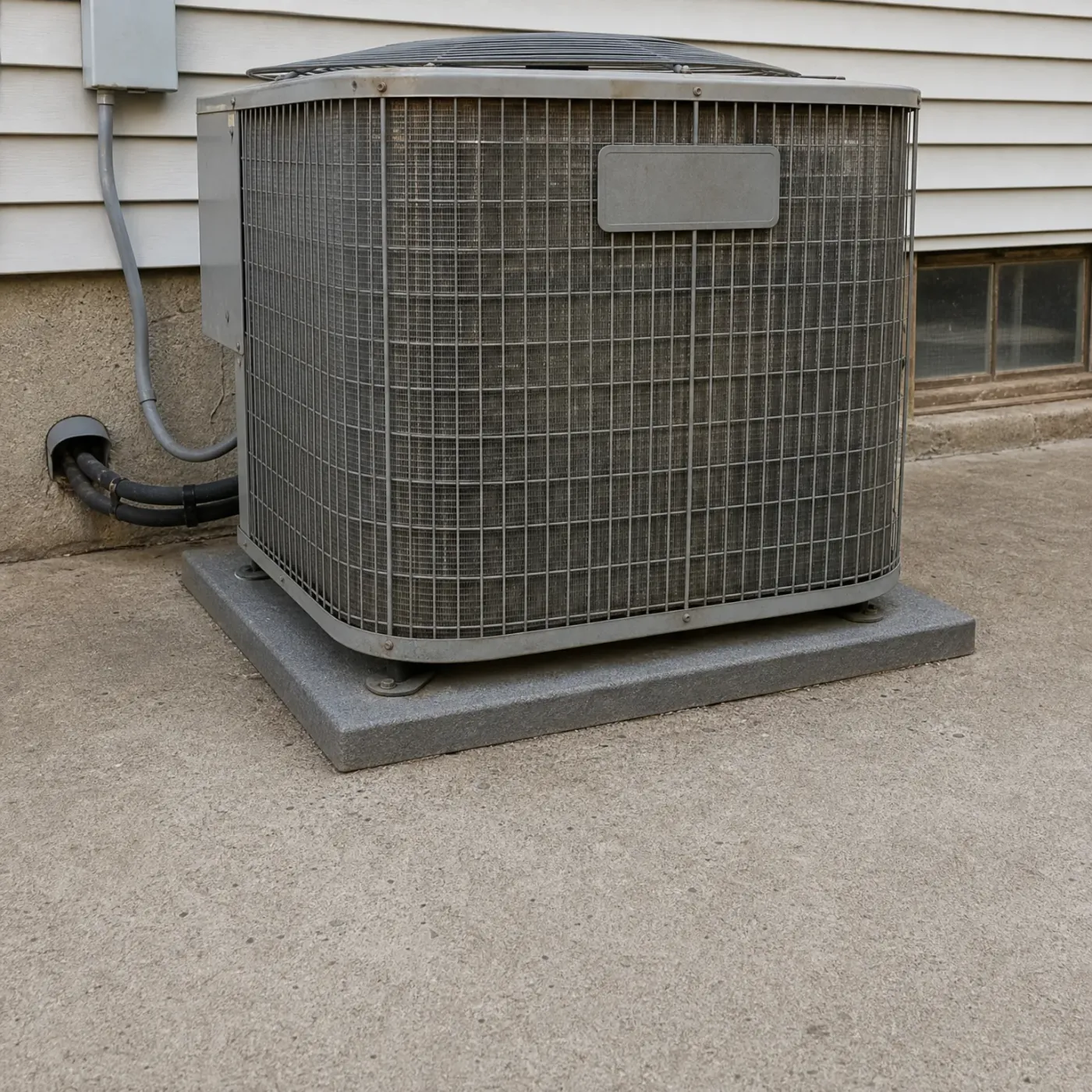
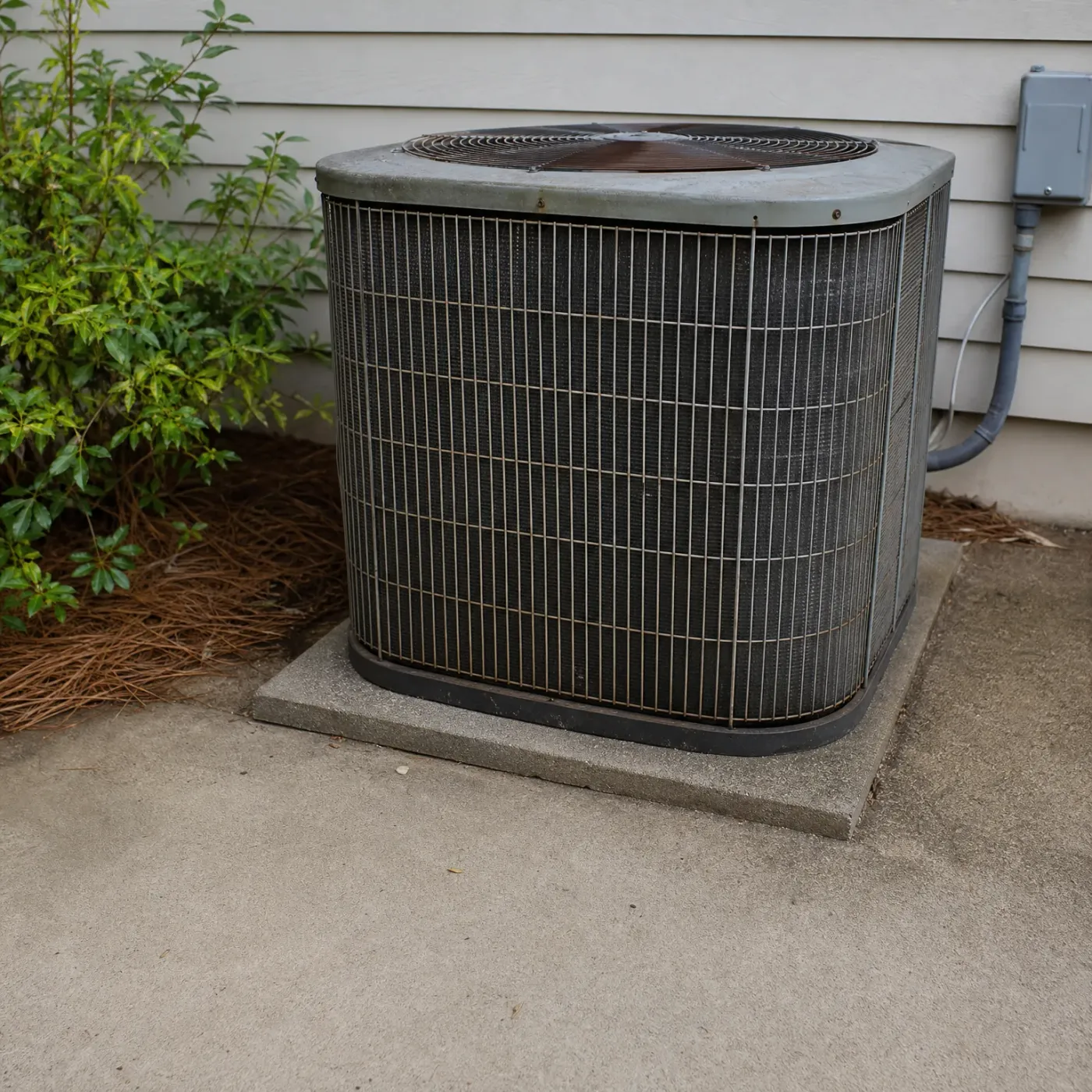
Dirt coats the cabinet and fills the mesh, and the coil underneath is likely just as dirty. A unit like this can run all afternoon in Yukon's heat and still lose the fight to move heat out of the house.

A house that won't cool down in Yukon in July turns into a long night fast. Kids can't sleep, the dog pants by the vent, and you're running a box fan on top of a system that's already running flat out. Humidity sits heavy enough here that a warm house also feels damp, which makes the whole thing worse than the thermostat number suggests. Left alone, a system straining against blocked airflow or a stuck fan can run itself into a bigger failure, and that's a repair that costs more than one caught early.
You don't have to spend your evening calling around Canadian County to find someone who'll actually show up, or explain the same problem three times to three different companies before you get a quote you trust. Answer a few questions about what's going on with your unit and you'll be matched with a contractor who works on systems like yours and reaches out to you directly. That's one call made instead of five.

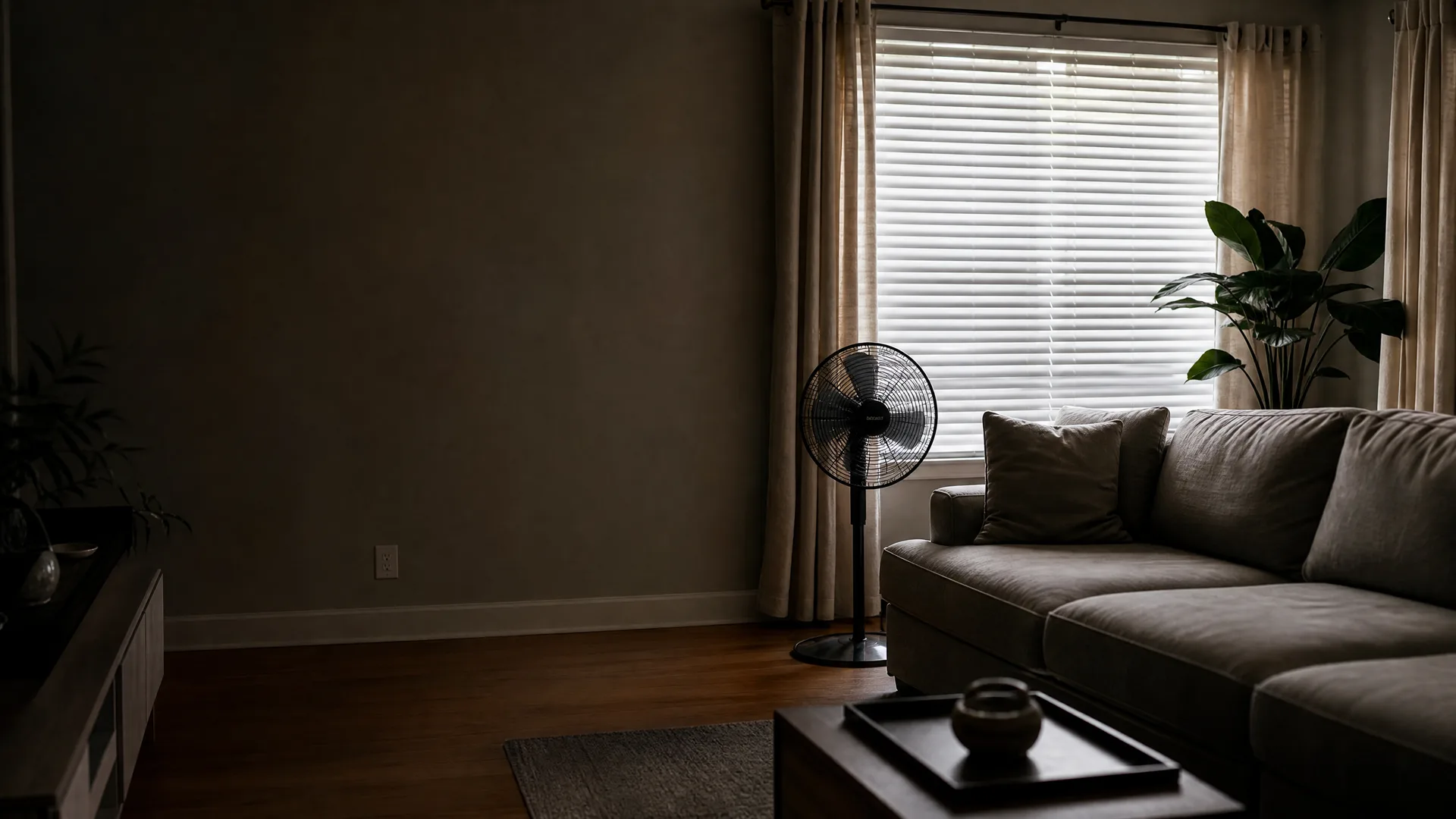
By three in the afternoon the blinds are already shut tight against the sun, and the living room still feels close. The floor fan next to the couch is running on high, pushing the same warm air around instead of cooling anything. You've checked the vent twice now, holding your hand up to it, and it's barely cooler than the room. Outside, the Canadian County heat presses on the windows even through the blinds. The dog has moved off the rug and onto the bare floor by the hallway. You're not ready to call this an emergency, but you've stopped trusting the thermostat's number, and you're thinking about who you'd even ask to come look at it.
Describe what your air conditioner is doing once, in one form.
It costs nothing to send, and you don't have to hire anyone.
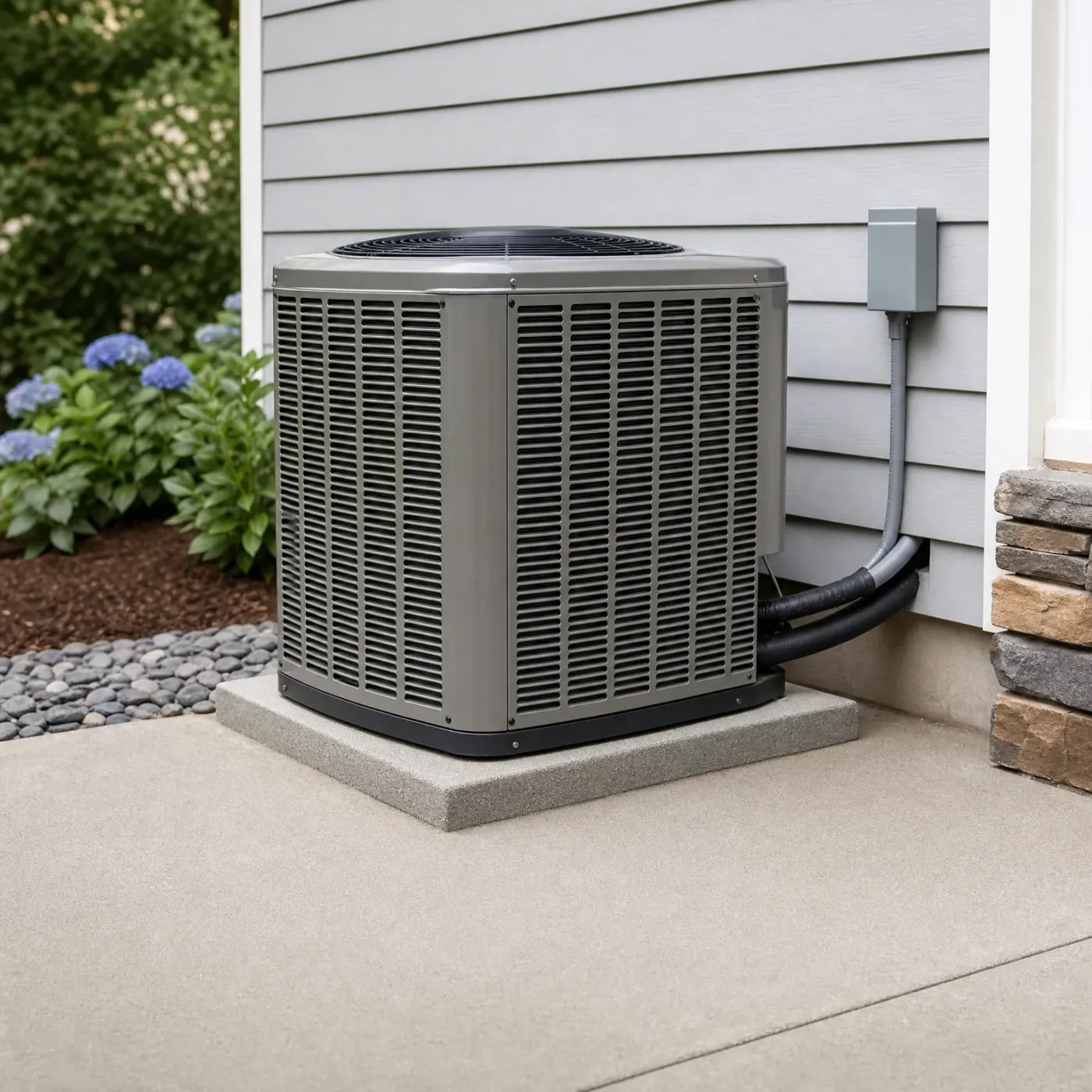
This outdoor unit sits clear on its pad, with open space on every side and nothing blocking the fan. The fins are clean, the lines running into the house are intact, and the disconnect box is secure on the wall. Air moves through it the way it's supposed to.
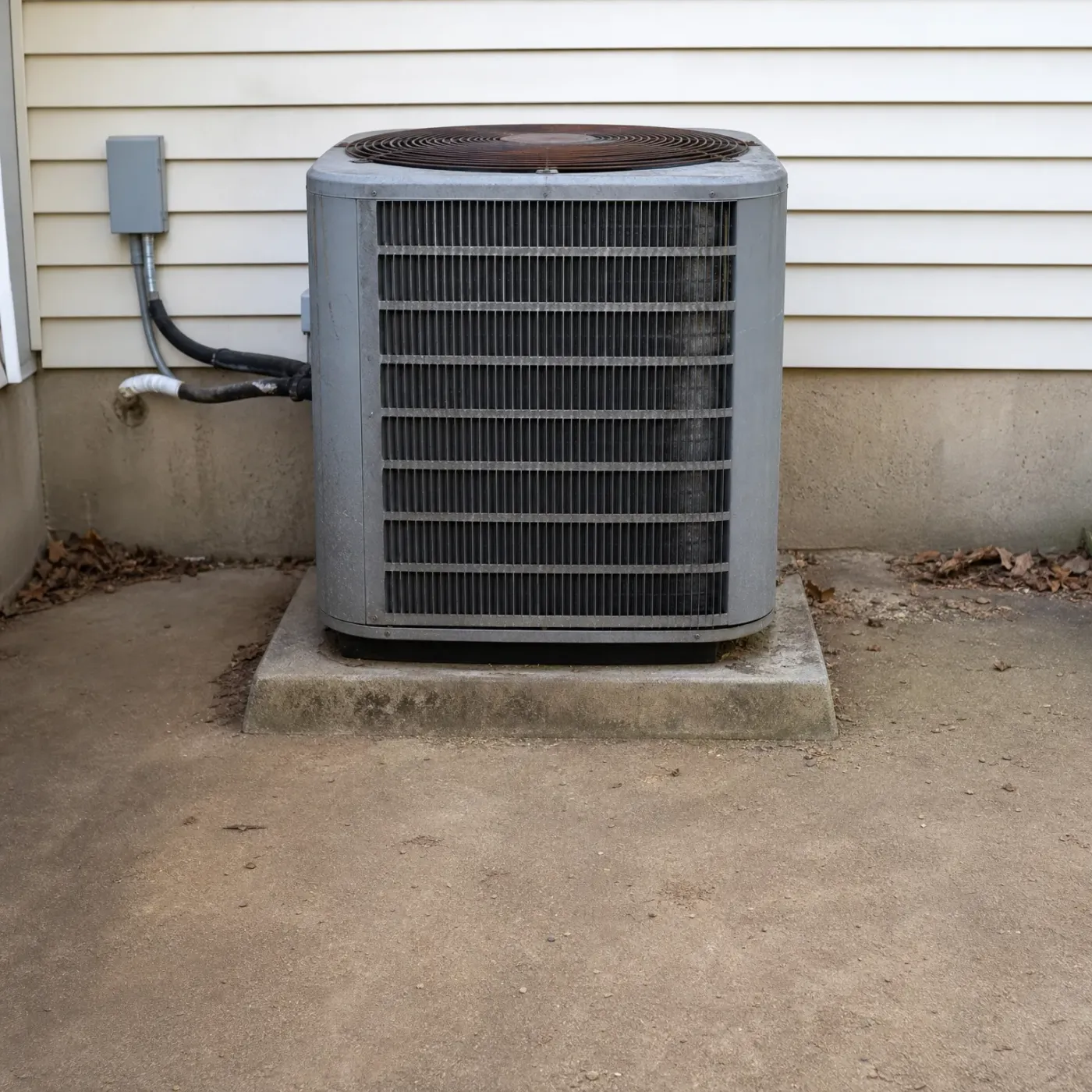
Rust has started on the fan shroud, and dirt has built up across the fins where the unit needs to pull air through. Conduit runs along the siding to the disconnect, but age and weather have caught up with the cabinet itself. A unit in this shape works harder to do less.
Canadian County's summer dew point averages 66°F across June, July and August, according to NOAA climate data. That's thick, sticky air, and your AC has to pull the moisture out of it before the house feels cool at all. On a day like that, the system spends real effort just wringing out the humidity, and the cooling comes second. That's why the air can run long and the house still feels damp and warm instead of dry and comfortable. If the coil or airflow is already compromised, this kind of air makes the struggle obvious fast.
NASA POWER T2MDEW


Some AC trouble really does pass on its own. A dirty filter gets swapped, grass clippings get hosed off the outdoor coil, a tripped breaker gets flipped back, and the system is back to cooling the house within the hour. If you caught the problem early and the fixes above solved it, there's nothing more to do until the filter needs changing again.
If the outdoor fan isn't spinning, the coil is clean but the air still isn't cold, or the system short cycles even after you've cleared debris and checked the breaker, the cause is inside the unit. That could mean a failed capacitor, a refrigerant leak, or a compressor under strain, and none of those are things to diagnose by looking at the cabinet. Running a system in that state through a Yukon summer, with dew points sitting around 66°F, tends to push the compressor harder and can turn a repair into a bigger one. At that point it's worth having someone check the refrigerant charge and the electrical components directly rather than guessing further.
From May through September, your AC is the only thing standing between your house and the heat outside. That's five straight months of the compressor and fan running daily, so a unit that's low on refrigerant or dragging dirty coils doesn't get a break to hide the problem. Trouble that shows up in May is still there in September.
NOAA nClimDiv 1991-2020
Warm air out of the vents usually points outside, to the coil, the fan, or the refrigerant level, not to anything inside the house. Some of that you can check yourself in a few minutes: the breaker, the filter, grass clippings packed against the cabinet. A stuck fan motor or a system low on refrigerant is a different matter, and it needs a license to fix right. That split matters more here than it would somewhere with a short summer. Canadian County runs hot and humid from May into September, and a system that's already struggling in June has months left to run before it gets a break. It won't fix itself by August.
Once you know which side of that line you're on, the next step is just getting the right person out to look at it. That's the part that usually eats an afternoon: searching for contractors, calling a few, explaining the same thing about the outdoor unit three separate times while you wait on quotes that are hard to compare because nobody's looked at the system yet. Getting matched with a contractor skips that. You explain it once, to someone who's going to show up and look at the coil and the fan and the charge themselves, not guess over the phone. From there it's their call on what's actually wrong, but you're not the one running down leads to find out who to ask.





Skip calling shops to ask who repairs air conditioners in Canadian County.
No charge to send it. You decide if you hire them.