Tell us about the job
Takes about a minute. No obligation.
A contractor coming out to diagnose a central AC repair in Caddo County is working in an area where severe weather is a regular feature of the operating environment. 242 severe weather events were recorded in Caddo County, Oklahoma between 2015 and 2024. At that rate, every system in the county has been running against real and repeated load, and that history shows up inside the equipment. Compressors and capacitors that have cycled hard through repeated weather stress present differently than ones that have simply aged in a mild place. A contractor here establishes what that load has already done to the system before pricing any repair.
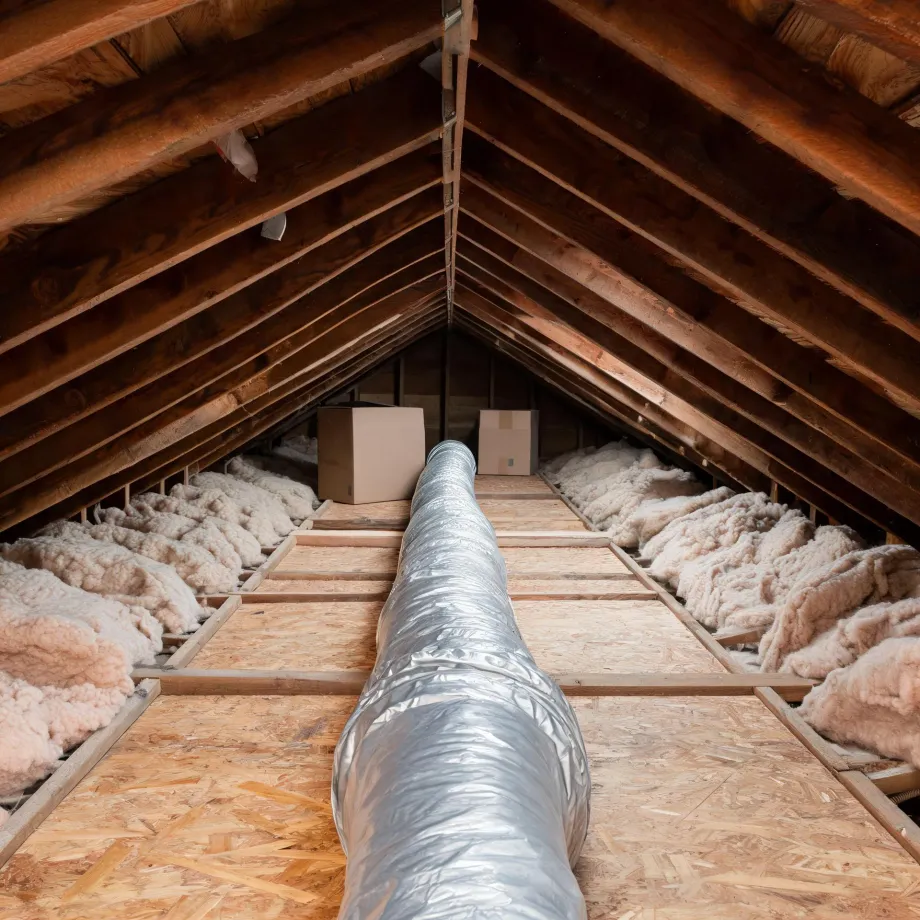
Ductwork and wiring aside, the variable that shapes a repair bill here is whether the components a contractor pulls from the unit can still be ordered. Half the homes in Caddo County, Oklahoma were built in 1972 or earlier (2020-2024 ACS 5-year). Equipment gets swapped out across decades while the house stands, so the system a contractor opens may be from any number of eras, each with its own parts ecosystem. Some of those ecosystems are still active. Others are not, and when a part is discontinued, the job price and the repair path both change.
The Parts of a Central AC a Contractor Checks First
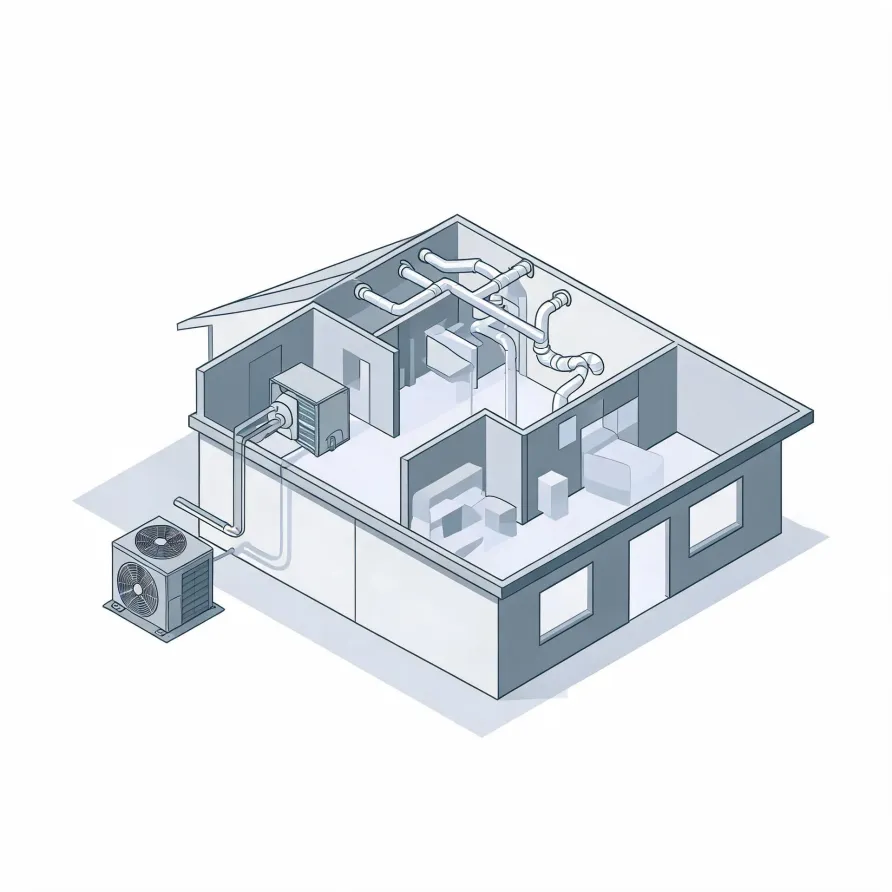
The outdoor condenser unit sits outside the house, usually on a concrete pad along a side or rear wall, and it carries the compressor and condenser coil. These are the pieces a contractor reaches first when the system stops cooling, runs constantly, or makes a noise it should not make. A failed compressor or a coil clogged with debris are among the first things on the list.
Inside the house, the air handler holds the evaporator coil and the blower. The evaporator coil is a common source of trouble when airflow drops or ice forms on the unit. The blower moves conditioned air through the supply side of the house, and its motor and capacitor get checked when airflow is weak or uneven. The refrigerant line set runs between the two units and is inspected for leaks whenever the system is low on refrigerant.
The drawing shows the general layout of a central AC system, and a licensed contractor determines which parts apply and what work is needed in your particular home.
Get matched in Caddo CountyCaddo County, by the numbers
242 severe weather events were recorded in Caddo County, Oklahoma between 2015 and 2024.
NOAA National Centers for Environmental Information, Storm Events Database, bulk CSV export, events 2015-01-01 through 2024-12-31.Half the homes in Caddo County, Oklahoma were built in 1972 or earlier (2020-2024 ACS 5-year).
U.S. Census Bureau, 2020-2024 American Community Survey 5-Year EstimatesCaddo County, Oklahoma holds 11,545 housing units (2020-2024 ACS 5-year).
U.S. Census Bureau, 2020-2024 American Community Survey 5-Year EstimatesOwners occupy 72.7% of the occupied homes in Caddo County, Oklahoma (2020-2024 ACS 5-year).
U.S. Census Bureau, 2020-2024 American Community Survey 5-Year EstimatesCodes & Standards for Central AC Repair in Caddo County, Oklahoma10 sourced rules and standards
What Happens When a Contractor Comes Out
Split-system central air conditioners rated below 45,000 Btu/h manufactured on or after January 1, 2023 must meet a federal minimum of 13.4 SEER2.
Split-system central air conditioners rated at or above 45,000 Btu/h manufactured on or after January 1, 2023 must meet a federal minimum of 13.4 SEER2.
Split-system central air conditioners manufactured between January 1, 2015 and December 31, 2022 had to meet 13 SEER, the metric that preceded SEER2.
Single-package central air conditioners manufactured on or after January 1, 2023 must meet a federal minimum of 13.4 SEER2.
Space-constrained central air conditioners manufactured on or after January 1, 2023 must meet a federal minimum of 11.7 SEER2.
Federal efficiency standards for split-system central air conditioners and heat pumps are set on each certified combination of outdoor unit and indoor coil rather than on the outdoor unit alone.
Residential and light commercial air conditioning and heat pump systems assembled in the field, including mini-splits and unitary systems, may not be installed on or after January 1, 2025 using a refrigerant with a global warming potential above 700.
A field-assembled system whose specified components were all manufactured or imported before January 1, 2025 carries no installation compliance date under the refrigerant restrictions and may still be installed.
What Caddo County, Oklahoma Requires for HVAC Repair Work
An Oklahoma mechanical licence is valid statewide, and a contractor licensed by a local authority who works only in that locality is not required to hold the state licence at all.
Oklahoma requires a Construction Industries Board licence for mechanical work: nobody may do or advertise mechanical work as a journeyman or contractor without the right licence.
Severe Weather Events in Caddo County
Weather puts real strain on central AC equipment, and strain that repeats year after year shortens the life of parts and raises the odds of a breakdown. How hard local weather runs a system is a local question, and what a contractor finds inside a unit in Caddo County reflects what the weather here has asked of it.
242 severe weather events, 2015–2024. Source: NOAA National Centers for Environmental Information, Storm Events Database.