






Sooner AC Cooling

AC tune-up before summer in Yukon, OK

Your air conditioner tune-up request goes to a pro who covers Canadian County.

Find my pro

Do I really need an AC tune-up before summer?

You've seen the flyers and the reminder calls, and you're wondering if a tune-up is a real need or just something contractors push every spring. Your AC worked fine last September when you shut it off for the year, so it's fair to ask what a visit now would actually change. In Yukon, summer runs long and the unit doesn't get much of a break once it starts.

Yes, especially here, where the AC runs for months without a break

A tune-up catches the small problems before they turn into a breakdown in July or August, when your AC is running most of the day and a failed part means waiting on a repair in the heat. Canadian County summers are long and muggy, and that stretch puts real strain on a unit that's been sitting idle since fall. Dirty coils, a low refrigerant charge, or a weak capacitor don't always show up right away. They show up as a system that struggles to keep the house cool or shuts off on the hottest afternoon. A spring check finds those issues while there's still time to fix them on your schedule instead of the contractor's next available slot during peak season.

An outdoor air conditioner condenser unit on a concrete pad beside a light-colored stucco wall, with horizontal siding and a small electrical box to the left and gravel at lower left.

What a tune-up actually checks

A contractor coming out before summer checks the refrigerant charge, tests the capacitor and contactor, and cleans the condenser coil outside. A dirty coil makes the system work harder to dump heat, and a weak capacitor can leave the compressor struggling to start on the first hot morning. These are the parts that sit outside through an Oklahoma winter collecting dust and cottonwood seed, and they're the parts most likely to cause a July breakdown.

A dark gray outdoor air conditioning condenser unit on a concrete pad beside a house with light siding and a stucco wall, with mulch and grass in the foreground.

Why this matters more here

Canadian County summers run long, often into October, so your AC logs more hours here than it would somewhere with a short summer. More run time means more wear on the same parts: the contactor making and breaking its connection, the fan motor bearings, the coil collecting debris. A system that's been checked before the heat sets in is less likely to fail on the week you need it most, and less likely to fail at all.

Why does my AC seem off before summer even starts?

A system that's been sitting since last September gives you a few clues before it struggles. The outside unit might run longer than it used to, cycling on and off more than you remember. You might notice the air coming from the vents isn't as cold as it was, or a room upstairs stays warm no matter how long the system runs. Sometimes there's a musty smell when it first kicks on, or a rattle from the condenser outside that wasn't there before. None of this means the system is done. It usually means something inside it, the coil, the charge, the capacitor, is already working harder than it should. Left alone through a Yukon summer, that strain is what turns a small problem into a breakdown in July.

An older man with gray hair and a beard, wearing a dark coat dusted with snow, stands smiling in a doorway of a warmly lit home with a sofa, lamp and window visible behind him.
An older man with grey hair and a beard, wearing a dark coat dusted with snow, stands in a dimly lit entryway with a ceiling lamp, a side table with two shaded lamps, and a lit fireplace visible in a room beyond.
A bearded older man in a dark snow-dusted coat and scarf stands just inside a home's front door, with a lamp-lit room and snowy window visible behind him.
An older man with gray hair and a beard stands in a doorway of a home, wearing a dark coat dusted with snow, with a lit fireplace and lamp visible in the blurred room behind him.

Matched to your air conditioner job

A licensed local pro takes the request for your air conditioner tune-up.

There's no charge for the request.

Get it checked before summer

A contractor comes out while the weather is still mild, checks the refrigerant charge, tests the capacitor and contactor, and cleans the condenser coil before the first hot stretch hits. If something's wearing thin, you find out on a cool day in April, not during a 95 degree afternoon in July. Scheduling is easier too, since contractors aren't buried in emergency calls yet. A local contractor who works on these systems all season knows what tends to fail first in a unit that's been sitting all winter, and catching it now usually means a simple fix instead of a breakdown.
Wait and see what happens

You skip the tune-up and just turn the AC on when you need it. Most of the time it runs fine, and you've saved yourself a visit. But if the capacitor was already weak or the coil was dirty, you won't know until the unit is working hardest, in the middle of a stretch of Oklahoma summer heat with the house full of family. That's also when every other AC in Canadian County is calling for help at once, and a same-day appointment gets harder to land. The system still runs either way. The question is whether you find the weak part before it fails or after.

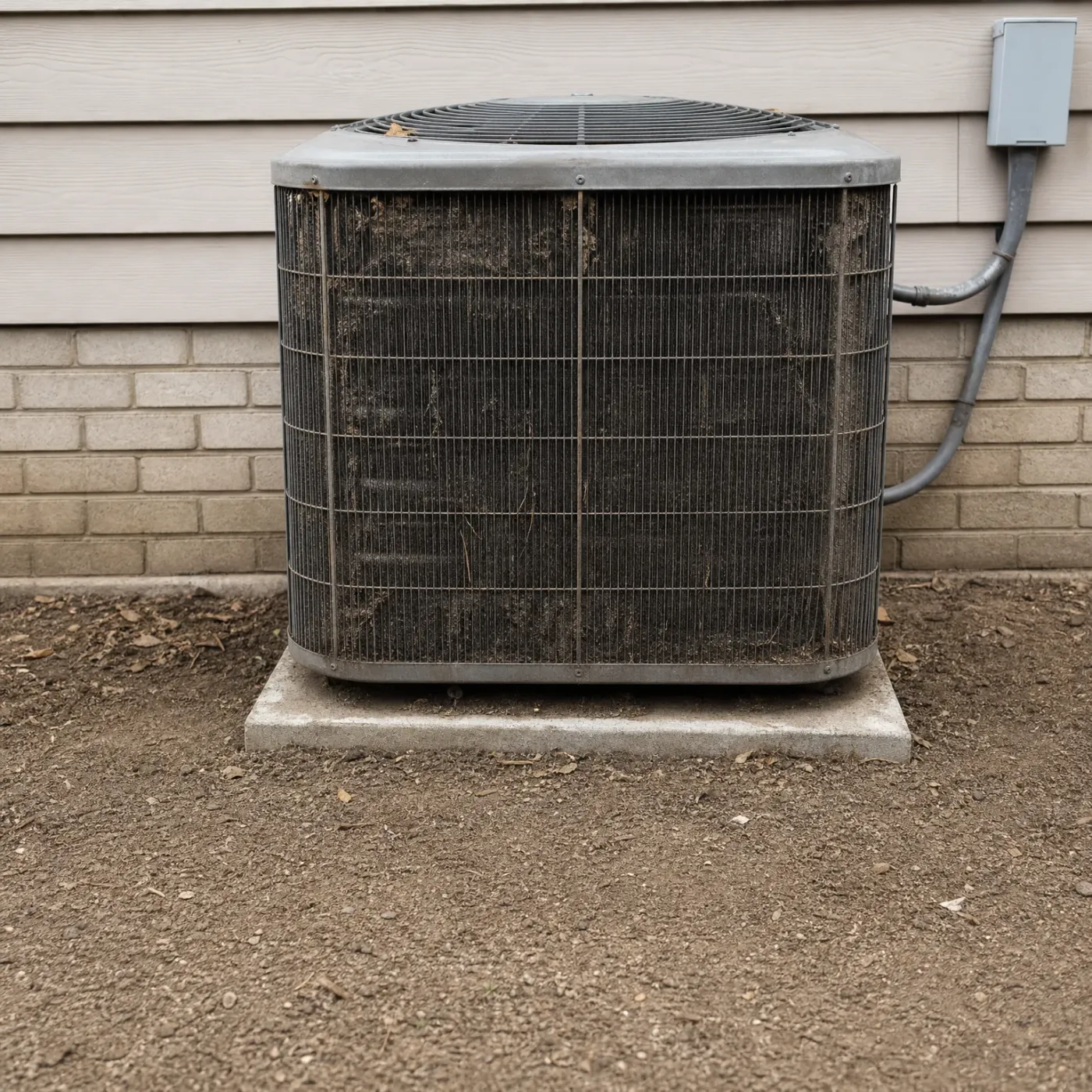
A dirty outdoor air conditioning condenser unit on a concrete pad beside a house wall with horizontal siding above a painted brick foundation, with a gray electrical disconnect box and conduit on the wall.
Before you get your air conditioner maintenance
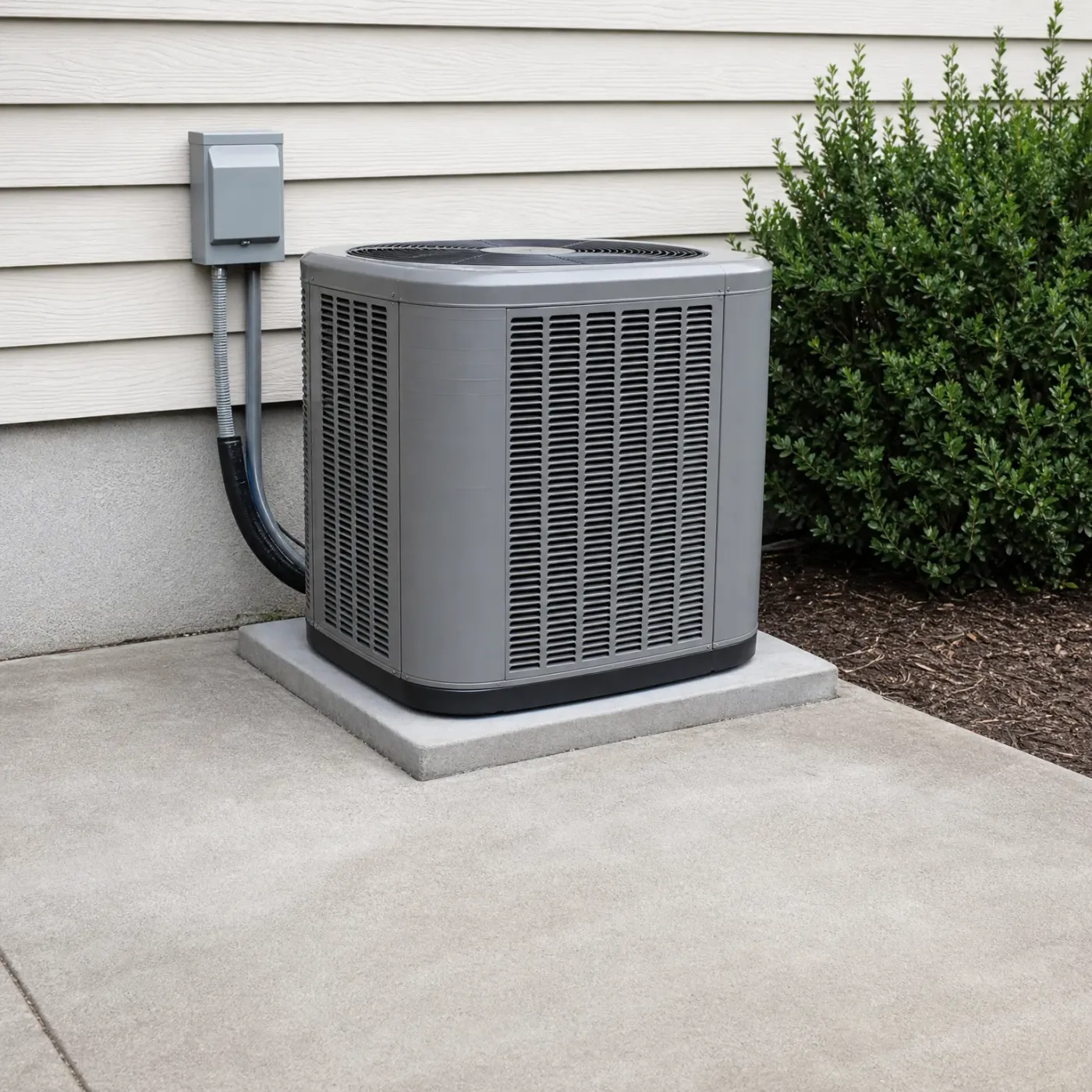
A gray outdoor air conditioning condenser unit on a concrete pad beside a house with horizontal lap siding, with a wall-mounted disconnect box and conduit to the left and a green shrub with mulch to the right.
After you get your air conditioner maintenance

Your outdoor unit has been sitting since last fall, collecting pollen and whatever the wind blew through the yard. Before the first hot stretch, a contractor works through it in order. Gauges go on the lines to check the refrigerant charge, because even a little low and the compressor runs longer than it should to cool the same house. The capacitor gets tested under load, since a weak one lets the compressor or fan motor strain to start, and that strain is what ends a motor early. The coil gets hosed off so it can shed heat the way it's supposed to. Inside the contactor, the switch that turns the outdoor unit on and off, a contractor looks for pitting, because a stuck contactor can leave the unit running long after the house is cool. Airflow across the indoor coil gets checked too, since a blocked filter or a tired blower can let that coil ice over on a hot afternoon. Connections at the outdoor disconnect get snugged down, since a loose one is a common reason an AC stops cooling in the middle of summer.

What's Actually Happening Out There

  • A contractor checks refrigerant charge with gauges, since even a small undercharge forces the compressor to run longer for the same cooling.
  • The capacitor gets tested under load because a weak one can let the compressor or fan motor start hard and wear out early.
  • The condenser coil gets cleaned of the pollen and grass clippings it collected sitting outside since last fall.
  • The contactor gets checked for pitting, since a worn contactor can stick and leave the outdoor unit running even after the thermostat is satisfied.
  • The blower motor and the return filter location get checked, because restricted airflow across the indoor coil can lead to it icing over on a hot day.
  • Electrical connections at the outdoor disconnect get tightened, since a loose connection there is a common cause of a no-cool call in July.
A woman wrapped in a thick cream knit blanket sits in an armchair beside a lit table lamp, with an open book in the foreground and a frost-covered window behind her.
A woman in a cream knit sweater sits in an armchair with her eyes closed and head tilted back, beside a window showing orange autumn foliage and a wooden side table with a mug.

Cooling runs May through September

Five months is a long stretch to ask one system to keep up, month after month, without a break. That's most of the year your AC is either running or about to be. A unit that sat idle since fall needs a check before it's asked to do that again.

NOAA nClimDiv 1991-2020

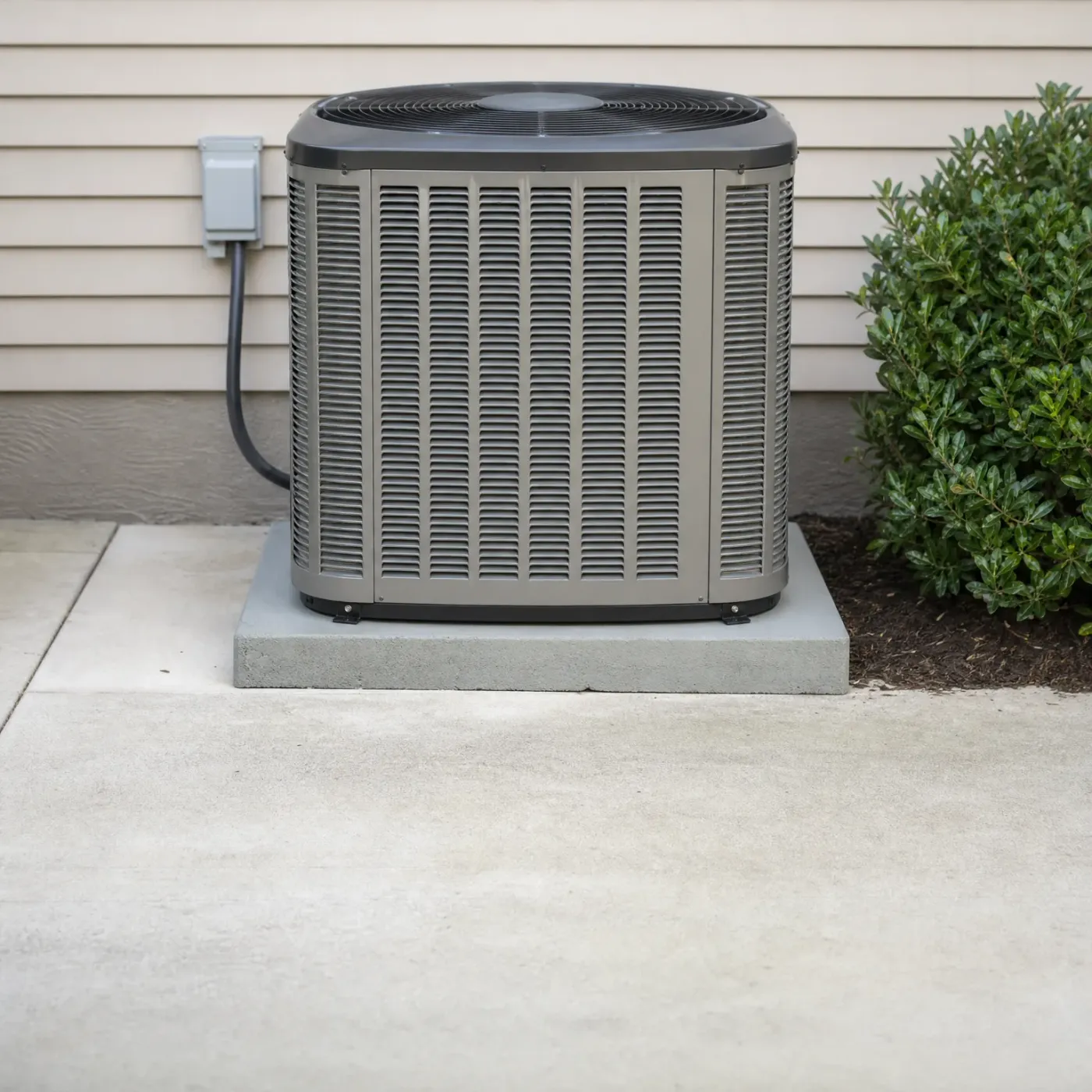
An outdoor air conditioning condenser unit on a concrete pad beside a house with horizontal lap siding, with an electrical disconnect box and conduit on the wall and a green shrub to the right.

Clean coil, clear airflow

This is what a condenser should look like going into summer. The louvered panels are clear, the fan grille is clean, and nothing is blocking the airflow it needs to dump heat outside. Air moves through it the way it was built to.

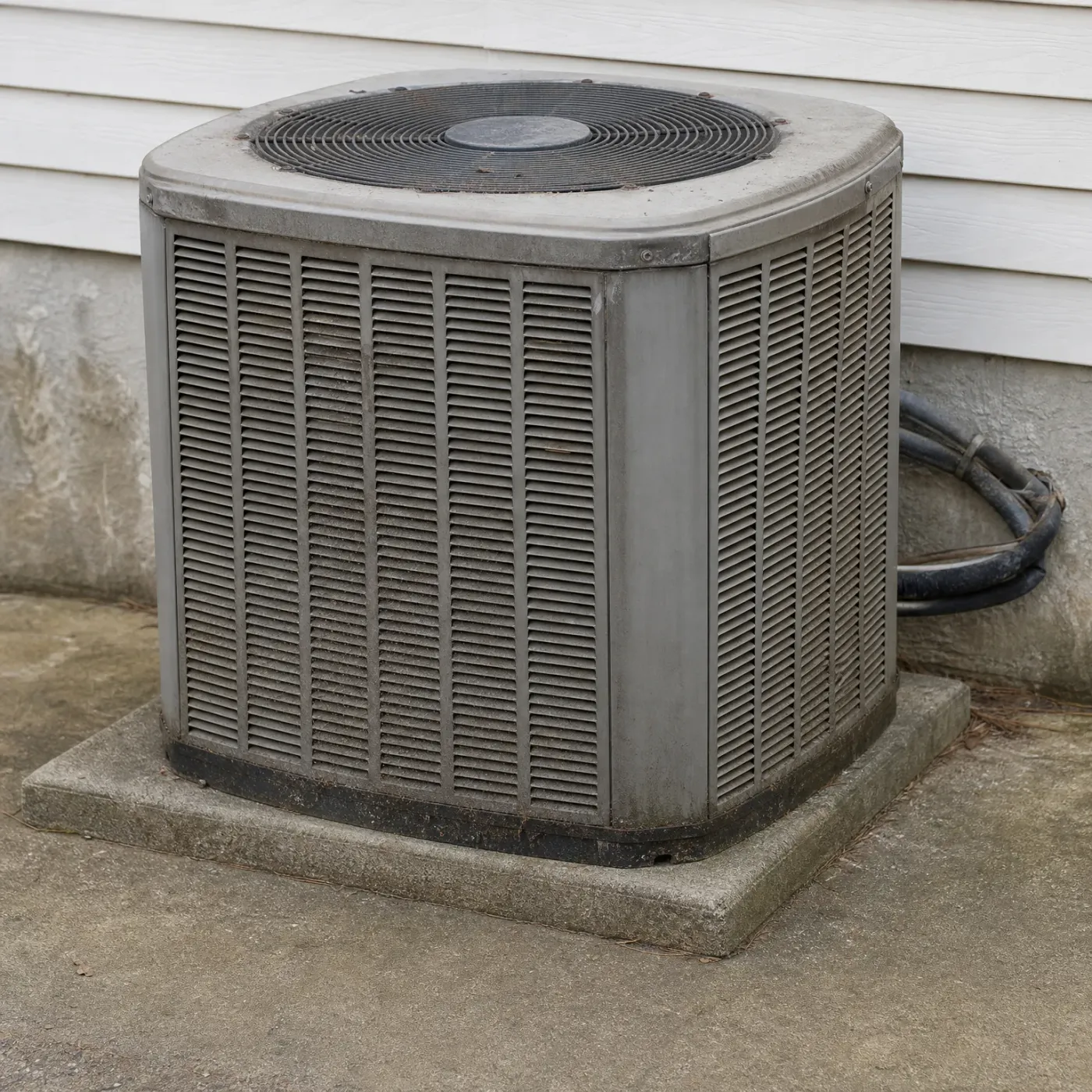
An outdoor air conditioner condenser unit on a concrete pad beside a house with horizontal siding and a lower concrete foundation wall, with coiled refrigerant lines at right.

Dirt builds up over winter

Sitting since last fall, this unit has caked dirt across the panels and the top grille. That buildup makes the coil hold onto heat it should be releasing, so the compressor runs longer to cool the same house. A contractor can clean this before the heat sets in.

A woman stands in the open front doorway of a single-story house with stone and wood siding while a man in a dark polo shirt and cap walks toward it along a concrete path.

So, yes, get it looked at before summer

An AC tune-up before summer in Yukon isn't a flyer gimmick. It's a check on a system that's been sitting idle since last fall and is about to run for five months straight. The refrigerant charge, the capacitor, the coil outside, all of it either holds up under that or it doesn't, and you'd rather find out in April than in July.

From here, the next step is getting matched with a licensed contractor who works in Canadian County and services this kind of equipment all season. You'll hear from one contractor, not several, so you're not fielding a round of calls to sort out who's worth talking to. They'll know what tends to go wrong on a system that's sat idle all winter, and they'll tell you straight what yours needs before the heat sets in.

A speckled beige ceramic vase holding thin dried branches sits on a round wooden table near a window with sheer curtains, with a dark upholstered chair and draped blanket blurred in the background.
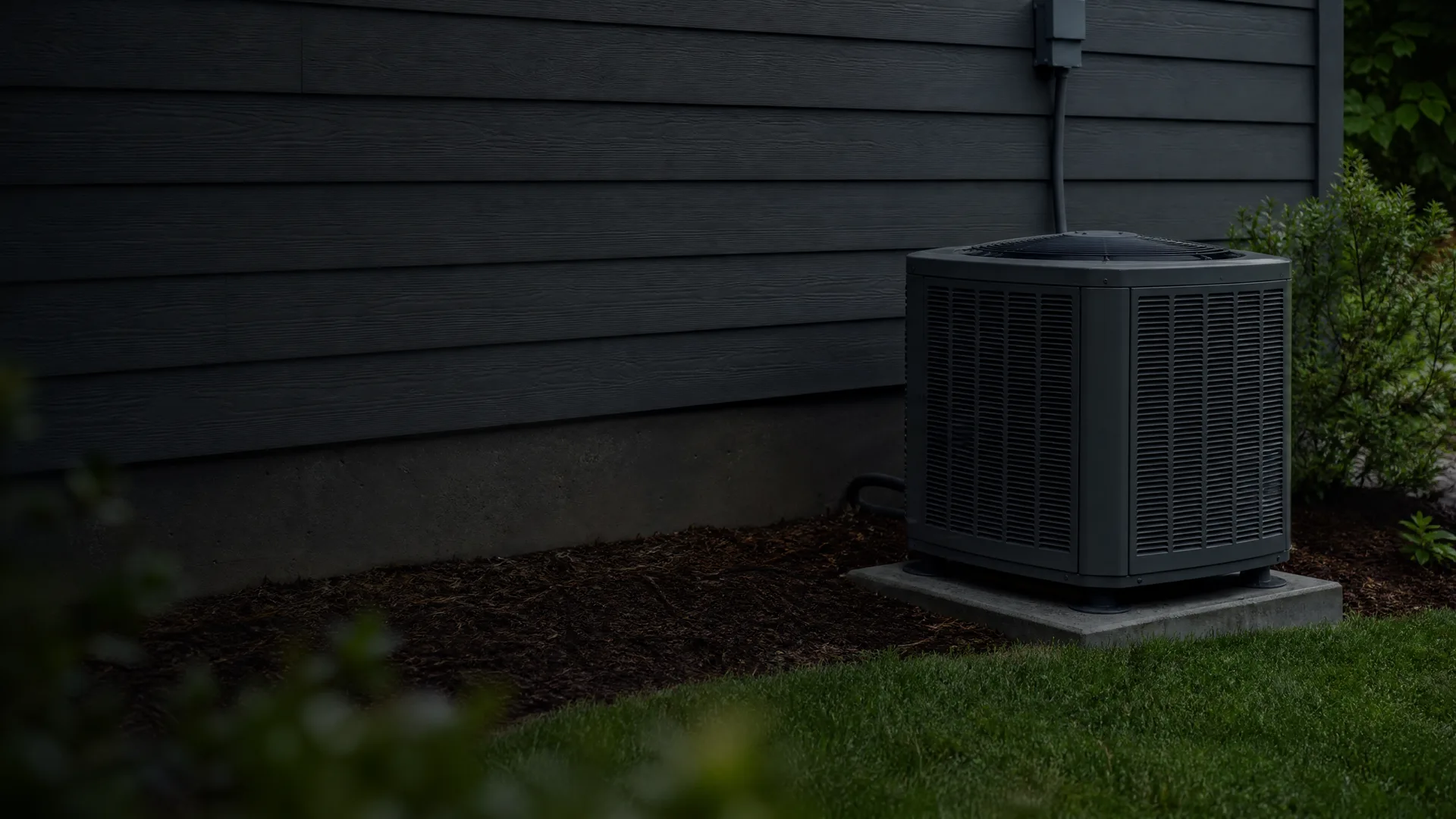
An outdoor air conditioner condenser unit sits on a concrete pad beside a dark horizontal-lap-sided house, with mulch, grass, and shrubs around it.

An air conditioner pro near you

The pro who gets in touch is licensed in Oklahoma and works in Canadian County.

Step 1 of 3: Equipment