Sooner AC Cooling

AC unit frozen up in Stillwater, OK

Request a pro

A frozen AC unit means ice on the coil or lines, and the system needs to come off and thaw before anyone can tell you why it iced up in the first place. It could be low refrigerant, a dirty filter choking airflow, or a blower that's not pulling air the way it should. Stillwater summers run hot and long, and a frozen unit usually means no cooling at all until someone sorts out the cause. Guessing which one it is, then calling around Payne County to find someone who can look at it, is time you don't have when your house is sitting there warm. Answer a few questions about your system and your AC unit, and you'll be matched with a contractor who handles frozen units in this area. They'll reach out to you directly. No searching through listings, no explaining the problem over and over to different shops, no sorting through quotes on your own. Just a straight path to someone who can look at your unit and tell you what's going on.

Ice on the coil usually means airflow is restricted somewhere, or the system is low on refrigerant. Either one drops the coil temperature below freezing, and once ice starts forming it builds on itself, blocking more airflow and making the problem worse. A dirty filter is the most common cause, since it starves the blower of the air it needs to keep the coil warm enough. Running the AC with low refrigerant does the same thing, but that points to a leak somewhere in the line set. With Stillwater summers running hot and humid for months at a stretch, an AC that's already working hard has little room for something cutting its airflow or charge, and it freezes up faster than it would during a mild stretch of weather. Either way, the system needs to shut off and thaw completely before a technician can see the coil and lines clearly enough to find out which one caused it.

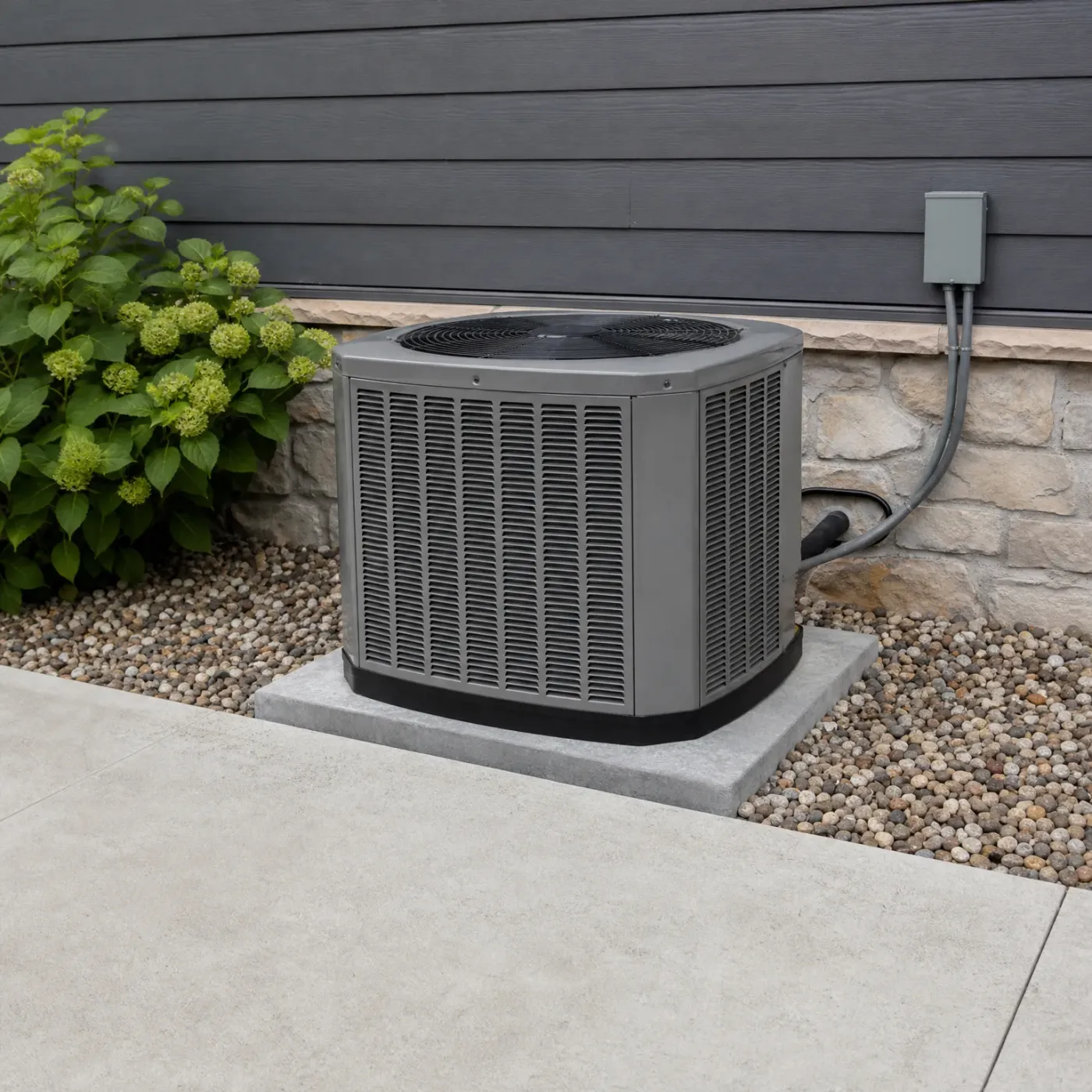
A gray outdoor air conditioner condenser unit on a concrete pad beside a house with dark horizontal siding and a stone base, surrounded by gravel, with a flowering shrub at left and a concrete walkway in front.

Running the way it should

No ice, no frost, just steady cold air coming out of the vents. The coil stays well above freezing because air is moving through it the way it was designed to. This is what lets the system cool your house instead of fighting itself.
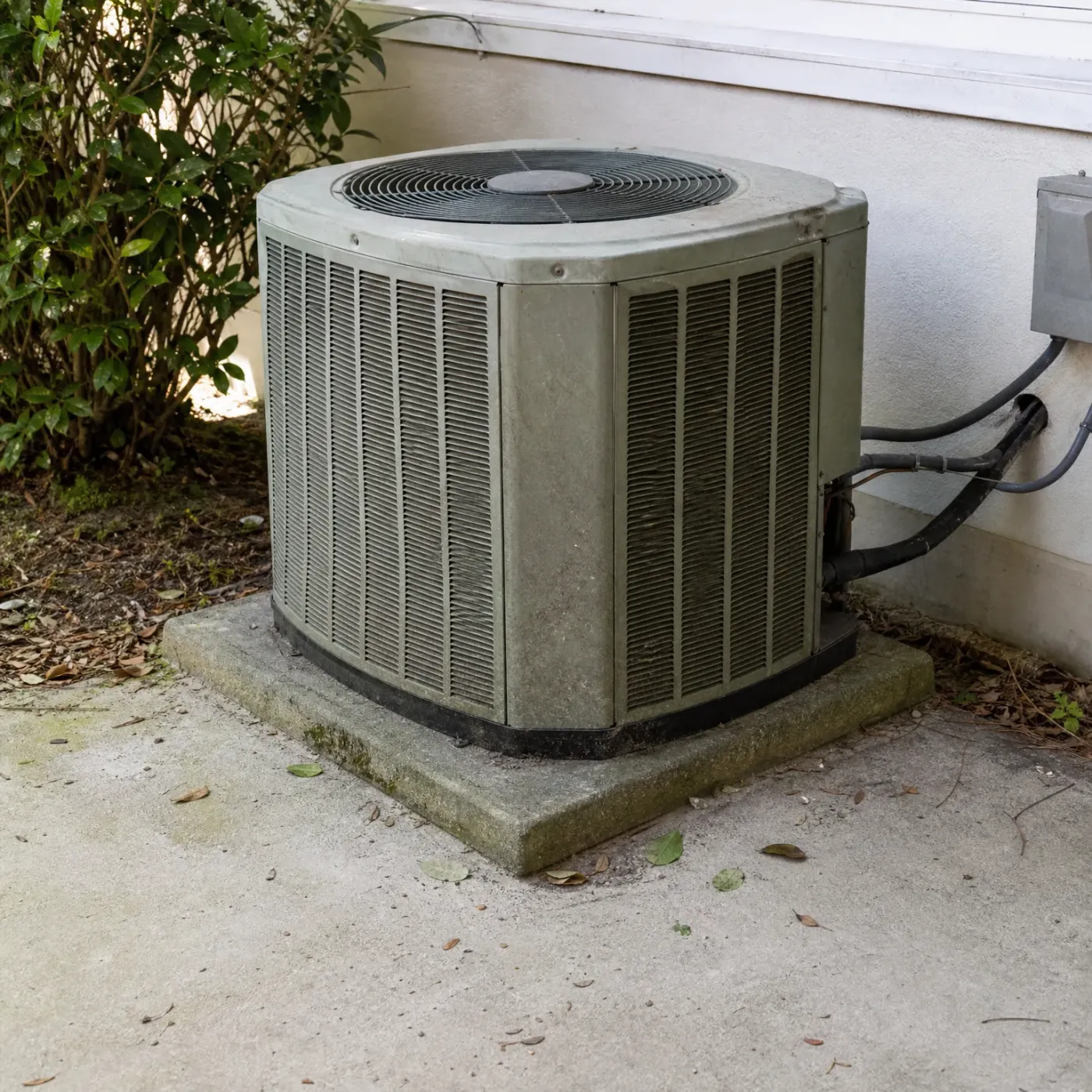
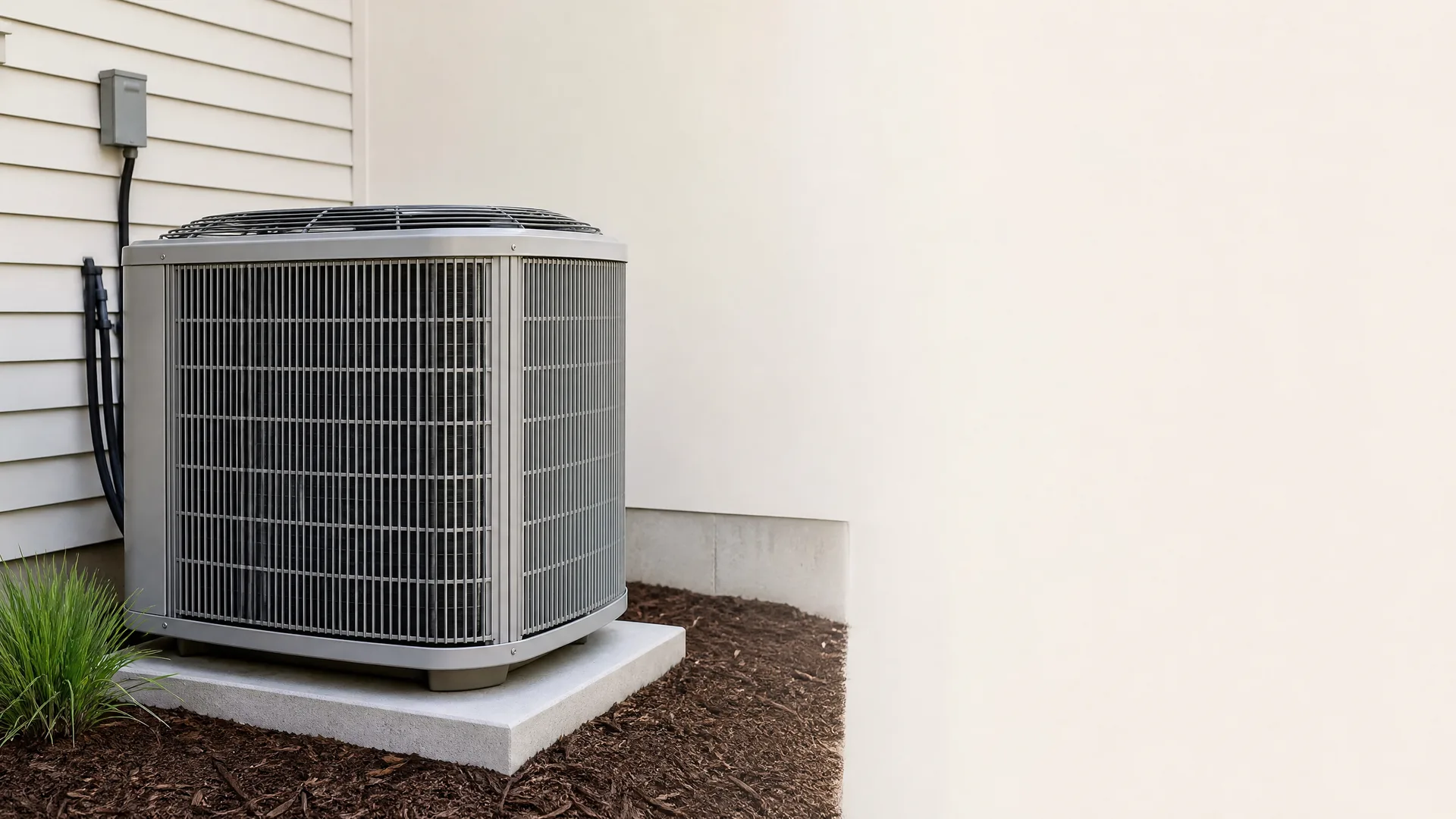
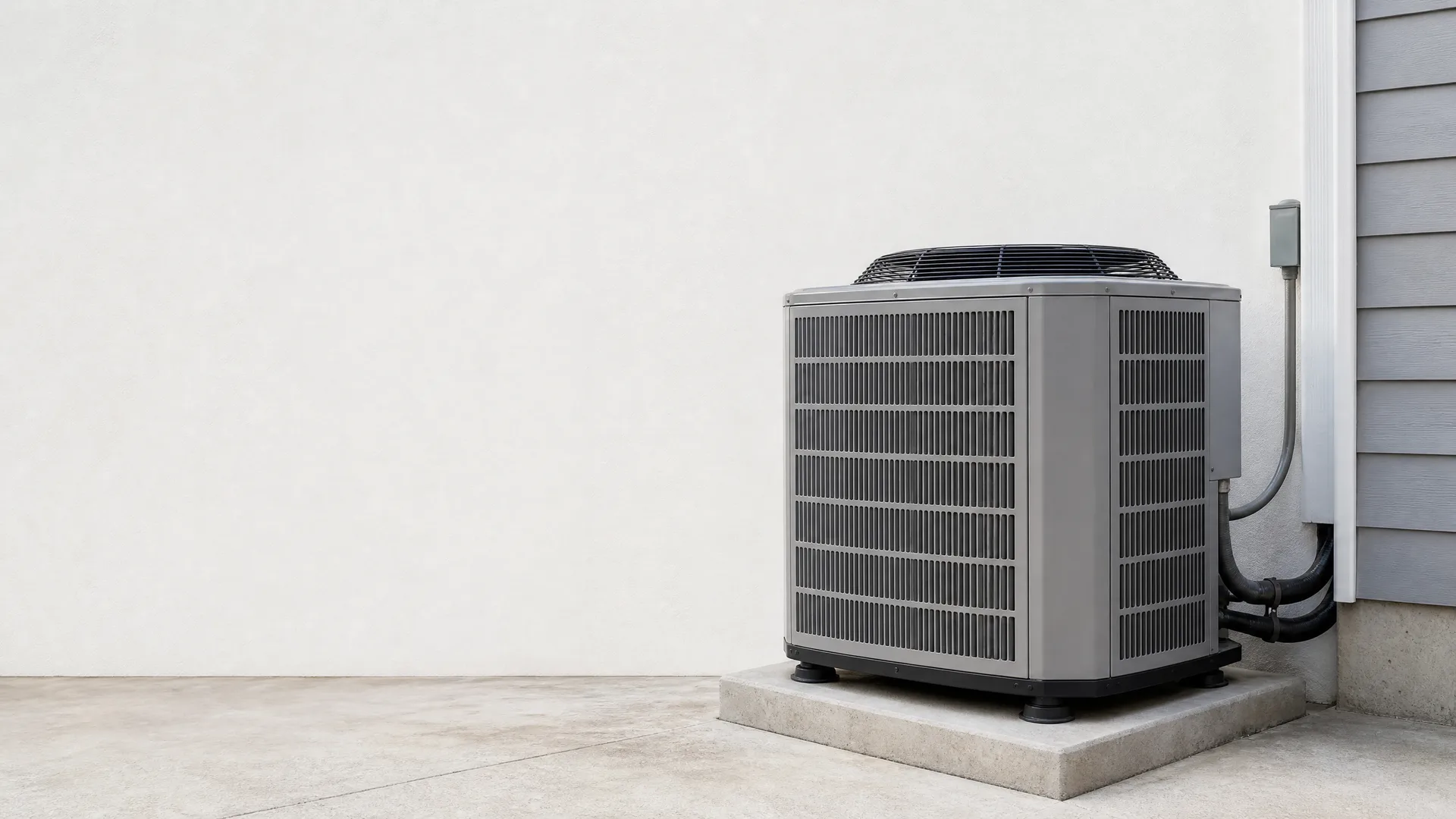
An outdoor air conditioner condenser unit sits on a concrete pad beside a stucco wall, with refrigerant lines and conduit running to the wall and a shrub to the left.

Iced over and losing ground

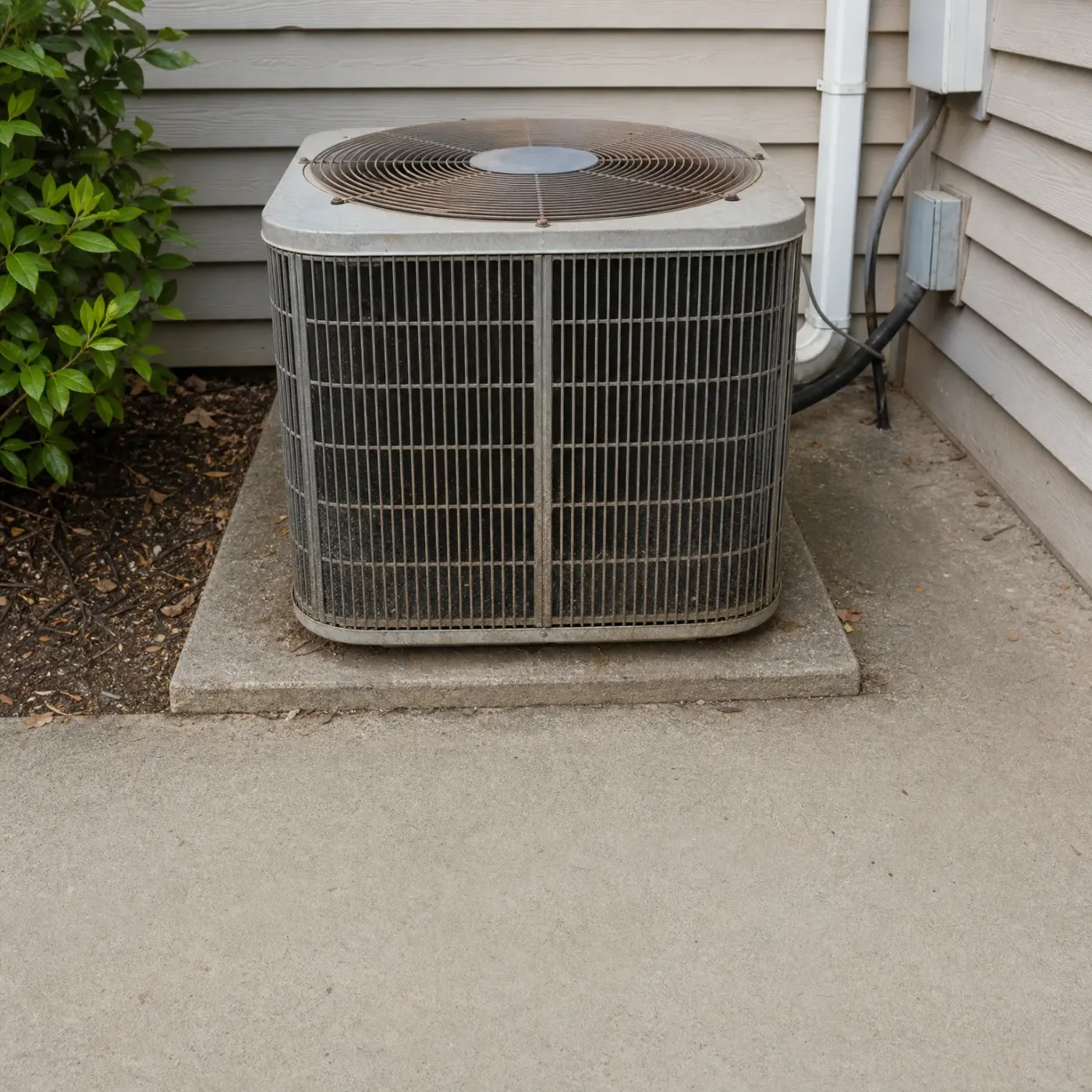
Frost spreads across the fins and the lines running into the wall, and grime builds up along with it. Airflow gets worse the longer this sits, and the unit works harder for less cooling until something gets fixed.

Shut It Off or Keep Running It

Shut it off now

  • Switch the thermostat to off and set the fan to on, so the blower can move air across the coil and speed up the thaw.
  • Running the compressor while the coil is iced makes the ice thicker and can push liquid refrigerant back into the compressor.
  • A frozen coil can take a few hours to thaw fully, and the water has to go somewhere, so keep towels down near the indoor unit.
  • Pull the filter and look at it while you wait. A gray, matted filter is choking off the airflow the coil needs to stay above freezing.
  • Check that every supply vent in the house is open and not blocked by furniture or rugs, since closed vents restrict airflow the same way a dirty filter does.
  • Once it's thawed and running clean air again, a contractor still needs to find out why it iced up before you turn the AC back on for good.

Keep running it

  • Ice builds on ice. The longer the coil stays below freezing, the thicker it gets and the less air gets through it.
  • A compressor forced to run against a blocked coil works harder than it was built to, and that strain doesn't reverse itself once the ice melts.
  • Liquid refrigerant can return to the compressor instead of vaporizing first, which is the kind of damage that doesn't show up until the compressor fails outright.
  • You lose cooling either way. Ice on the coil means warm air coming out of the vents no matter how long the system runs.
  • Whatever caused the freeze, low refrigerant, a dirty filter, a weak blower, is still there and gets worse the longer the system runs on top of it.
  • Letting it run through the freeze usually turns a repair into a bigger one, and sometimes into a compressor replacement.
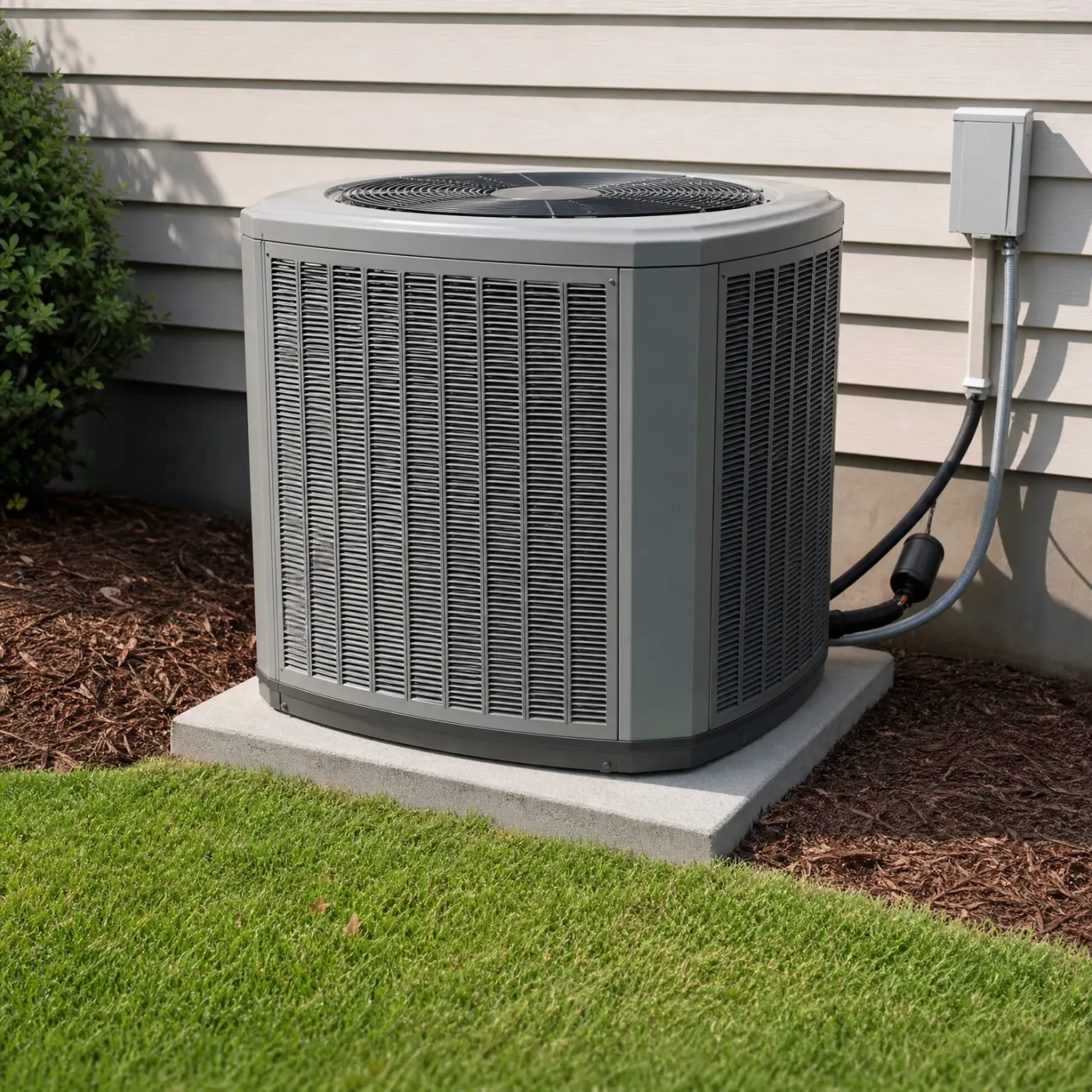
An outdoor air conditioner condenser unit on a concrete pad beside a house with horizontal lap siding and a light stucco wall, surrounded by dark mulch and an ornamental grass.

Why a frozen coil spreads fast

A coil only has to drop a few degrees below freezing before moisture in the air starts turning to frost on contact. That frost is itself an insulator, so it slows the coil down further and more frost builds on top of it. Within a few hours what started as a thin white layer can turn into a solid block of ice wrapped around the lines. The longer it runs iced up, the longer the thaw takes.

An outdoor air conditioning condenser unit on a concrete pad beside a light stucco wall, with a disconnect box and refrigerant lines running to adjacent lap siding.

What the ice hides from view

Once ice covers the coil, you can't see the fins underneath it, so a technician can't tell by looking whether they're caked with dust or clean. The same goes for the refrigerant lines. That's the reason a full thaw has to happen before any diagnosis means much. In Stillwater's humid summer stretch, a coil that's iced over and left alone can take most of a day to clear on its own with just the blower running.

How long does it take for a frozen AC unit to thaw out?

You've shut the system off and switched the fan to on like you're supposed to, and now you're just waiting. With Stillwater summers running long and muggy, every hour the AC sits off is an hour the house warms back up, so you want a real sense of how long this takes before you start checking back in.

Plan on several hours, sometimes overnight

A light coating of frost might clear in an hour or two. A coil that's built up a thick layer of ice, especially around the lines, can take 12 to 24 hours to melt completely. The fan moving air across the coil speeds this up, but it's still just air at room temperature doing the work, not heat. Checking on it every hour and switching the system back on too soon is the mistake to avoid here. If ice is still visible anywhere on the coil or the lines, it needs more time. Running the compressor against leftover ice undoes the thaw and risks the same liquid refrigerant problem you were trying to prevent by shutting it off.

A gray outdoor air conditioner condenser unit on a concrete pad beside a house with horizontal lap siding, with a wall-mounted disconnect box and conduit, mulch bed, shrub, and lawn nearby.

Working the way it should

The condenser sits on its pad against the siding, lines running clean up the wall to the disconnect box. No frost anywhere on it. It cycles on, runs, and shuts off again, and the air coming through your vents stays cold the whole time.

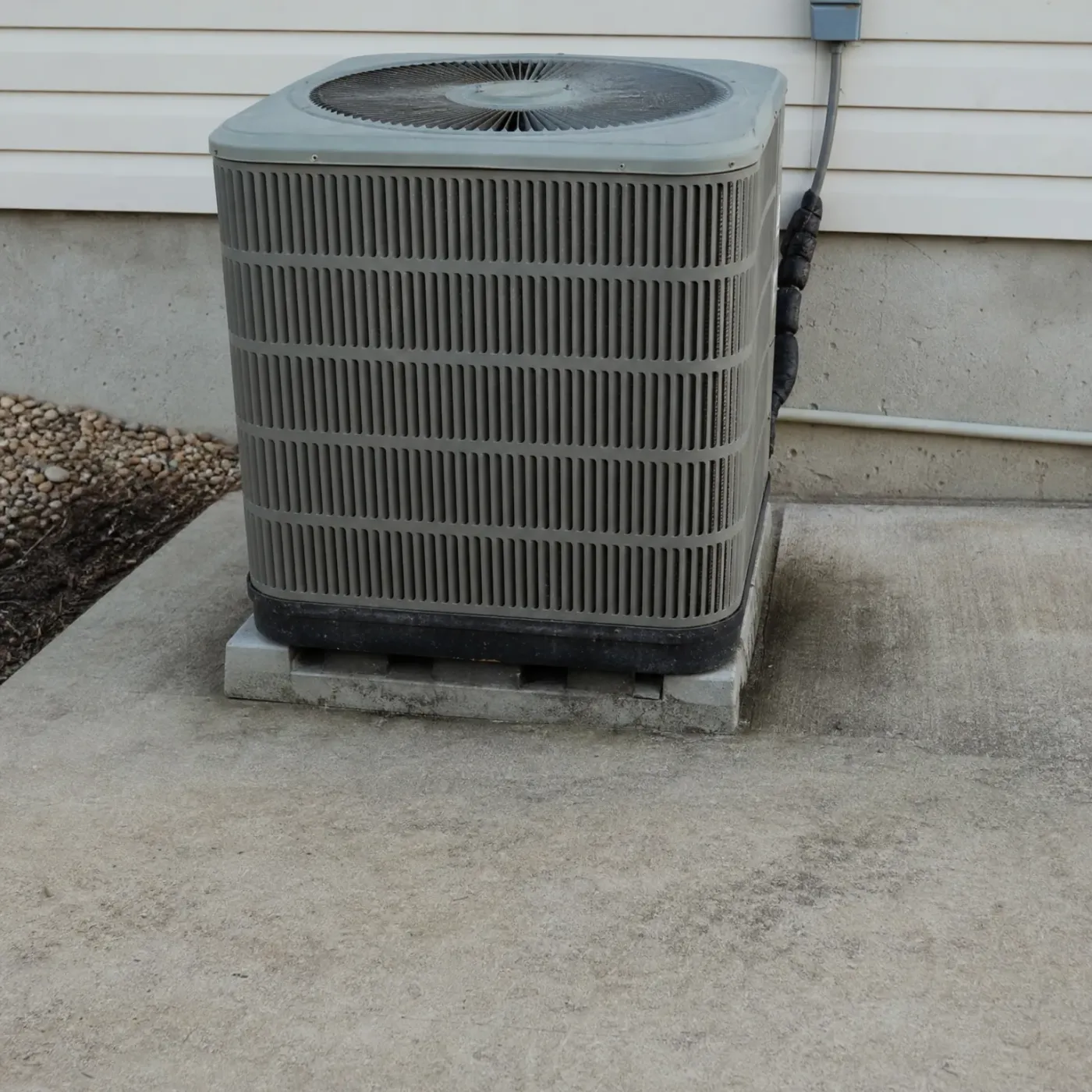
An outdoor air conditioner condenser unit sits on a gray pad beside a light vinyl-sided wall, on a concrete slab next to a gravel bed.

Iced up and not cooling

Frost or solid ice is sitting on the lines where they run up the wall, maybe on the unit itself. The compressor might still be running, but with ice on the coil it isn't moving the heat out of your house anymore. It needs to come off and thaw before a contractor can see what's actually wrong.

A bearded man in a plaid flannel shirt stands indoors looking out a frost-covered window, with a steaming dark blue mug on the wooden sill and snow-covered trees outside.
A man in a blue T-shirt sits on a light gray sofa, laughing while looking at an open laptop in the foreground, with a framed picture, lamp and potted plant behind him.

Get matched with an air conditioner pro in Payne County

Once that coil is thawed and the system's run a cycle or two, you still need someone to find out why it iced up, and a frozen coil can mean three or four different things underneath it. Guessing wrong means paying for a filter change when the real problem is a slow refrigerant leak, or vice versa, and the ice just comes back in a few days. A Stillwater summer doesn't leave much room for that kind of trial and error with the heat running into October. Normally that means calling around, explaining the ice, the thaw, what you've already tried, and doing it again with the next company until someone can get out to you. Here you do that once. Tell them what happened and what you've already done to shut it down safely, and a contractor who covers Payne County takes it from there. Your part is done once you hand it off, and the house gets back to cooling the way it's supposed to.

What an ice-up costs you in July

A frozen coil in the middle of an Oklahoma summer means no cold air while it thaws, and that thaw can take hours. If the ice formed because of a dirty filter or low refrigerant, the system was already working harder than it should have to keep your house cool, and that shows up on your power bill before you ever see frost. Run it frozen long enough and liquid refrigerant can back up into the compressor, which is a far more expensive repair than whatever caused the ice. The sooner it's looked at, the less likely a cheap problem turns into one.

What you're trying to avoid

Nobody wants to spend a Saturday calling around Stillwater for someone who can look at a frozen unit, explaining the same thing to every shop that picks up, then sitting with quotes trying to guess who's being straight with you. That's the part that eats a day while your house sits warm. Getting matched with a contractor who handles this and has them reach out means you explain it once and wait for the call instead of making a dozen. You still need someone out to find why it froze, since a filter change won't fix a refrigerant leak and a recharge won't fix bad airflow.

A woman in a cream cowl-neck sweater sits by a window with snow outside, in a dimly lit living room with a sofa, lit lamp, mirror, candles and a fireplace.
A woman in a gray turtleneck sweater sits beside a large window looking out at snow-covered evergreen trees, in a dimly lit living room with a lit fireplace, lamps, couch and houseplant.
A woman in a cream turtleneck sweater stands beside a large window with snow-covered ground and bare trees outside, in a dimly lit living room with lamps, a sofa and framed art.
A woman in a grey cowl-neck sweater stands indoors near a window, looking out at falling snow, with a lamp, framed picture and couch in the warmly lit room behind her.
A two-story house with beige horizontal siding, stone veneer at the base, dark shingled gable roofs and a concrete walkway leading to the front door, set behind a patchy green lawn under a clear blue sky.

That dew point you feel the second you step outside in July is also working against your AC indoors. In Payne County, summer air holds a dew point around 66°F on average, according to NOAA climate data, and air that heavy carries a lot of moisture for the coil to pull out. Every pound of that moisture the system removes is extra load on top of just cooling the air. Run the fan at low speed, a dirty filter, or a system that's already short on refrigerant, and that extra moisture load is what tips a coil into icing over instead of just running cold.

NASA POWER T2MDEW

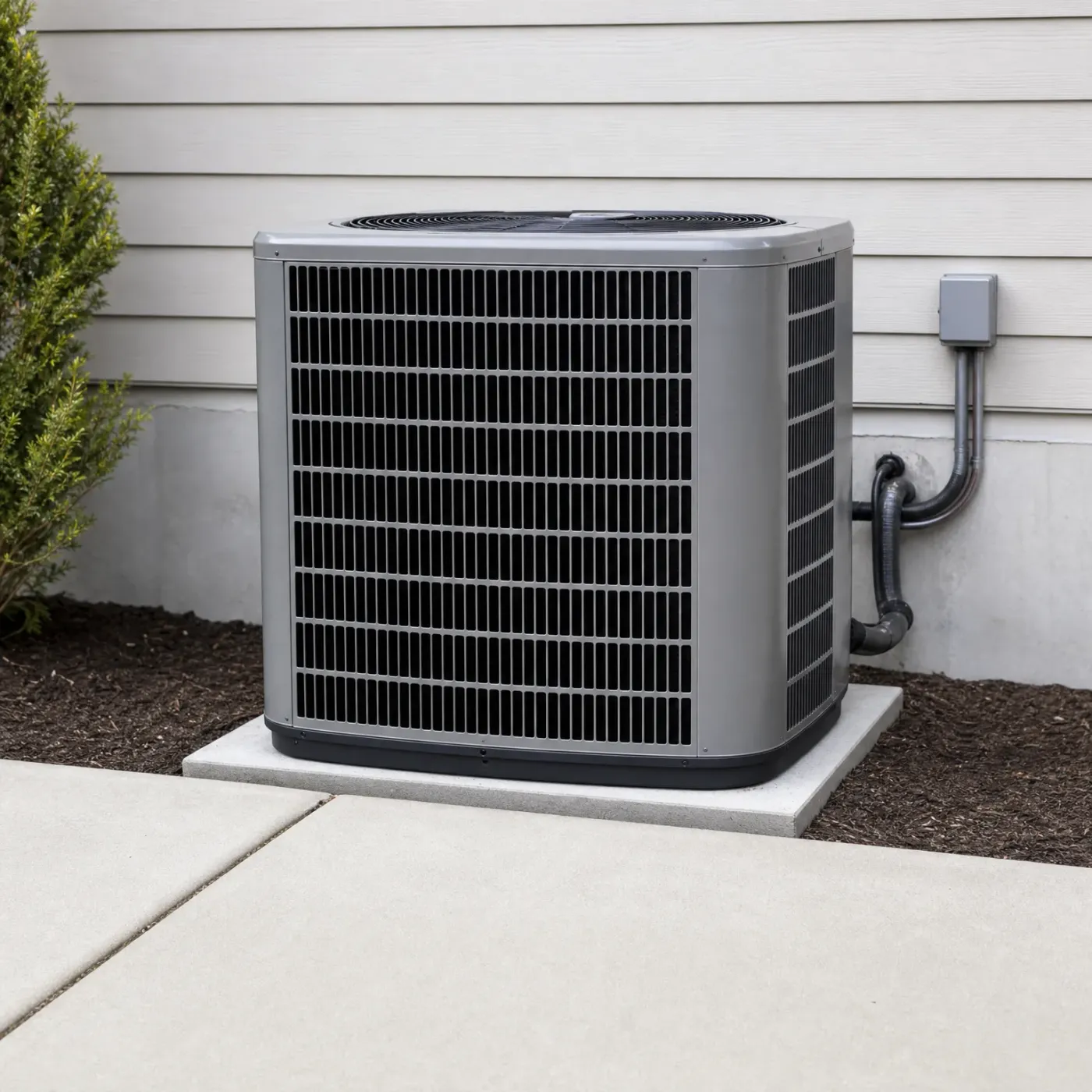
A gray outdoor air conditioner condenser unit sits on a concrete pad beside a house with horizontal lap siding, with conduit and an electrical disconnect box on the wall, dark mulch and a shrub to the left, and a concrete walkway in the foreground.
Clean coil, clear airflow, nothing frozen anywhere on the unit or the lines running to the house.
An outdoor air conditioning condenser unit on a concrete pad beside a house with horizontal lap siding, with a shrub and mulch bed to the left and conduit and a small electrical box on the wall to the right.
Dirt packed into the grilles chokes the airflow this unit needs, and that's how a coil starts icing over.

Cooling runs May through September

Five months of cooling a year means your AC gets five months to fail, and ice on the coil tends to show up on the hardest-working days in July and August. A unit that freezes once in a long summer is worth watching the rest of the season.

NOAA nClimDiv 1991-2020

Where this leaves you

  • Ice on the coil almost always traces back to blocked airflow or low refrigerant, nothing more mysterious than that.
  • Thawing the unit never fixes what caused it to freeze, it only clears the ice so a tech can see the real problem.
  • Letting it freeze and thaw over and over without a diagnosis usually ends with a bigger repair or a dead compressor.
  • Finding a contractor who can get out to a Payne County address this week beats calling shop after shop yourself.
  • Explaining the same story to three different companies just to compare quotes takes time you don't have in a July heat wave.
  • Once it's matched and diagnosed, you'll know whether you're looking at a filter, a charge, or a blower problem, not guessing.

A frozen AC unit comes down to one of two things: something is blocking airflow, or the system is low on refrigerant. You've thawed it, or you're about to, and that part is just waiting it out with the fan on. The ice itself was never the problem, it was a symptom of whatever caused it, and that part doesn't go away on its own. Leave it alone and the same ice shows up again the next hot day, and each time the compressor runs with a restricted coil or a low charge, it's working harder than it should. A few rounds of that and you're not looking at a filter swap anymore, you're looking at a compressor that's failed outright, in a Payne County July where the house heats up fast without it.

What actually changes once you're matched with a contractor is what you don't have to do anymore. You're not calling three or four shops, telling each one the same story about ice on the coil, waiting on callbacks, and lining up quotes to see who can even get to your address this week. That part of it is the slow part, not the repair itself. Once someone's out there with gauges and a look at the airflow, you'll know if it's the filter, the charge, or the blower, and you'll know it from someone who's looked at the unit instead of guessed at it over the phone.

An outdoor air conditioning condenser unit on a concrete pad beside a dark stucco wall, with gravel bedding, shrubs, an ornamental grass clump, and a lawn in the foreground.

Find an air conditioner repair pro in Payne County

Skip calling shops to ask who repairs air conditioners in Payne County.

Step 1 of 3: Equipment