





Profile view of a bearded man wearing a dark green baseball cap and a dark gray T-shirt against a plain light background.

Central AC or mini split for an Oklahoma home

Step 1 of 3: Equipment

Should I get central AC or a mini split in Oklahoma?

You're weighing central AC against a mini split for your Oklahoma home, probably because you're building, replacing a dead unit, or trying to cool a room the main system never handles well. Oklahoma summers get hot and sticky for months at a stretch, so whatever you pick has to keep up. The right choice usually comes down to what's already in your house and what you're actually trying to fix.

Central AC for the whole house, a mini split for problem rooms or additions

If your home already has ductwork, central AC is almost always the better fit. Oklahoma summers push humidity and heat for months, and a central system is built to pull both down evenly across every room. Most homes here heat with gas, and a central AC pairs with that furnace to share the same ducts and the same thermostat, which keeps things simple. A mini split earns its place when there's no ductwork to work with, like a converted garage, a sunroom, or an addition, or when one room always runs hotter than the rest no matter what the main system does. It cools that one space directly without touching the rest of the house. The two aren't really competing. Most Oklahoma homes end up using central AC for the house and a mini split only where it solves a problem central air can't reach.

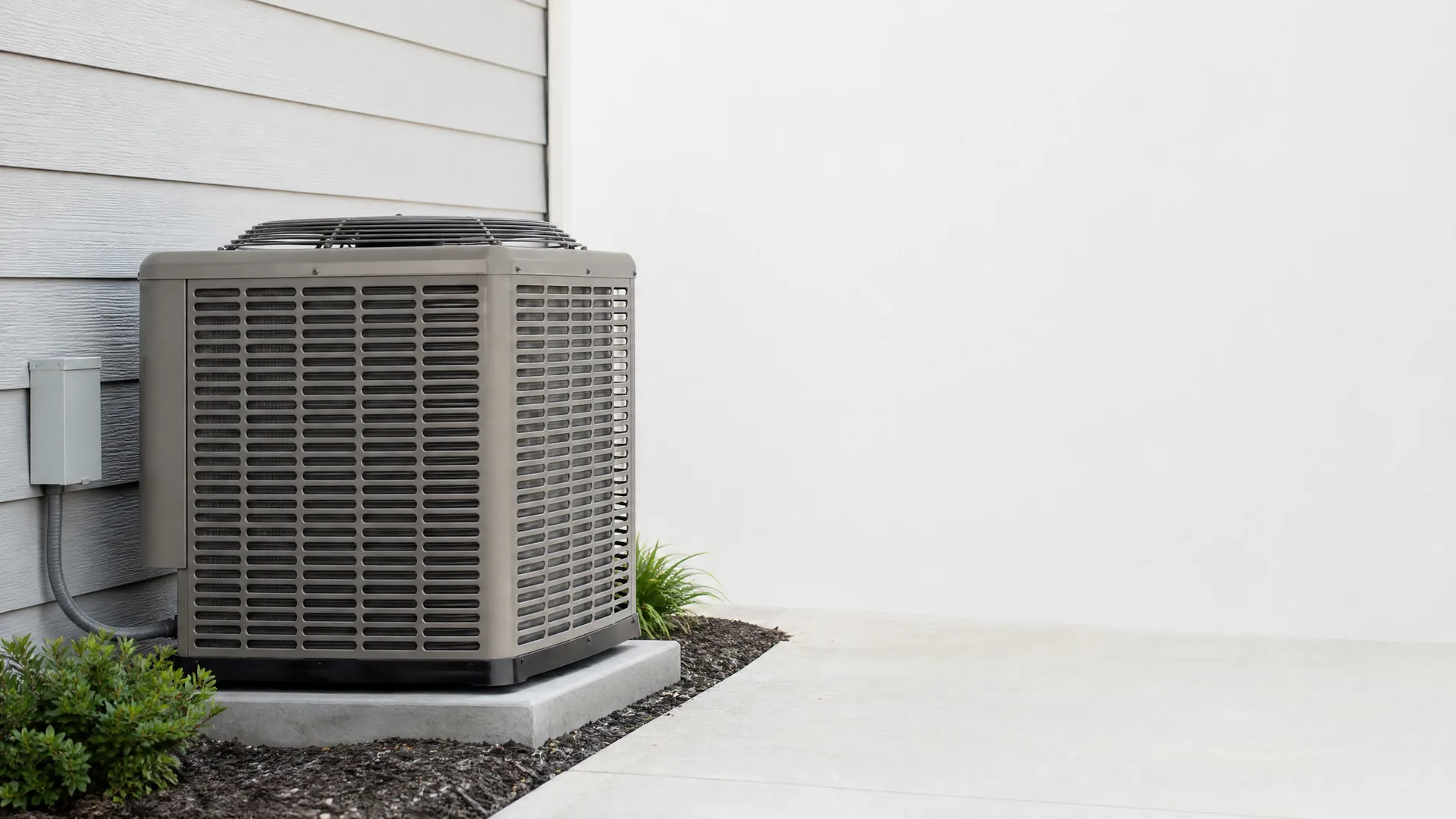
An outdoor air conditioner condenser unit on a concrete pad beside a house with light horizontal siding, with a small electrical disconnect box on the wall, mulch and shrubs at left, and a plain white wall and concrete slab at right.

Why humidity changes the sizing math

Central AC cools your whole house through one coil sized to the load of every room combined, which matters in Oklahoma because a system has to run long enough on humid days to pull moisture out of the air, not just drop the temperature. A unit sized only for heat will cycle off too fast and leave the house cold but damp. A mini split does this room by room, so an oversized head in one room can short cycle even while the rest of the house still feels sticky.

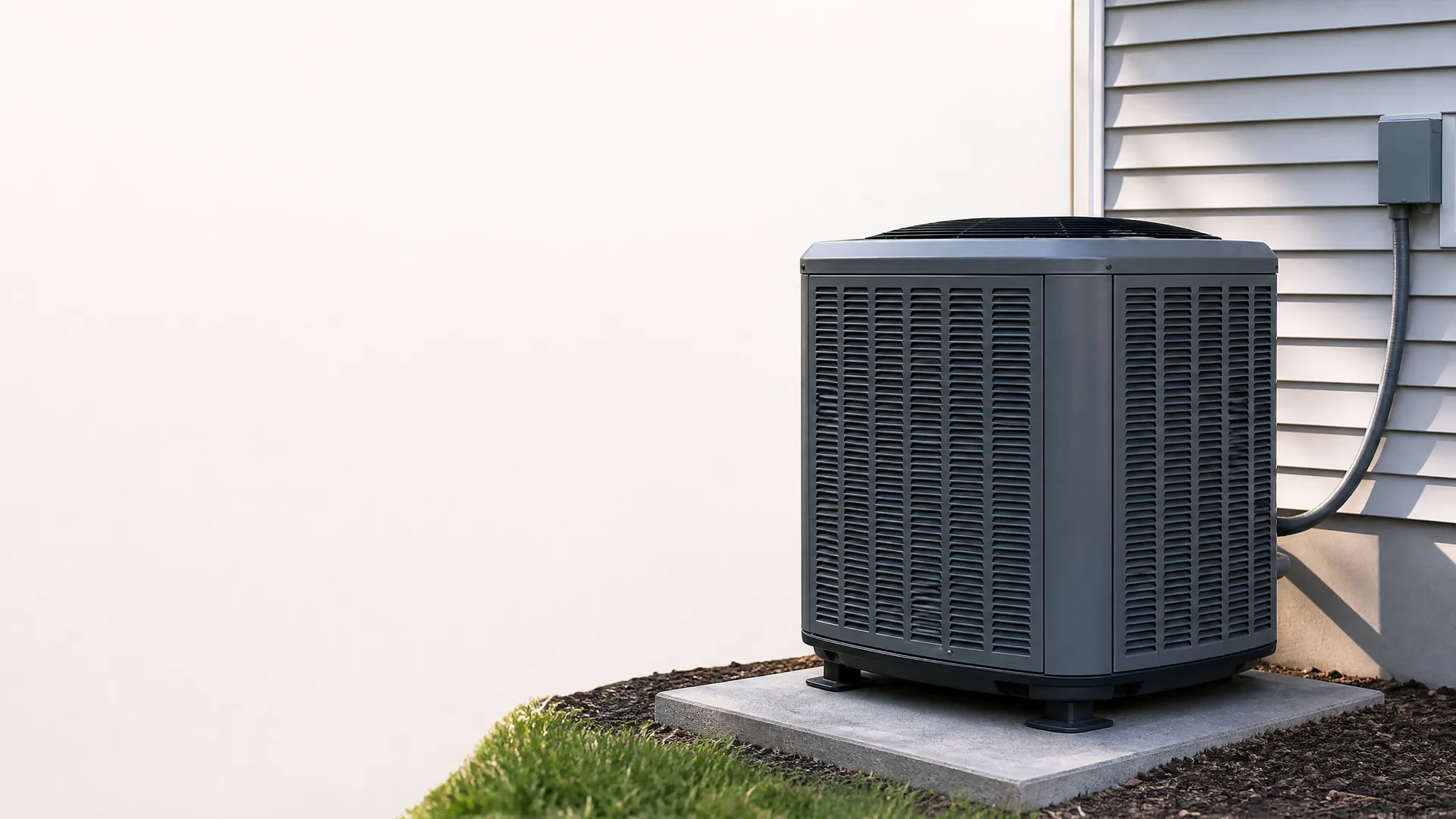
A dark gray outdoor air conditioner condenser unit on a concrete pad beside a house with horizontal siding and a plain light wall, with mulch and grass in the foreground and a conduit and electrical box on the wall.

What a mini split skips in your attic

A mini split moves refrigerant through a line set run along a wall or through a small hole, not through sheet metal ductwork in the attic. That matters here because an Oklahoma attic can push past 120 degrees by July, and any leak or gap in ducts running through that space loses cooled air before it reaches a room. Central AC depends on that duct run being sealed. A mini split bypasses it, which is part of why it works well for a single room the main system struggles to reach.

Is your house keeping up on the worst days?

If you've got central air already, you know the signs of a system that's lost the fight with an Oklahoma summer. The air coming out of the vents feels cool but the house still feels damp, floors tacky, windows fogging at the edges. Upstairs rooms or a sunroom stay hot no matter how low you set the thermostat, because the one coil is trying to serve every room at once. If you're running a mini split in a room the main system never reached, you might notice it cycles fast and still leaves the air sticky, a sign it's undersized for that space. Left alone, the damp air gives mold and dust mites a place to settle, and the system that's struggling runs longer than it should, which shows up on the power bill.

A dim bedroom with a bed in the foreground, a radiator against the wall, and a box fan set in a sunlit window with sheer curtains and green trees outside.

The box fan in the window is just pushing hot air around. It's past nine and still warm enough that the upstairs hallway light feels warm on your arm. Your son kicked the sheet to the floor an hour ago and he's sweating at the hairline, one arm hanging off the mattress. The vent in the ceiling is blowing, you can hear it, but what comes out barely reaches the bed. Downstairs the thermostat says seventy-two. Up here it doesn't feel like seventy-two. You stand in the doorway a minute, go pull the fan an inch closer, and know tomorrow night will be the same unless something about this changes.

Get the right pro for your air conditioner

After this form, you can stop searching for an air conditioner pro.

Sending the form costs nothing.

How each system actually cools your rooms

  • Central AC uses one thermostat, so a room at the end of the duct run can lag behind the room the thermostat sits in.
  • A mini split has its own indoor head in each room, so the bedroom runs colder than the living room if you set it that way.
  • Central AC moves air through ducts, so leaks or poor insulation in the attic lose cooling before it reaches the vent.
  • A mini split's outdoor compressor is variable speed, so it slows down and holds steady instead of cycling on and off.
  • Central AC needs ductwork already in place or a budget to add it, which matters most in additions and converted garages.
  • A mini split needs a hole through the wall for the line set and a condensate drain, not a full duct run.

Central air runs on a single thermostat, usually in a hallway or living room. That thermostat reads one temperature and tells the whole system when to run, so every room shares the same call whether it's actually warm in there or not. A mini split skips that problem by putting a sensor and a blower in each room it serves. The bedroom can run at 70 while the living room sits at 75, because each head answers to its own setting, not one reading for the house.

The path the cold air takes matters too. Central air pushes conditioned air through ducts, usually run through the attic, and every foot of leaky duct or gap in the insulation is cooling lost before it ever reaches the vent. A mini split sends refrigerant through a line set instead of air through sheet metal, so there's no attic run to lose ground in.

How the outdoor unit runs is different as well. A central AC compressor is usually single speed or two speed, so it's either running at full output or off. A mini split's compressor is variable speed, which means it throttles down and holds a steady output instead of cycling. That matters in Oklahoma because a unit that runs longer at lower output pulls more moisture out of the air than one that blasts cold air and shuts off.

What each one needs installed is the real dividing line. Central air needs ducts already run through the house, or the budget to add them. A mini split needs a line set and a condensate drain through an exterior wall, nothing more.

A woman with dark hair in a bun wearing a cream knit sweater sits on a gray sofa in a bright living room, looking off to the side.
A woman wrapped in a knit blanket sits on a gray sofa in a living room, looking toward a bright window with houseplants and an armchair in the background.
A woman in a gray cowl-neck sweater sits on a light sofa with cushions, smiling and looking to the side, with a kitchen and window visible behind her.
A woman with dark hair in a bun, wearing a light linen shirt, sits on a sofa and looks to the side, with a window, houseplants and a kitchen with pendant lights blurred behind her.

When central air makes sense

If you're cooling the whole house and the ductwork is already there or going into new construction, central air does that job without asking you to manage five different remotes. One thermostat, one system, and gas heat already runs through the furnace sitting next to it, so you're not paying to install a second way to heat the place. For a house where every room needs to be cool and the ducts can carry the air to get there, central air is the simpler answer.
When a mini split earns its keep

A bonus room over the garage, a sunroom, a finished attic, any space the ducts never reached or never cooled right, that's where a mini split solves a problem central air can't. No ductwork to add, no reworking the attic to run new trunk lines, just a line set through the wall and a head mounted where you need the cold air. It also works as backup if the main system goes down on a July afternoon and you need one room livable now.

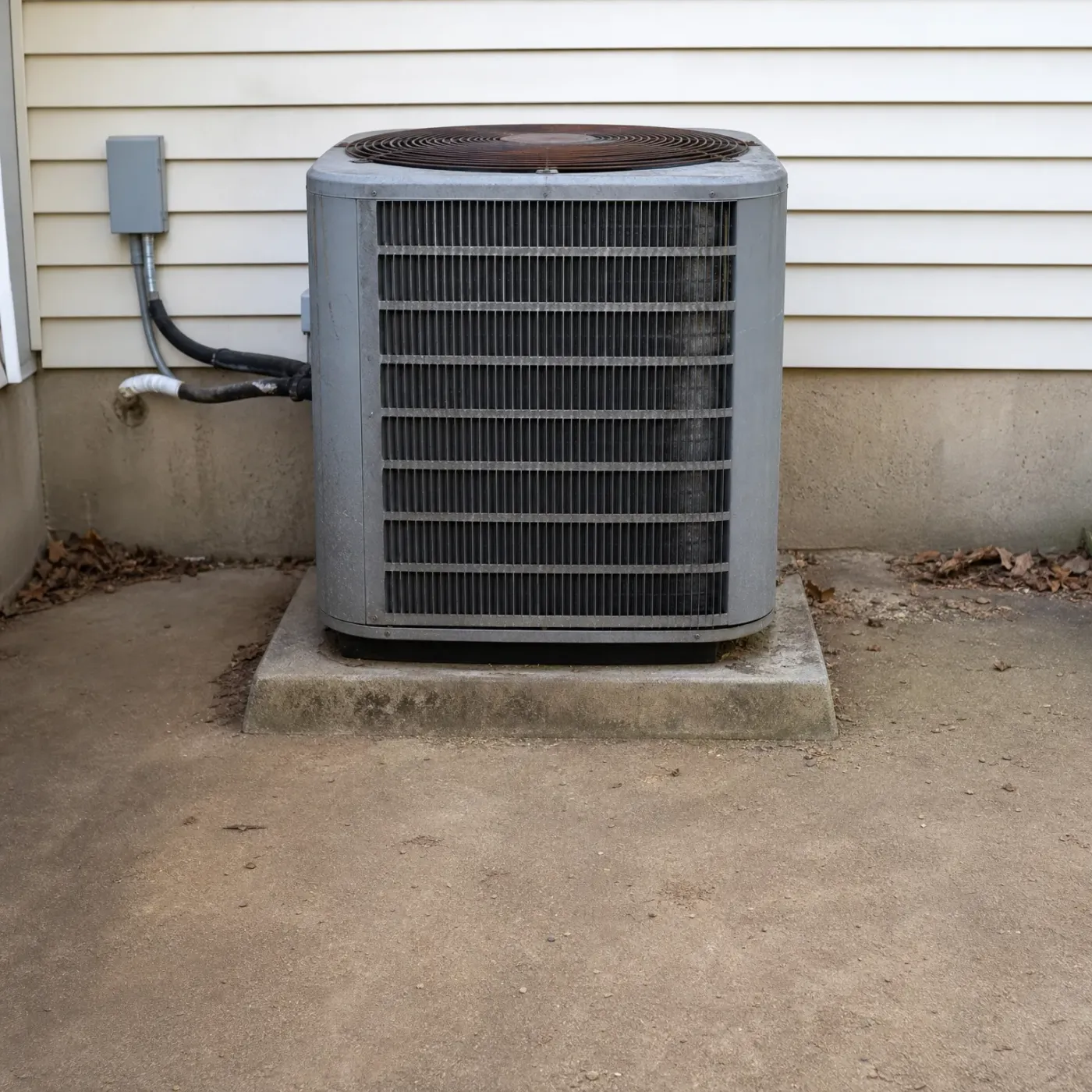
A gray outdoor air conditioner condenser unit on a concrete pad beside a house with beige horizontal siding, with an electrical disconnect box and insulated refrigerant lines on the wall and dry leaves on the ground.
Before you get your air conditioner installation
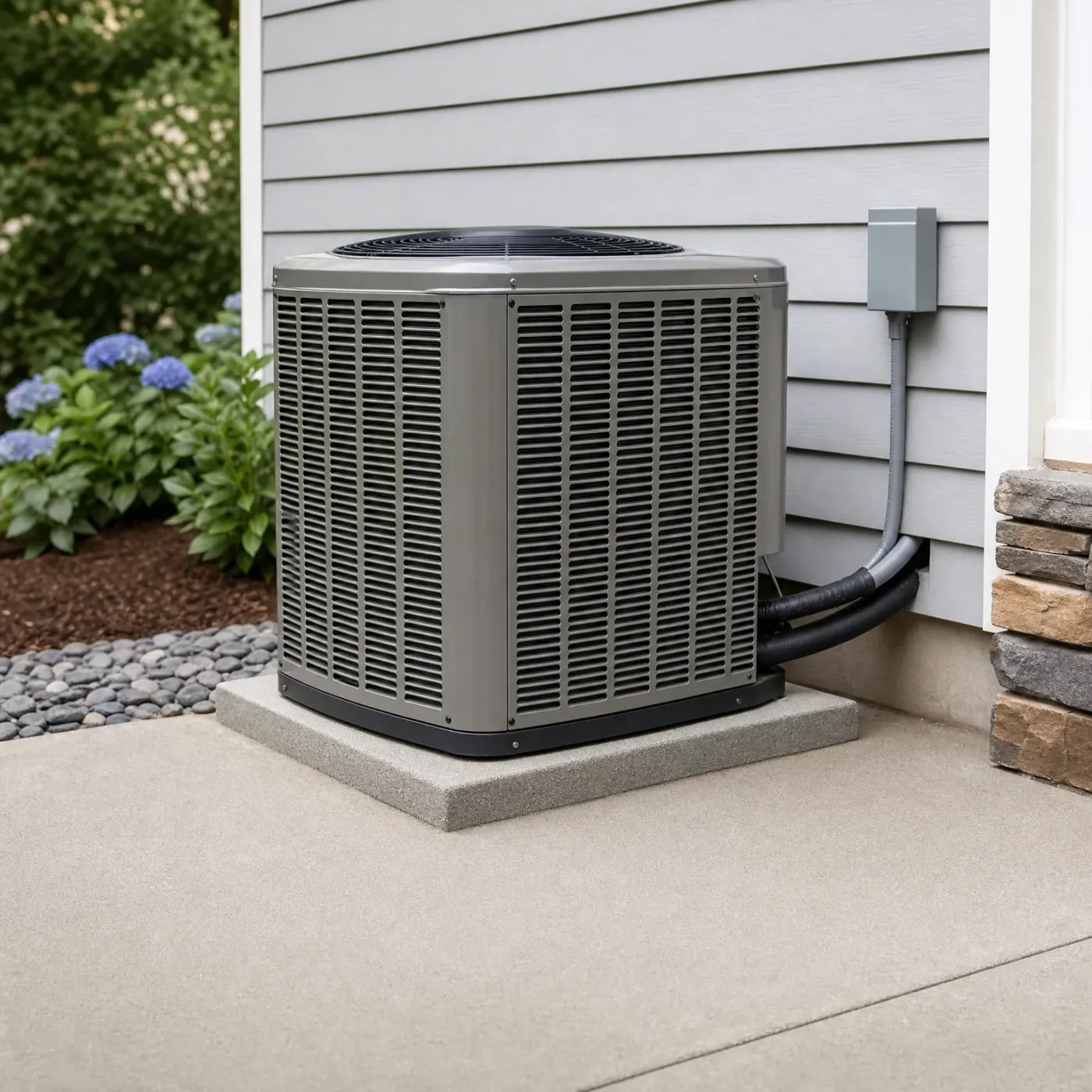
A gray outdoor air conditioning condenser unit on a concrete pad beside a house with horizontal gray siding, with a wall-mounted electrical disconnect box and insulated refrigerant lines, and blue hydrangeas in a mulched bed to the left.
After you get your air conditioner installation
  1. Refrigerant in the outdoor unit absorbs heat from inside your home

  2. The compressor squeezes that refrigerant until it gets hot

  3. A fan pulls outside air across the coil to release the heat

  4. Cooled refrigerant returns inside to pull more heat from the air

Power costs 13.21 cents per kilowatt-hour statewide

At 13.21 cents a kilowatt-hour, running central air or a mini split costs less here than in most states. That makes it cheaper to run a mini split alongside your gas furnace just for the one room that never cools right, without worrying much about what it adds to the bill.

EIA-861 2025 statewide residential average

Most Oklahoma homes with gas heat and ductwork already run end up staying with central air, and add a mini split only for the one room that never cools right. That's the answer, and the facts back it. Central air keeps the whole house on one thermostat and works with the gas furnace you've already got. A mini split earns its place where ducts don't reach or where one room has been fighting the rest of the house for years. You don't have to sort out which one fits your house, your ductwork, or that one bad room by yourself. Once you send the form, a contractor who installs both takes it from there, looks at what you've actually got, and tells you straight whether central air, a mini split, or both is the right call for your house. That part stops being your problem the moment you hit send.

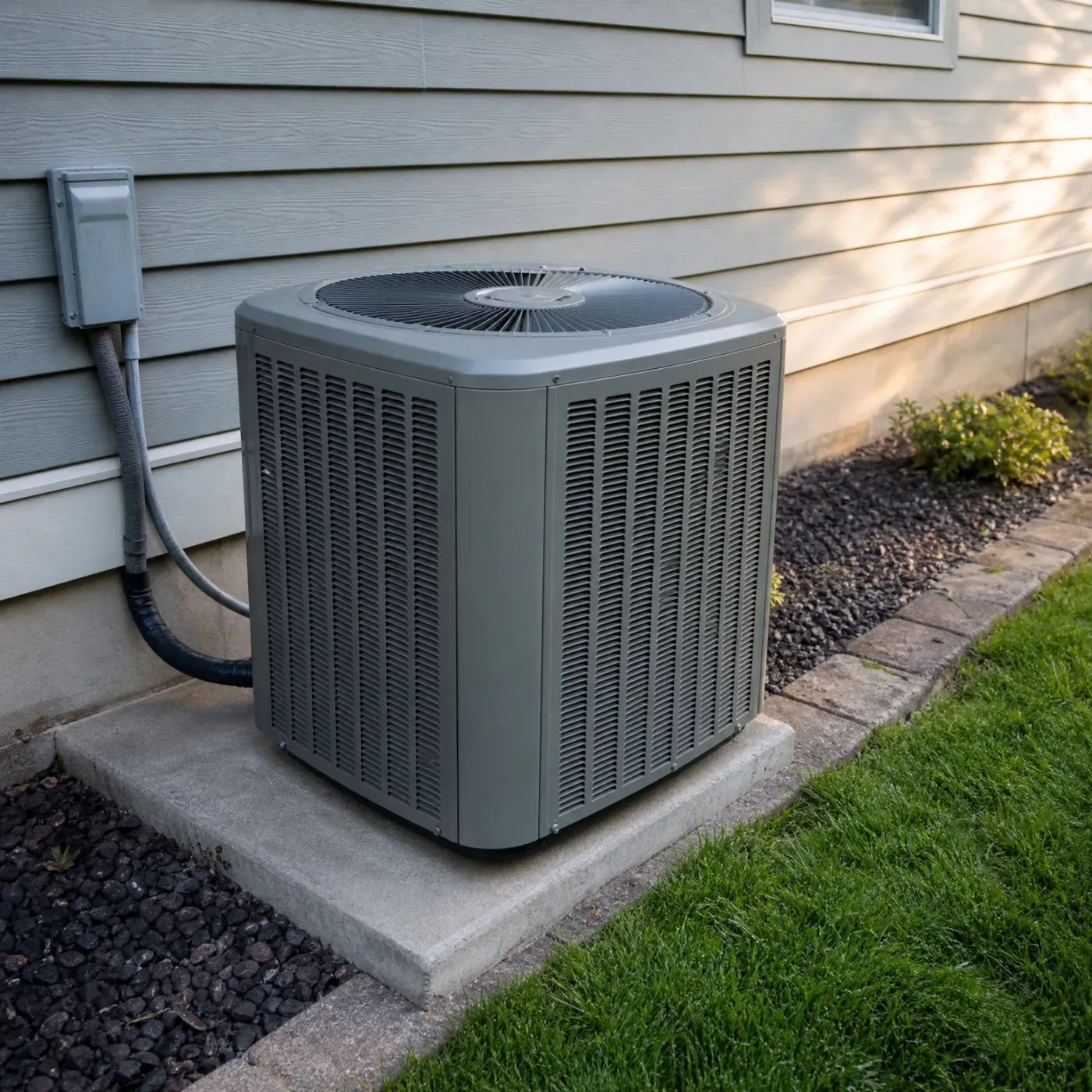
A gray outdoor air conditioning condenser unit on a concrete pad beside a house with horizontal lap siding, with a wall-mounted disconnect box and conduit, lava rock mulch, a shrub, and grass nearby.

A pro who works on air conditioners

Get matched

One request and the search for a pro is handled.

You're not committing to anything by asking.