Describe your air conditioner job once, to one pro.
Your AC can keep the house at 72 and still feel damp. That is normal in Oklahoma. The air outside is heavy with moisture most of the summer, and a central air conditioner only pulls out as much as it needs to in order to hit the temperature on the thermostat. It was built to cool the air, not to dry it. Once it hits the set point, it stops running, even if the house still feels sticky.
A whole-home dehumidifier works alongside your AC instead of waiting on it. It runs on its own schedule, pulling moisture out of the air whether or not the AC happens to be on at that moment. For a lot of houses here, that is the difference between a house that feels cool and a house that actually feels dry.
Whether you need one depends on your house, your AC, and how the humidity shows up for you, whether that is musty smells, damp floors, or a thermostat you keep nudging lower just to feel comfortable. That is worth sorting out before you spend money on equipment.
Finding someone to sort it out is its own chore. You would normally be searching for HVAC contractors near you, calling a few, explaining the same thing about your house to each one, then waiting on quotes to compare line by line. This page skips that part. A local contractor who works on air conditioning and dehumidifier installs all summer, in houses with the same heat and stickiness as yours, looks at your setup and tells you straight whether a dehumidifier makes sense for it. You are not fielding calls from five companies. You are talking to the one who will actually do the work, with a clear sense of what tends to fail and what tends to help in a house like yours.
From there it is a matter of deciding what fits your house and getting it installed.
Do I need a dehumidifier if I already have AC in Oklahoma?
Your thermostat says 72 but the house still feels sticky, and you're wondering if the AC should be handling that on its own. It's a fair question. An air conditioner does pull moisture out of the air as it cools, so it seems like it should be enough. But a lot of Oklahoma homeowners run into the same thing: the temperature is right and the air still feels thick, especially on the muggiest days or when the AC only runs in short bursts.
A standalone dehumidifier can help, because your AC isn't built to control humidity on its own
Your air conditioner removes moisture as a side effect of cooling, not as its main job. Once the house reaches the temperature on the thermostat, the AC shuts off, and so does any moisture removal, even if the air is still damp. On milder days, the AC may not run long enough to pull out much water at all. A dehumidifier works independently of temperature, so it keeps pulling moisture out whether the AC is running or not. In a place where the outside air carries a lot of moisture for months at a stretch, that gap matters more than it would somewhere drier. A whole-home dehumidifier ties into your ductwork and runs alongside the AC instead of fighting it.
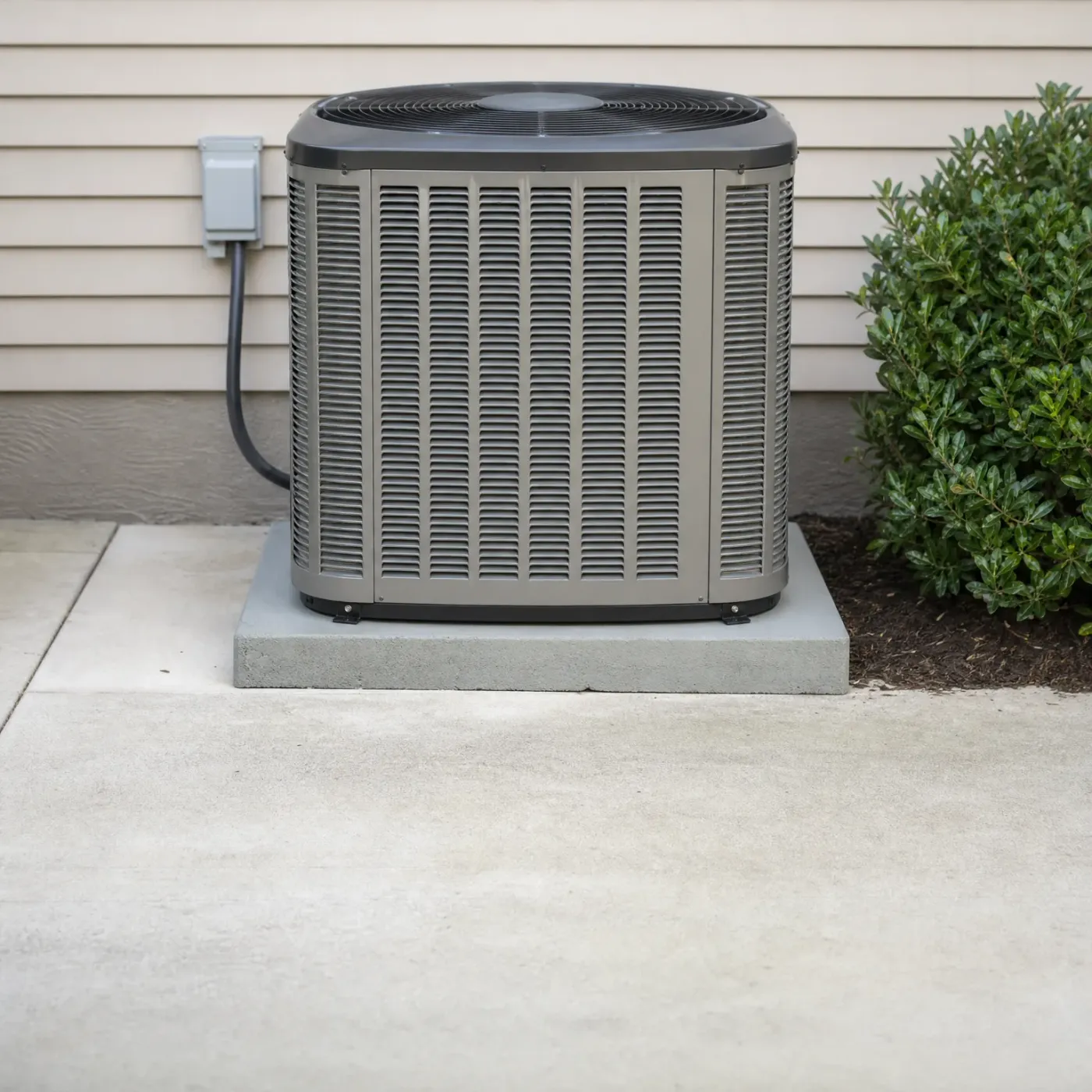
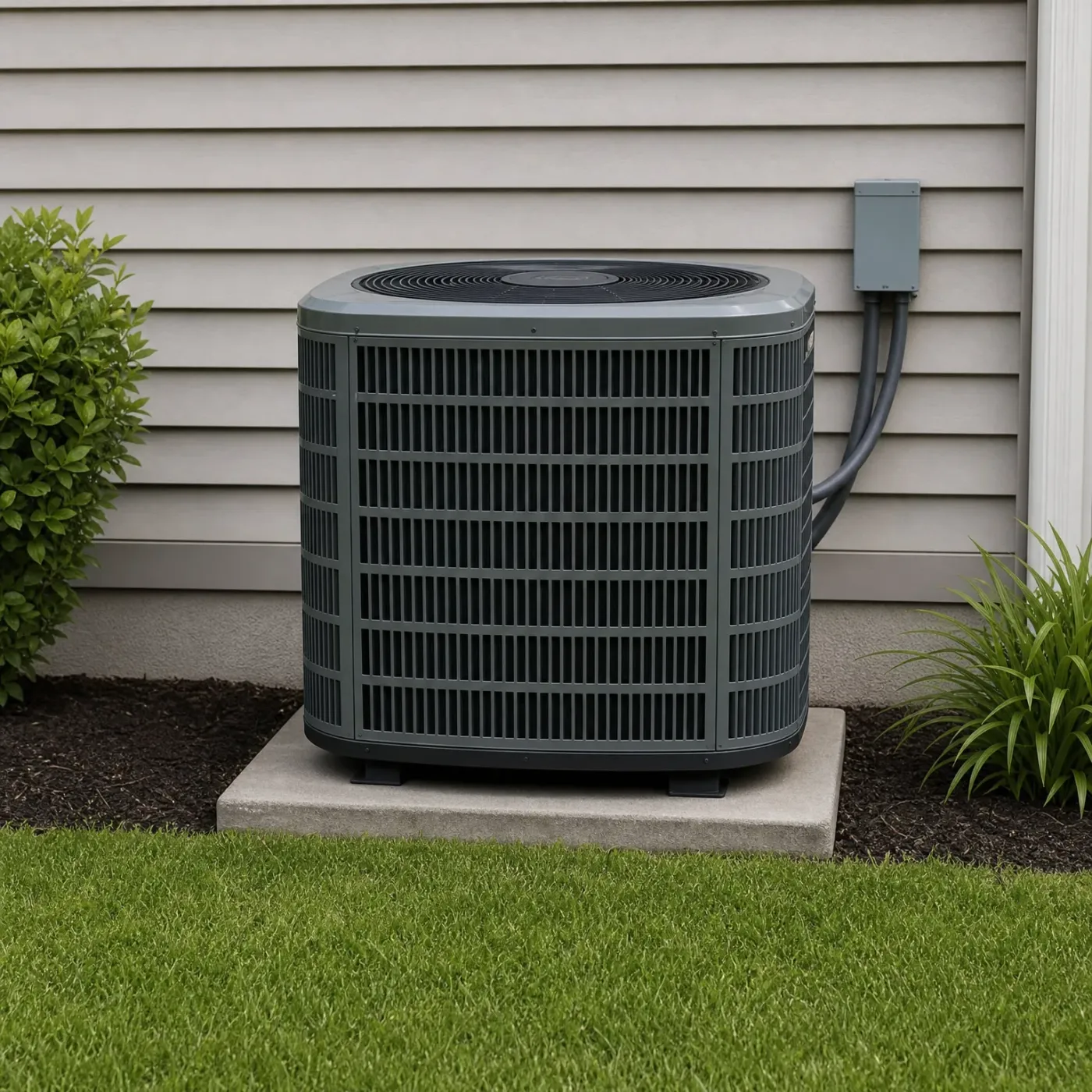
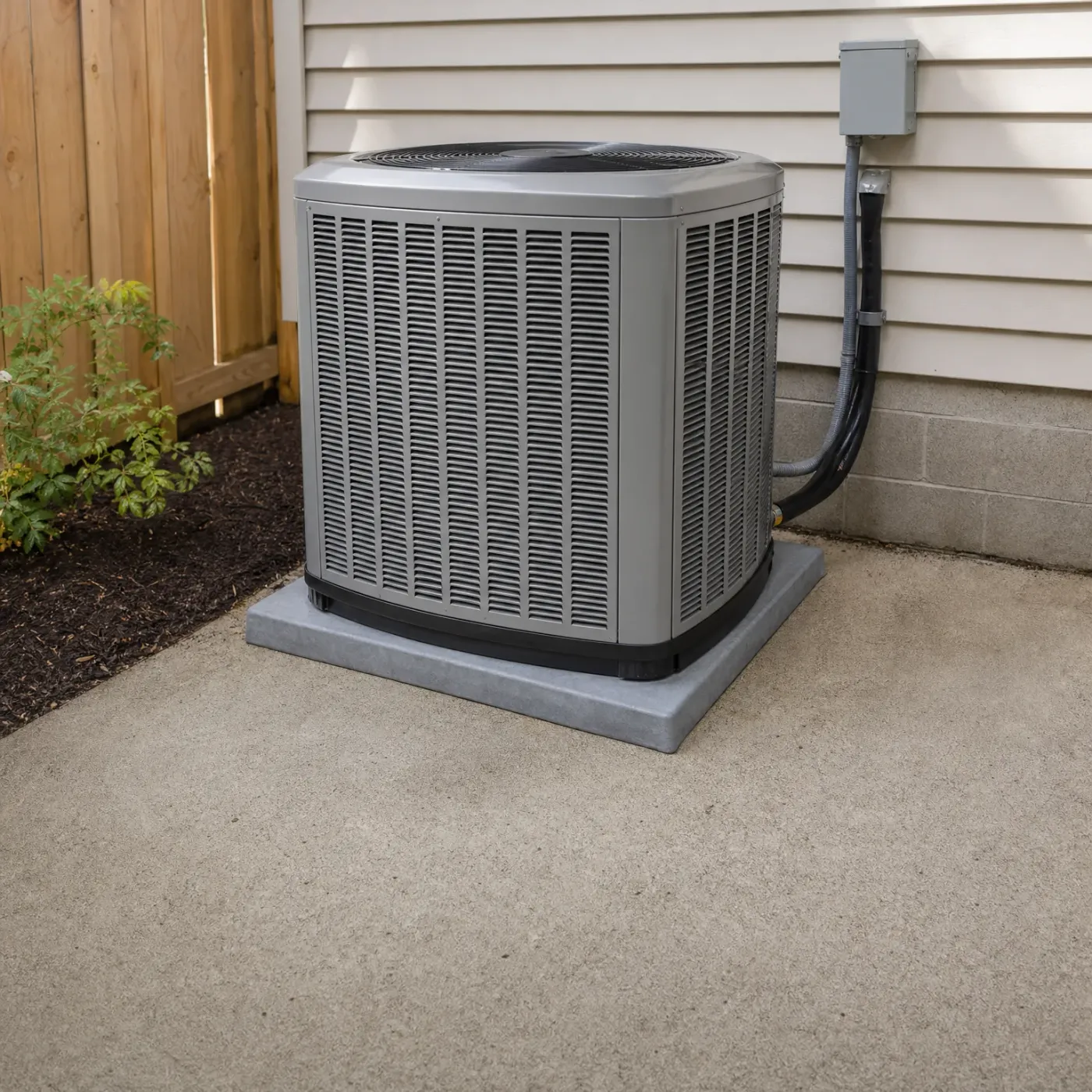
AC running as it should
A clean unit like this is pulling cool air across the coil and draining water steadily. On a muggy Oklahoma afternoon it cycles on, runs long enough to pull moisture out of the air, then shuts off. The house cools and the air inside doesn't feel heavy.
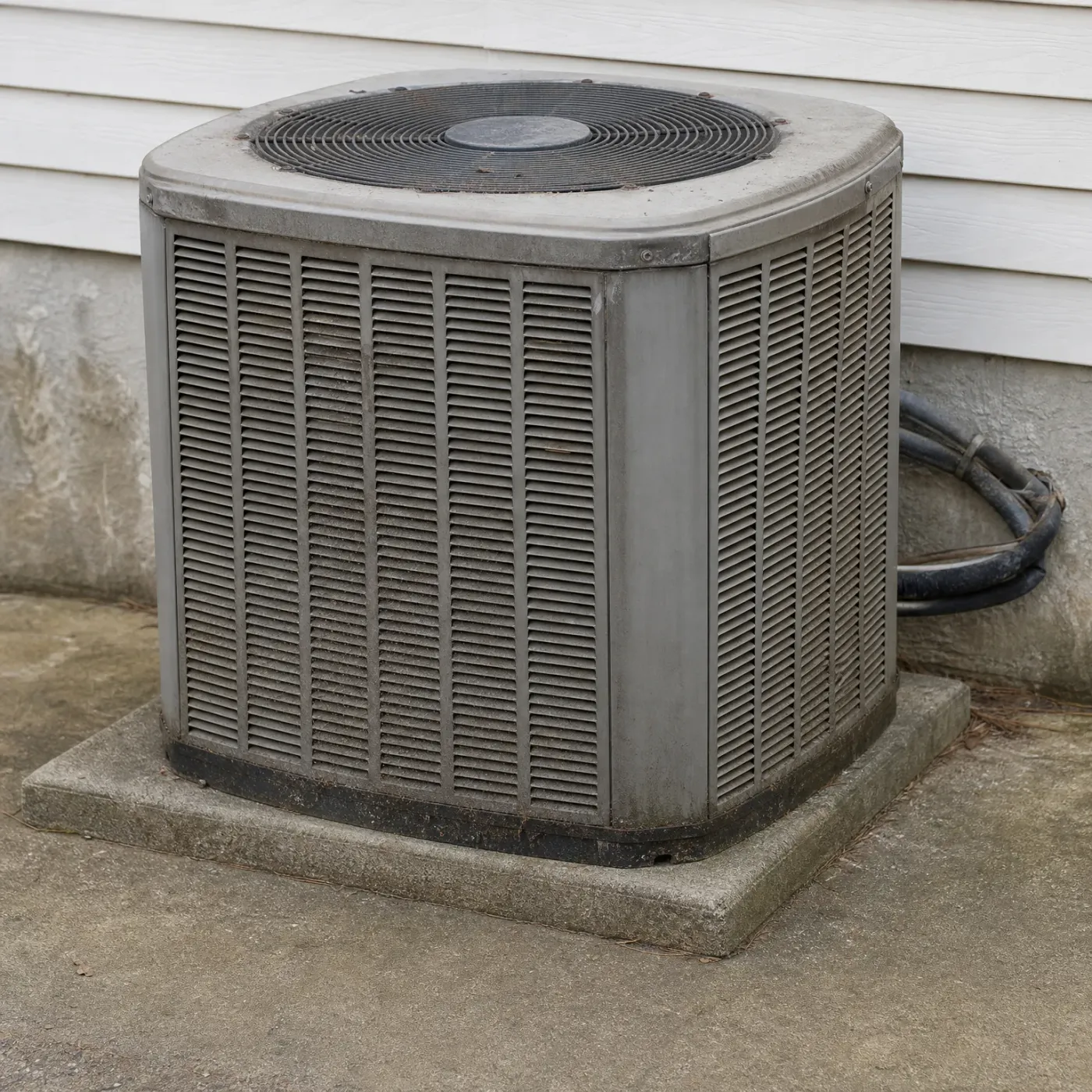
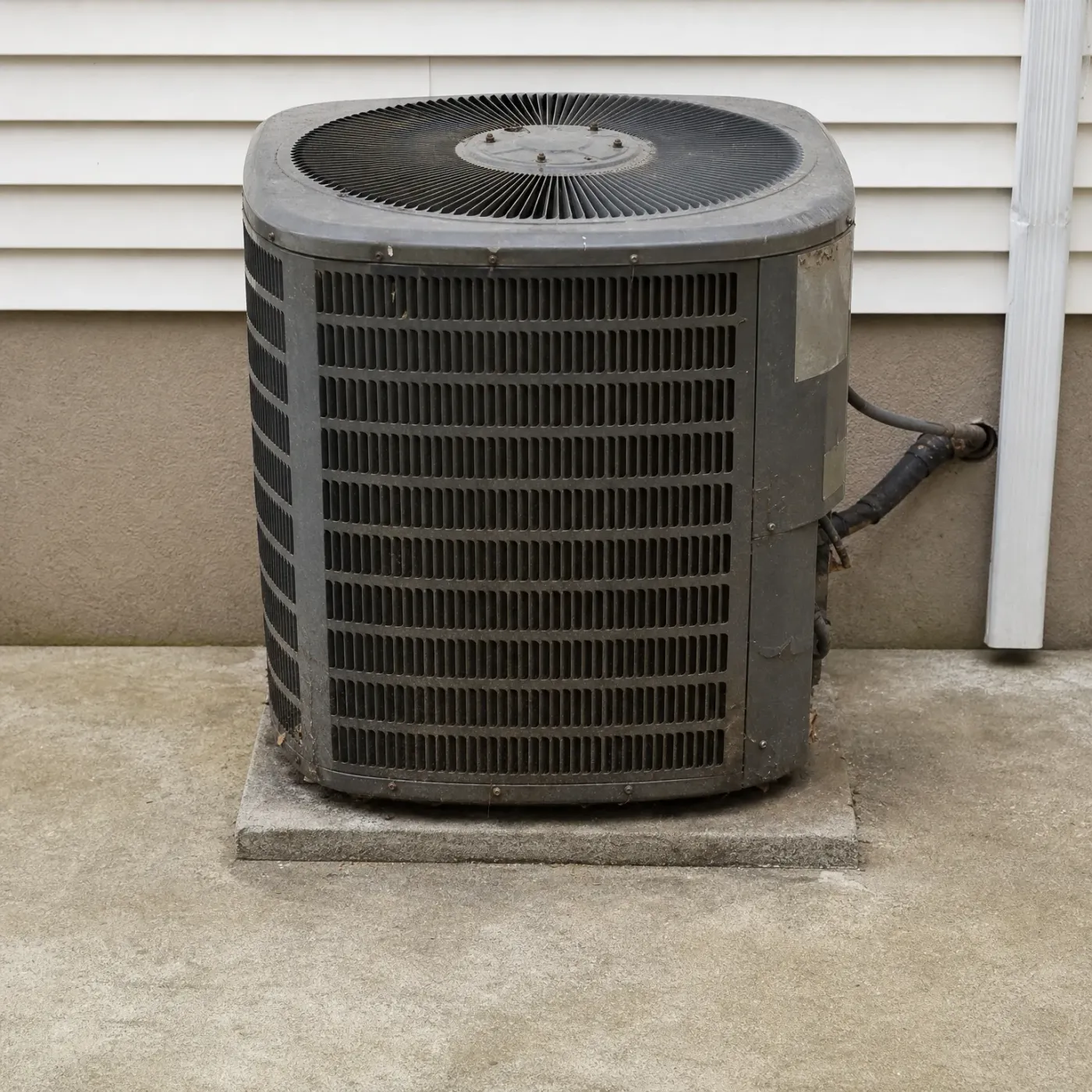
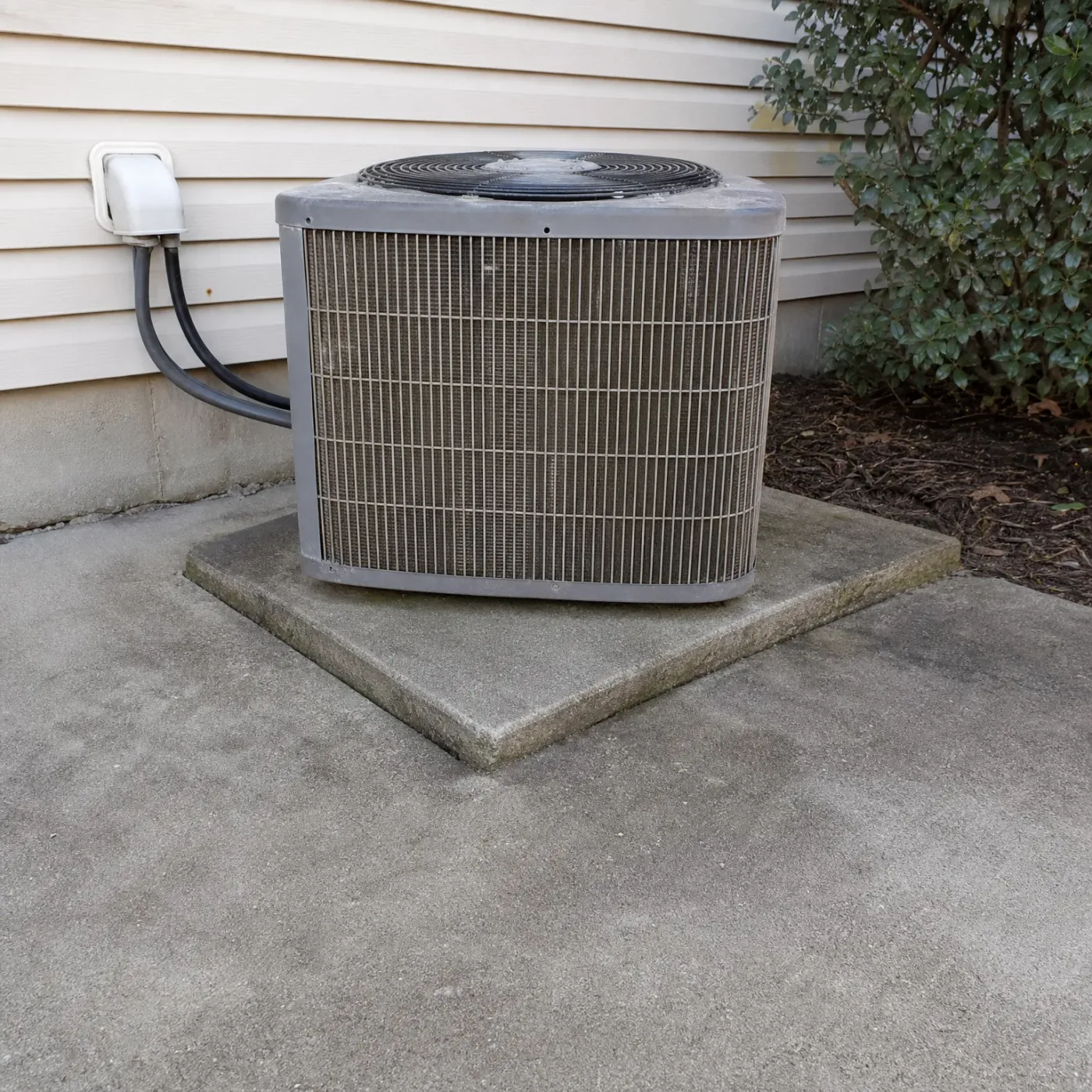
AC falling behind
Dirt built up on the louvers and fan grille like this cuts how much heat the unit can shed, so it cycles shorter and never runs long enough to wring the humidity out. The house hits 72 on the thermostat but still feels damp, and the coil works harder for less.
One installer gets your project, so there's no bidding war over it.
You only hire the pro if you want to.
Why AC alone leaves you damp
An air conditioner cools the air first. Pulling moisture out is something it does along the way, not the job it's built around. The thermostat only tracks temperature, so once the house hits 72 the unit shuts off, whether or not the air is still heavy. On a mild day that's fine. On a muggy July afternoon in Oklahoma, the house can hit its temperature long before the humidity in that air has anywhere near matched it, and the system has no way to know the difference or run longer to fix it.
What a dehumidifier handles differently
A dehumidifier doesn't care what the thermostat reads. It runs off its own humidity setting, pulling moisture out whether the AC is cycling or sitting idle. That matters most on the days your AC satisfies the temperature fast, maybe a mild 80-degree afternoon, because those are the days humidity lingers longest with nothing left to pull it out. Installed alongside the AC rather than as a stand-in for it, it picks up the part of the job the thermostat was never set up to measure.
Before you get your air conditioner installationAfter you get your air conditioner installation
Humidity above 60 percent indoors
At that level, your house feels clammy even at 72. Wood floors and doors start to swell, and mold gets the damp it needs to grow in closets and bathrooms.
If your house stays around 45 to 50 percent humidity most of the summer and only feels sticky on the worst July and August days, a whole-home dehumidifier may not earn its keep. Your AC is already handling the moisture load most days. Running a window unit or small portable dehumidifier for a few sticky weeks a year is a reasonable way to cover the gap. A contractor who installs these systems across Oklahoma every summer can tell you, after seeing how your system runs, whether your house actually falls into this group or just feels like it does on a bad week.
A house that stays damp all season
If the house feels clammy by June and stays that way through September no matter where you set the thermostat, that's a different situation. Musty closets, foggy windows, a basement or crawlspace that never quite dries out: those point to a moisture load your AC isn't built to chase down on its own. A local contractor who works on Oklahoma systems all summer has likely installed a dehumidifier into setups just like yours, tied into the same ductwork, and can size one to match what your house is actually dealing with rather than guessing.
Power costs 13.21 cents per kilowatt-hour statewide
At 13.21 cents a kilowatt-hour, running your AC longer to chase humidity out of the air adds up on the meter. A dehumidifier sized for the house pulls that moisture with less electricity than the AC burns cycling on and off to do the same job.
EIA-861 2025 statewide residential average
Here the AC cycles off once the thermostat hits 72, coil clean and condensate draining the way it should.
Here the unit short-cycles against a humidity load it wasn't sized for, and the house stays damp no matter what the thermostat reads.
1
Humid air crosses the evaporator coil and gives up moisture.
2
Water condenses on the cold coil and drips into the pan.
3
The pan drains the water outside through the condensate line.
4
The thermostat hits 72 and shuts the compressor off.
So no, your AC isn't broken, and no, you don't need a dehumidifier just because Oklahoma summers are sticky. You need one if your house stays above that 60 percent mark on an average afternoon, not just the worst week of August. If it does, a unit sized to the house will hold the air steady in a way your AC cycling on and off can't. A local contractor who services this equipment all summer has seen which houses actually need the extra capacity and which just need the AC checked out, and sizing a whole-home dehumidifier right depends on knowing your ductwork and your unit, not a guess over the phone. One contractor, local, looking at your house, can tell you which one you are.