How to lower your AC bill in an Oklahoma summer

A local pro who services air conditioners gets in touch about the tune-up.

Find my pro

How do I lower my AC bill this summer in Oklahoma?

Oklahoma summers push an AC hard for months, and the electric bill shows it by August. You want to know what actually brings that number down without replacing anything, and whether it is worth doing before the next heat wave or after.

A clean, well-tuned AC uses less power to do the same job

A dirty coil or a low refrigerant charge makes the unit run longer to cool the same house, and that longer runtime is what shows up on the bill. Maintenance catches both before they cost you a full summer of higher draw. A tech cleans the coil, checks the charge, and makes sure the airflow across the system is what it was built to handle. With power priced the way it is here, the difference shows up less in the rate and more in how many hours the compressor runs between April and October. A unit that cycles off sooner because it's actually cooling the air, instead of straining to get there, pulls less power over that stretch.

A gray-haired, bearded man in a dark coat dusted with snow stands smiling in a dimly lit room with a lamp, mirror, framed art, and a sofa in the background.
An older man with white hair and a beard, wearing a dark snow-dusted coat and scarf, stands in a warmly lit interior hallway with a framed landscape picture, a table lamp and a potted plant behind him, and a snowy view through a window at left.
An older man in a dark snow-flecked overcoat and scarf stands smiling in a warmly lit home entryway, with a glass-paned door showing darkness outside and a lamp-lit room visible through a doorway behind him.
An older man with gray hair and a beard, wearing a dark snow-dusted jacket and scarf, stands smiling in a warmly lit interior hallway with a lit table lamp, a vase of dried branches, and a framed picture in the background.

Why does the AC bill keep climbing even when the unit still cools fine

The thermostat says 72 and the house gets there, so nothing seems wrong. But check the vents and you might feel weak airflow, or notice the outdoor unit running longer stretches than it used to. Dust on the return grille, a coil you haven't looked at in a while, a filter that's gray instead of white. None of that stops the AC from cooling. It just makes the system work harder to do it, and that extra work is what shows up on the bill. Left alone through a full Oklahoma summer, that strain adds up on the compressor too, which is the expensive part to replace.

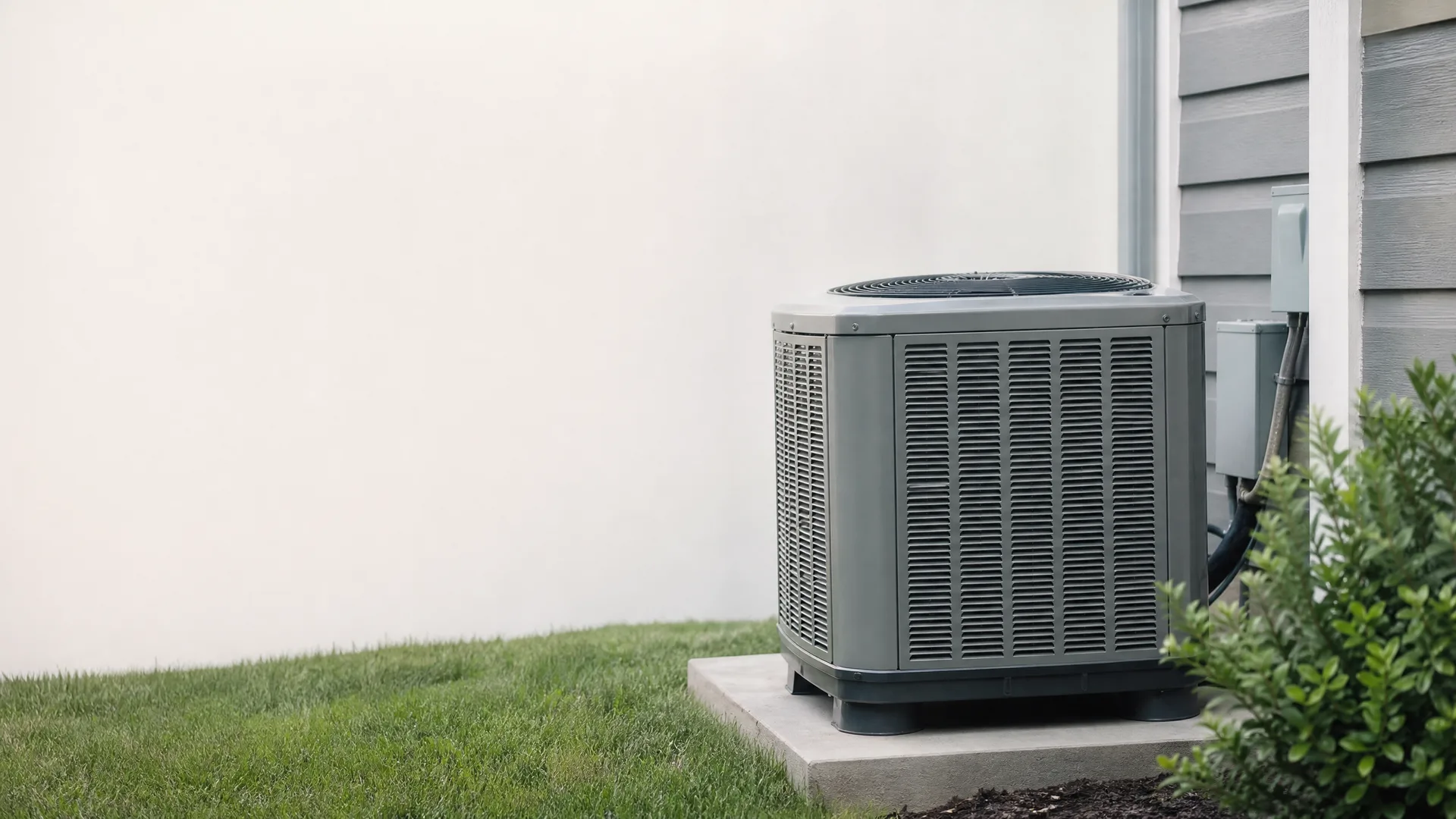
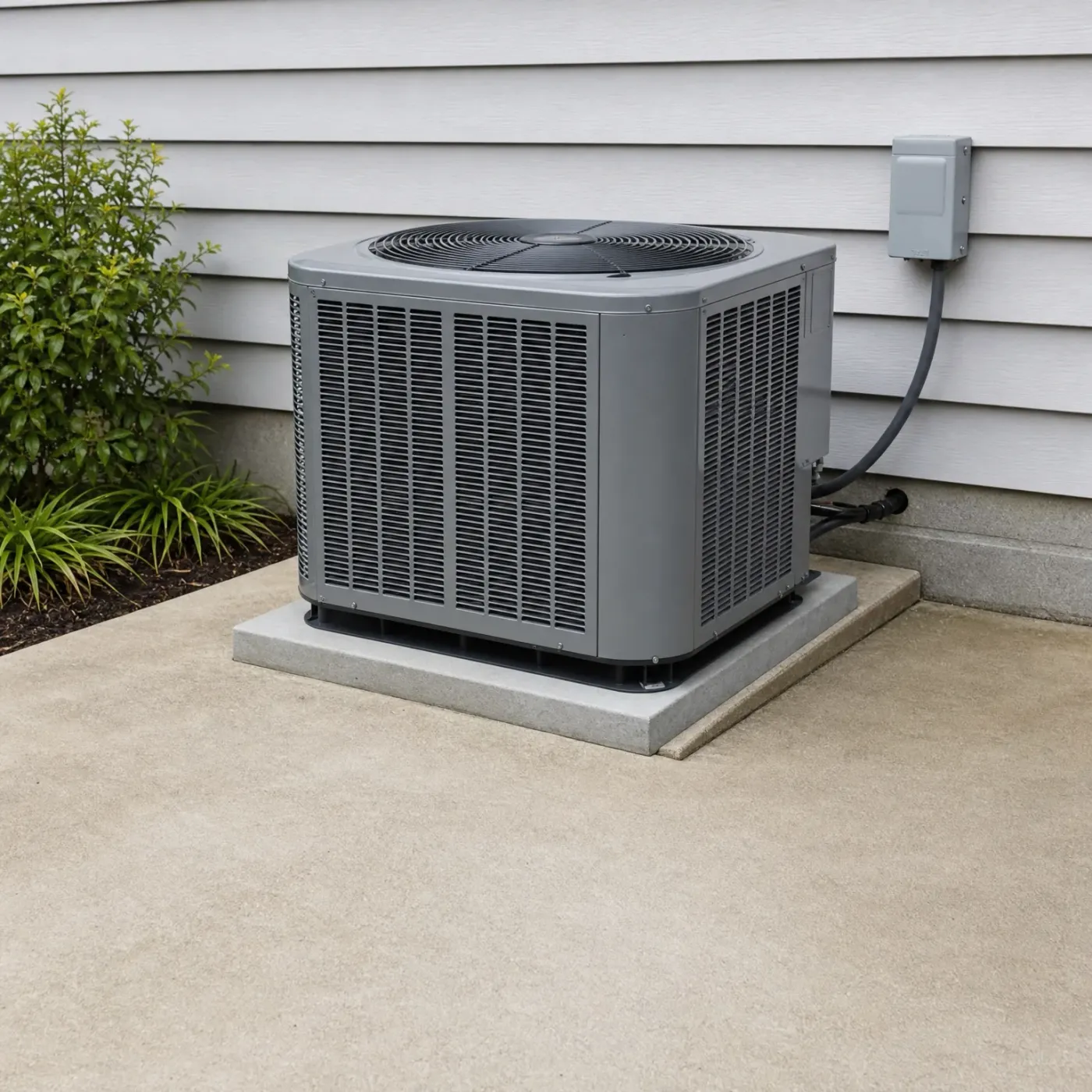
A gray outdoor air conditioner condenser unit on a concrete pad beside a house corner with lap siding and a stucco wall, surrounded by mown green grass.

What a dirty coil costs you

The outdoor coil gives up heat from the refrigerant to the air outside. When it is coated in dust and grass clippings, that heat transfer slows down, and the compressor runs longer to move the same amount of heat. A coil that gets hosed off and cleared of debris lets the unit shed heat the way it was built to. That difference shows up as runtime, and runtime is what the meter counts.

An outdoor air conditioning condenser unit on a concrete pad beside a house with light stucco and lap siding, with mown grass to the left and a green shrub to the right.

Why the charge matters more here

Refrigerant doesn't get used up, but a system can lose a little over the years through a fitting or a worn seal. A system running low on charge still blows cold air, so nothing seems wrong, but the compressor works harder to hit the same temperature. In July and August, with the compressor already running most of the day, that extra strain is the difference a technician can measure with gauges.

Service it now or wait it out

Maintenance now

  • A contractor can clean the outdoor coil and check the refrigerant charge before the next 100 degree week hits.
  • A low charge or a dirty coil both make the compressor run longer to move the same heat, so fixing either shows up on the next bill.
  • Catching a weak capacitor or a failing contactor in June costs you a service call, not a Saturday with no cooling in July.
  • A maintenance visit checks the blower motor and the ductwork for airflow problems that make the thermostat lie to the system.
  • Scheduling it before the hottest stretch means you are not waiting behind every other homeowner whose AC quit outright.

Wait and see

  • If the house still reaches 72 and the air coming out of the vents feels cold, the system may genuinely have nothing wrong with it yet.
  • A unit that was serviced within the last year has less to gain from another visit so soon.
  • Waiting costs you the chance to catch a problem early, since a coil or charge issue gets more expensive to run on the longer it goes unaddressed.
  • If the outdoor unit is already running long stretches or the bill jumped from last August, waiting means paying that higher number every month until something is done.
  • A breakdown in the middle of a 105 degree stretch does not wait for a convenient weekend.
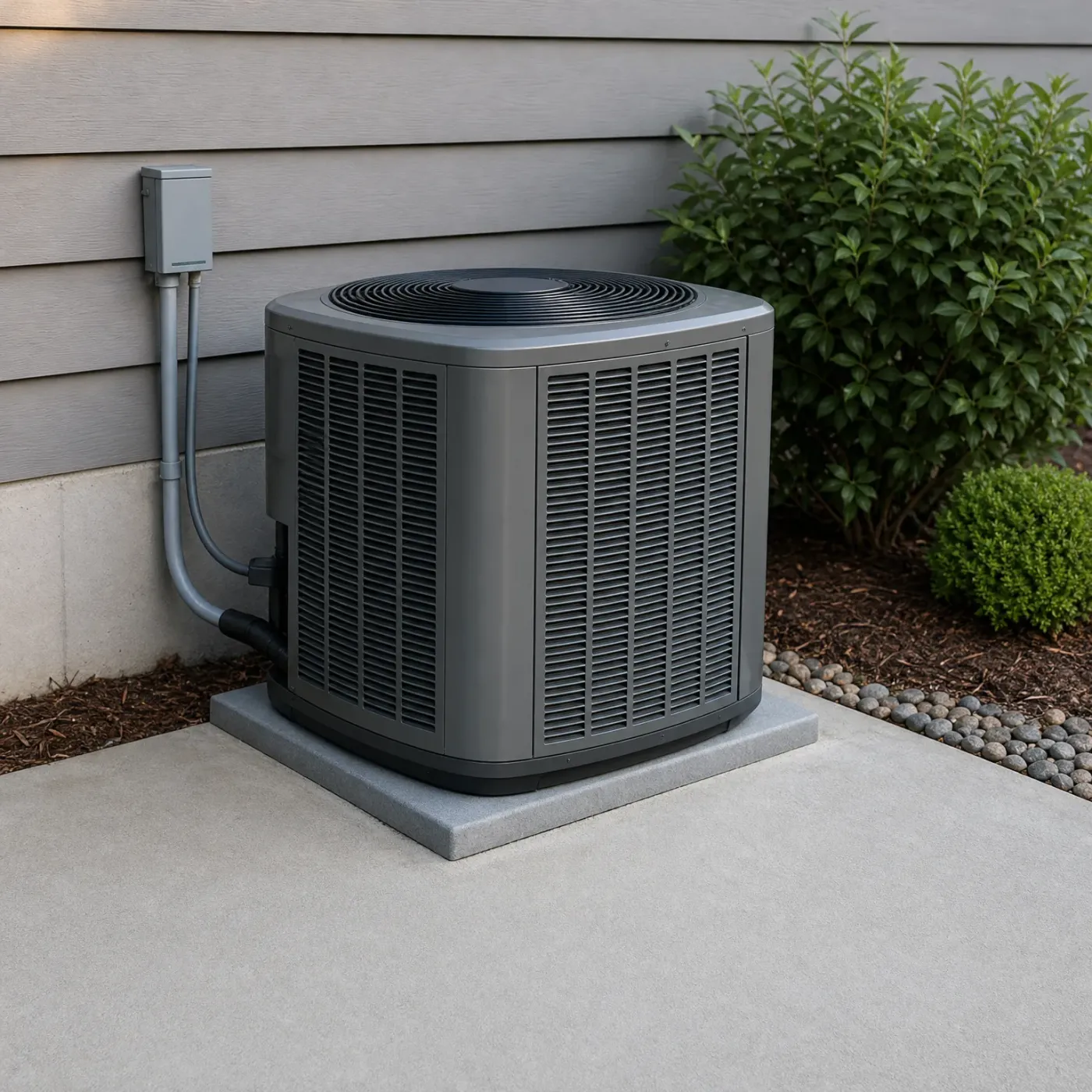
A gray outdoor air conditioner condenser unit on a concrete pad beside a house with horizontal lap siding, with a wall-mounted disconnect box and conduit at left and a green shrub and mulch bed at right.

A unit running clean

This is what the compressor should be doing all summer: short runs, full shutoffs, then quiet. The coil is clear and the airflow across it is strong, so the heat outside actually leaves the refrigerant and the unit stops instead of grinding through another cycle.

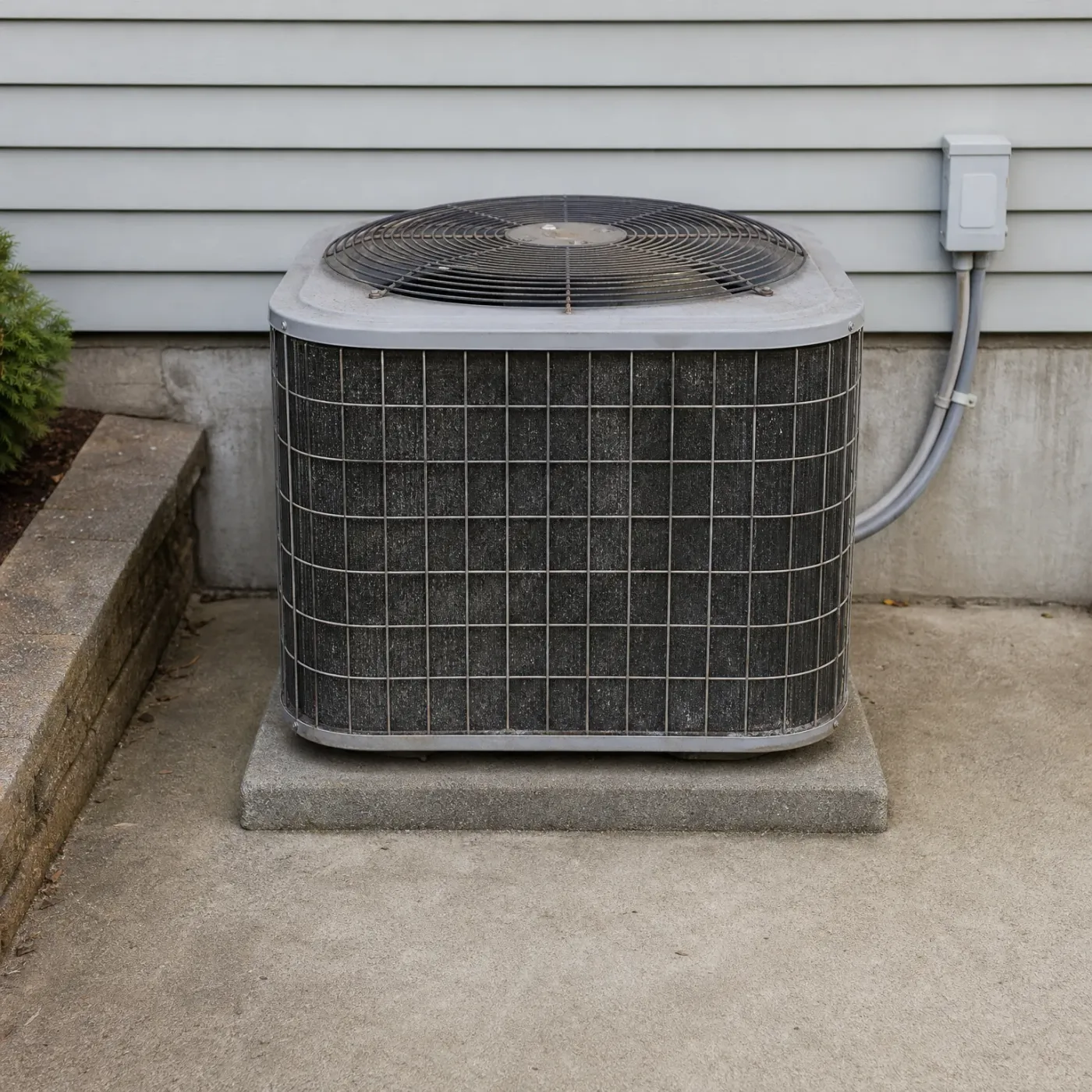
An outdoor air conditioner condenser unit on a concrete pad beside a house with horizontal lap siding, with a conduit running to a gray electrical disconnect box on the wall.

A unit running long

Same equipment, same Oklahoma heat, but the compressor barely shuts off. A dirty coil or a low charge is making it work longer to move the same heat out of the house. You won't see this from the thermostat. You'll see it on the bill in August.

A woman wrapped in a cream textured blanket sits in an armchair beside a lit lamp and a dark window, with an open book in the foreground.
A bearded man in a blue and brown plaid flannel shirt stands indoors looking out a window at snow-covered trees, with a ceramic mug on the windowsill.

A pro who works on air conditioners

Send the form and the air conditioner tune-up stops being something to remember.

You're not committing to anything by asking.

Skip it this year and the unit keeps cooling the house. It just does it the hard way, pulling more amps to push the same heat out through a dirtier coil and weaker airflow than it needs to.

Have it checked before the hottest stretch and the compressor does less work for the same 72 degrees. That difference shows up on the August bill, not on the thermostat.

Power costs 13.21 cents per kilowatt-hour statewide

At that rate, every extra minute your compressor runs to push heat through a dirty coil lands on the bill. Power here is cheap compared to a lot of states, but a unit working harder still adds up hour after hour through August.

EIA-861 2025 statewide residential average

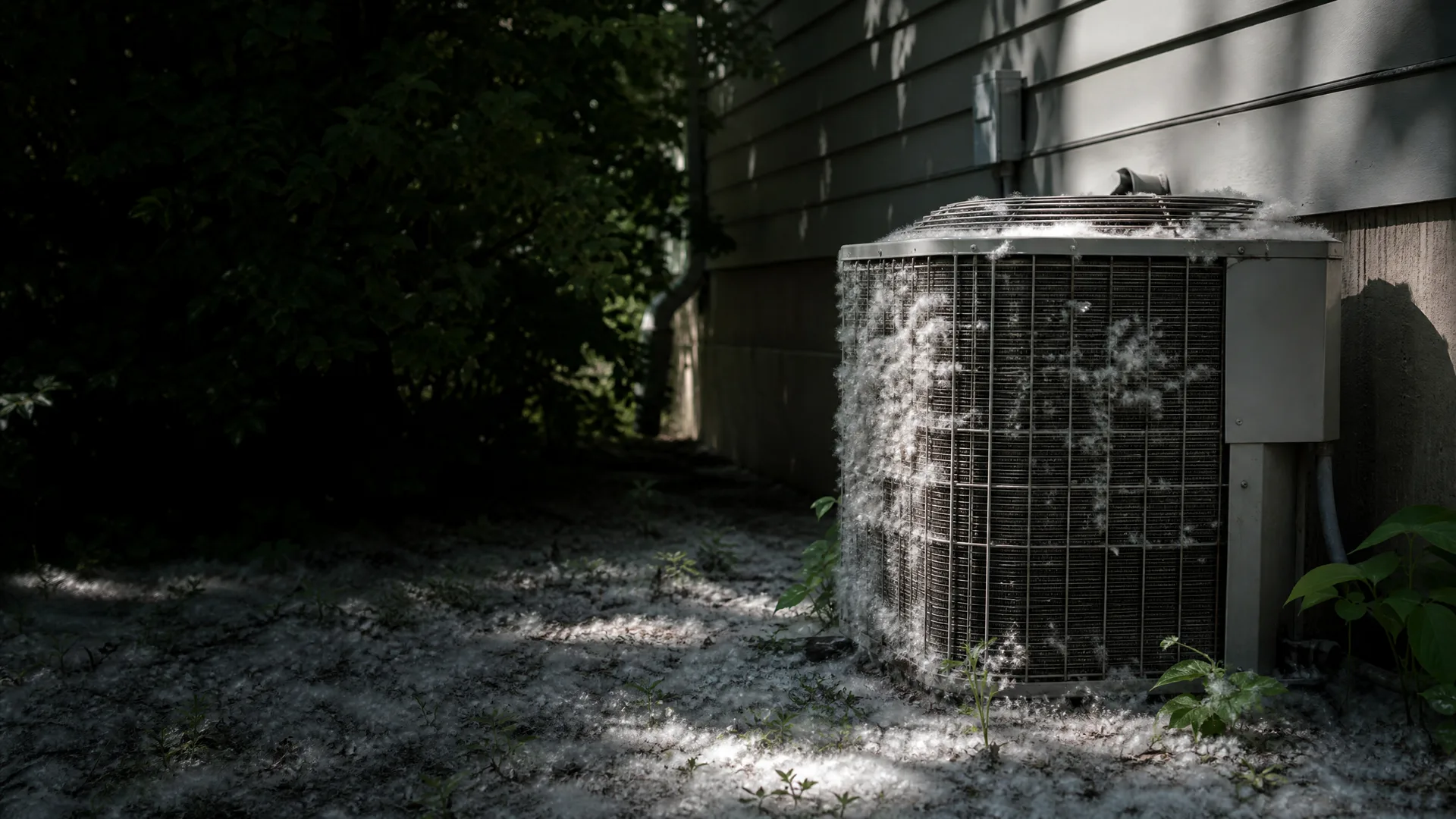
An outdoor air conditioner condenser unit beside a house with horizontal siding, its coil covered in white cottonwood fluff that also blankets the ground around it.

Late afternoon, early June, and the cottonwood trees along the fence line have been shedding for days. You walk around the side of the house to check the meter and the condenser is coated, fins packed white with fluff like the first snow never happened here. The unit is running, you can hear it, but the sound is strained, laboring. You crouch down and see the fluff has caught on the grille and worked into the coil itself, a layer thick enough to block the slats. Somewhere past it the compressor is still pushing, trying to shed heat through a coil that can barely breathe. You make a note to grab the hose later, knowing a quick rinse from outside won't reach what's packed in there.


A gray outdoor air conditioning condenser unit on a concrete pad beside a house with horizontal lap siding, with a wall-mounted disconnect box and conduit, and shrubs to the left.
A clean coil and clear airflow around the unit, the compressor cycling off instead of running straight through the afternoon.
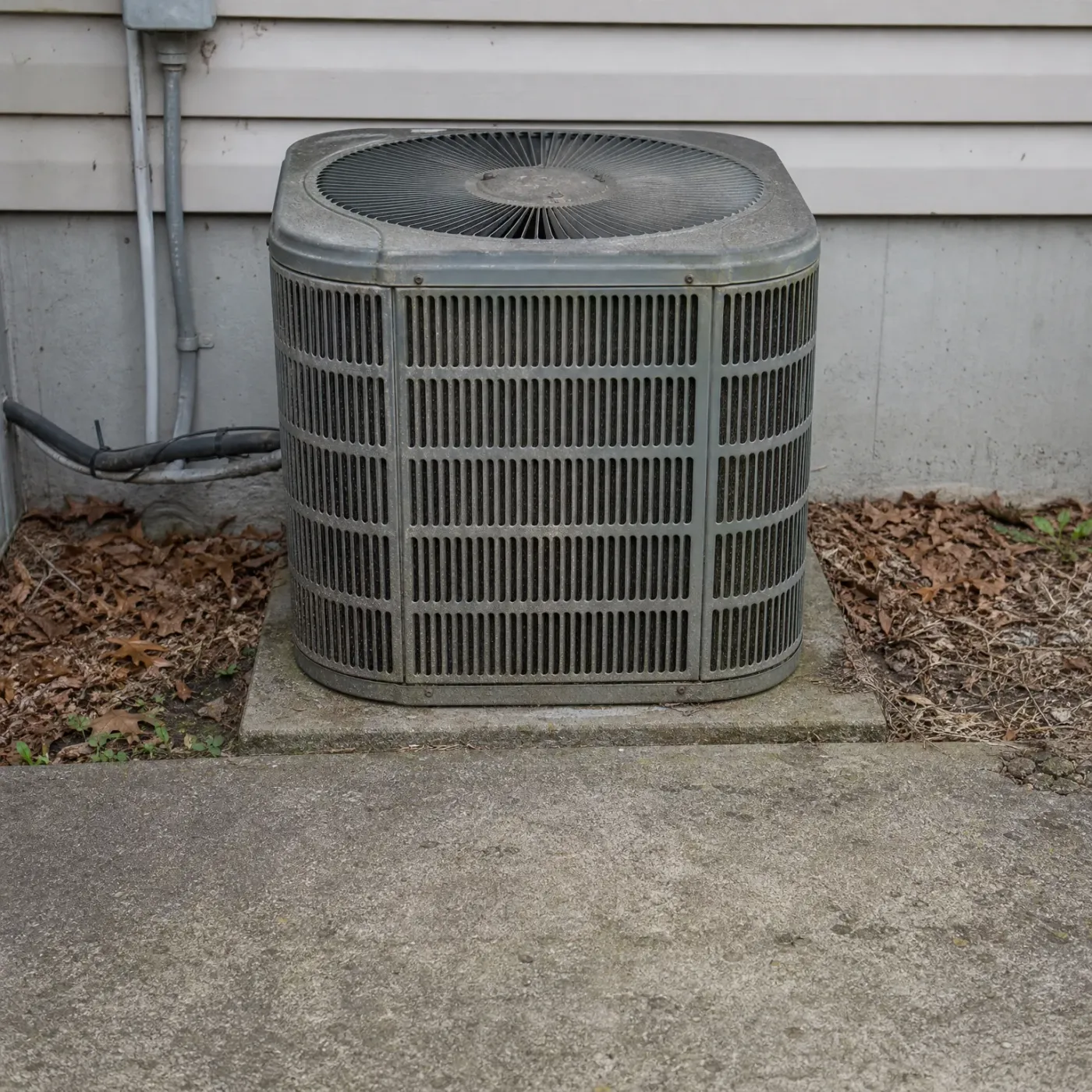
An outdoor air conditioning condenser unit on a concrete pad beside a house with horizontal siding and a concrete foundation, with dry brown leaves on the ground to either side.
Leaves packed against the fins and a coil that has not been rinsed in years, so the same cooling costs more amps to deliver.

How the cooling cycle actually runs

  • The thermostat calls for cool air, and a relay sends power to the outdoor contactor to start the compressor.
  • Refrigerant leaves the compressor hot and under pressure, then gives up that heat to outside air across the condenser coil.
  • A fan pulls air across the condenser fins the whole time the compressor runs, and that airflow is what carries the heat away.
  • Once the refrigerant cools and condenses, it travels inside to the evaporator coil and pulls heat out of the air moving through the ducts.
  • The thermostat reads the indoor temperature and cuts power to the contactor once the house hits the set point.
  • A capacitor gives the compressor and fan motor the jolt they need to start turning, and a weak one makes the whole cycle drag.

Start with the thermostat. It is just a switch reading indoor air temperature, and when that reading climbs above the set point, it closes a low voltage circuit that tells a relay to energize the outdoor contactor. That contactor is what actually lets line voltage reach the compressor, and the compressor is what does the real work, squeezing refrigerant gas until it gets hot. That heat has to go somewhere, so the hot refrigerant travels out to the condenser coil, the one sitting in the outdoor unit, and gives up its heat to the outside air. A fan blade overhead is pulling air across those coil fins the entire time the compressor runs, and without that moving air, the heat has nowhere to go and the refrigerant stays hot. Once it cools enough to condense back into a liquid, it runs inside through a line to the evaporator coil, where the process reverses: now it is pulling heat out of the air blowing through the ducts, which is what actually drops the temperature in the house. The compressor and the fan motor both need a jolt to get their windings turning in the first place, and that jolt comes from a capacitor. A weak one still starts the unit most of the time, but it makes both motors work harder to get up to speed, and that strain shows up as a longer run time for the same amount of cooling. When the house finally reaches the set point, the thermostat cuts power to the contactor and the whole cycle stops until it calls again.

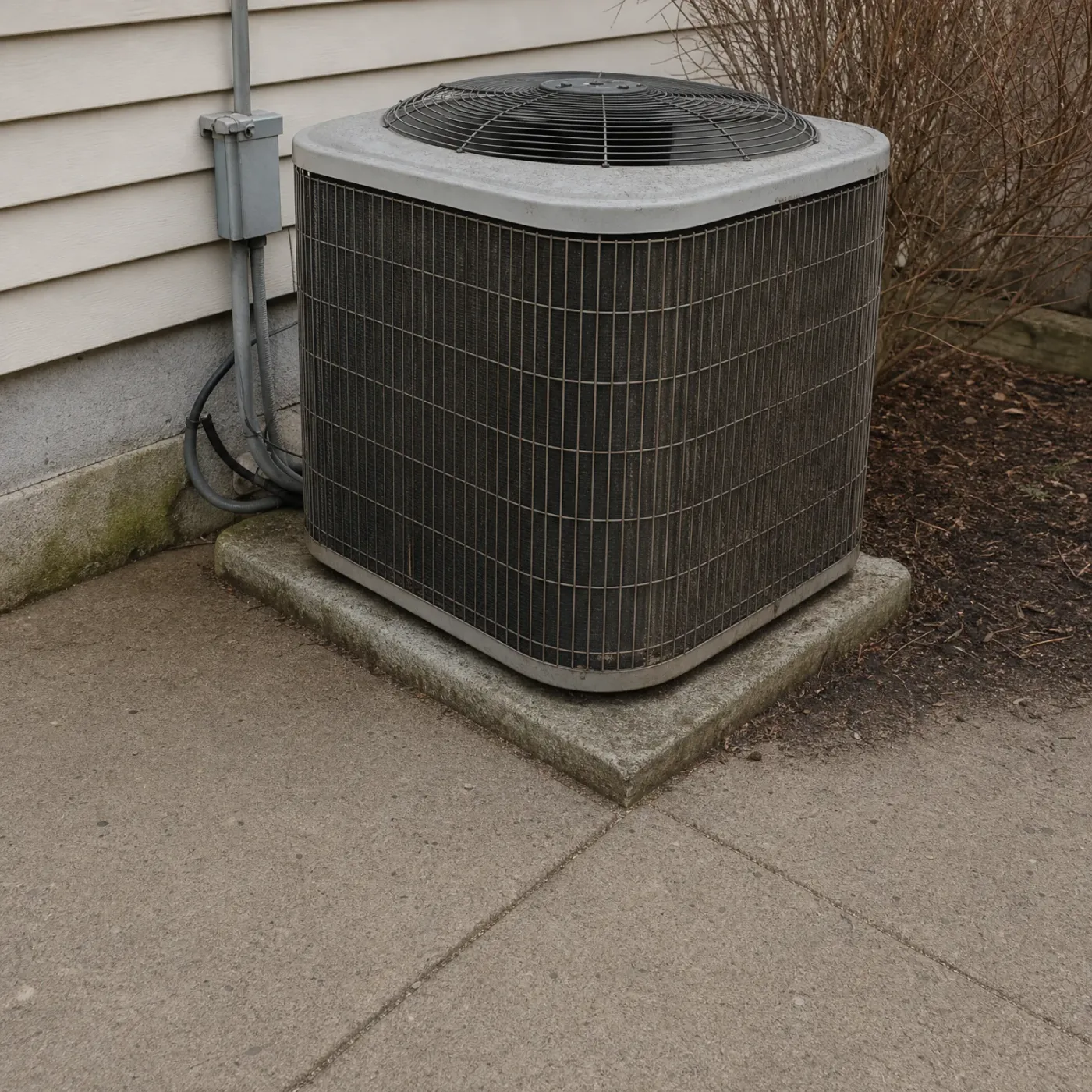
An outdoor air conditioning condenser unit on a concrete pad beside a house with light vinyl siding, an electrical disconnect box and conduit on the wall, bare shrubs and mulch to the right, and a concrete walkway in the foreground.
Before you get your air conditioner maintenance
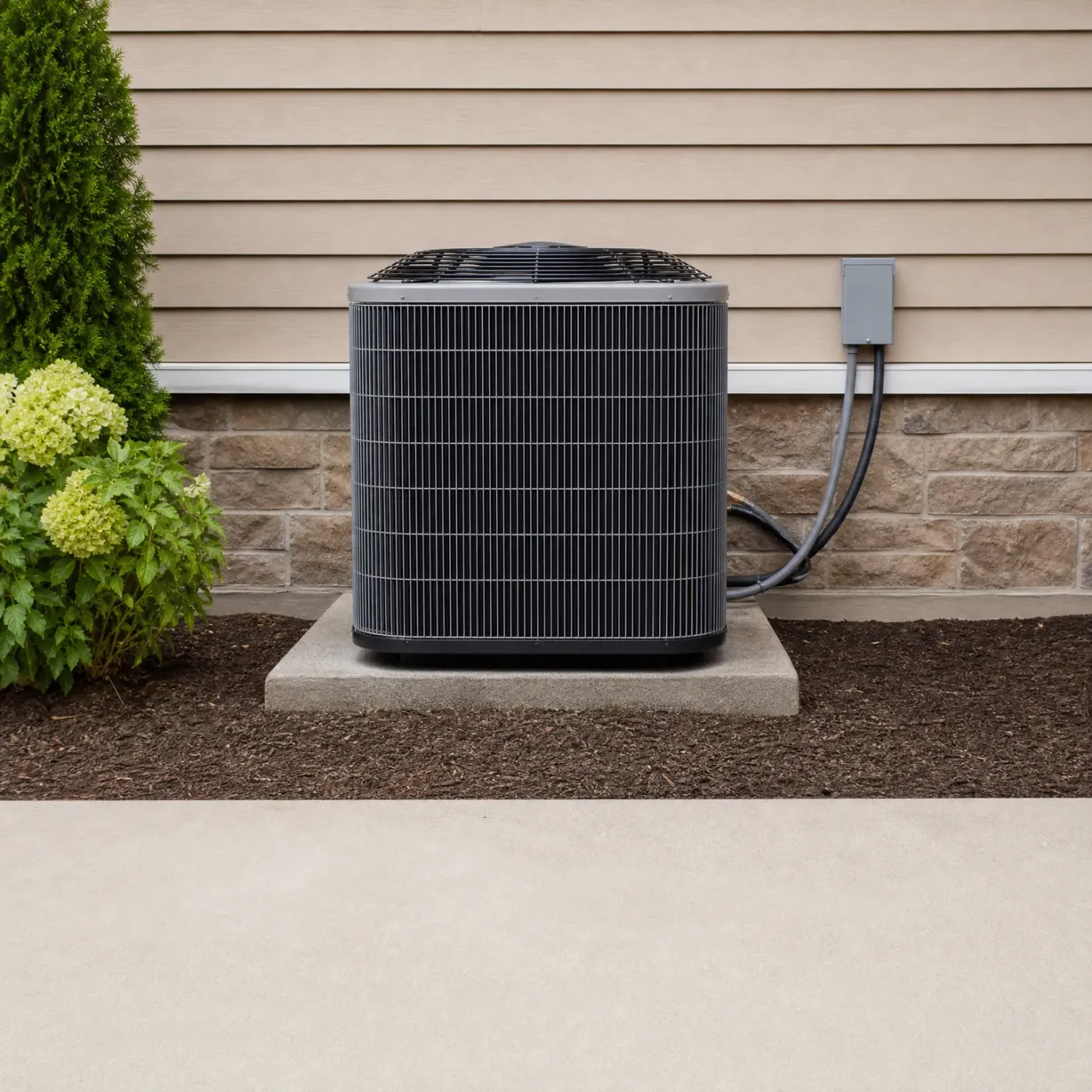
An outdoor air conditioner condenser unit on a concrete pad beside a house with beige horizontal siding and a stone-veneer base, with refrigerant lines running to a gray wall-mounted electrical box, surrounded by dark mulch, a flowering shrub and an evergreen on the left.
After you get your air conditioner maintenance
A single-story house with light gray horizontal siding, dark gray shingled gables, black shutters and a dark front door, fronted by a mulched bed of small shrubs and a large lawn under a clear blue sky.

The dew point is what makes the air feel heavy instead of just hot, and across June, July and August it averages 66°F where homes are in Oklahoma, based on NOAA climate data. At that level, your AC is not just cooling the air, it is pulling a lot of moisture out of it too, and that moisture load is what keeps the compressor running longer than the thermostat number alone would suggest. You might notice the unit cycling less often but staying on longer each time, or a house that feels cool but still a little damp. A dirty coil or weak airflow makes that moisture work harder for the compressor to keep up with.

NASA POWER T2MDEW county cells weighted by homes

A dirty coil and a low charge both make the compressor run longer than it should, and in an Oklahoma summer that shows up on the bill before it shows up as a breakdown. Maintenance before the hottest stretch catches both while they are still cheap problems instead of a dead unit in August. The coil gets rinsed, the charge gets checked, and the compressor goes back to cycling off like it is supposed to instead of running straight through the afternoon. You do not have to track down who does this or figure out what to ask them. Send the form and that part is off your plate. Someone who works on these systems in Oklahoma gets your information and reaches out, and from there it is their job to get the unit running the way it was built to, not yours to chase down.

A single-story stucco house at dusk with a lit paver walkway lined by low path lights, desert plants and boulders in front, and distant mountains under an orange and blue sky.

Air Conditioner Maintenance

Get your air conditioner to the right pro

Step 1 of 3: Equipment
  • A pale ceramic vase holding dried hydrangea blooms sits on a wooden windowsill in sunlight, with green foliage blurred beyond the window glass.
    • Describe your air conditioner job, and a local pro who handles it gets in touch.
  • Sunlit window seat with a cushioned bench and three textured throw pillows beside a dark wooden round side table holding a small stone bowl and a potted green plant.
    • After you send the request, you're done searching.
    • Send the form, and lining up the air conditioner tune-up stops being yours to chase.
  • A potted olive-like tree in a wide beige ceramic planter sits on a pale stone ledge beside a black-framed window with blurred greenery outside.
    • Skip calling around to set up an air conditioner tune-up.
    • One form instead of hunting for a pro who does air conditioner tune-ups.
  • A wooden bench by a black-framed window holds a beige striped pillow, a fringed knit throw, and a pale ceramic vase with olive branches, with green foliage and a white house visible outside.
    • A licensed local pro takes the request for your air conditioner tune-up.
    • Your request goes to one pro, not a list of companies.