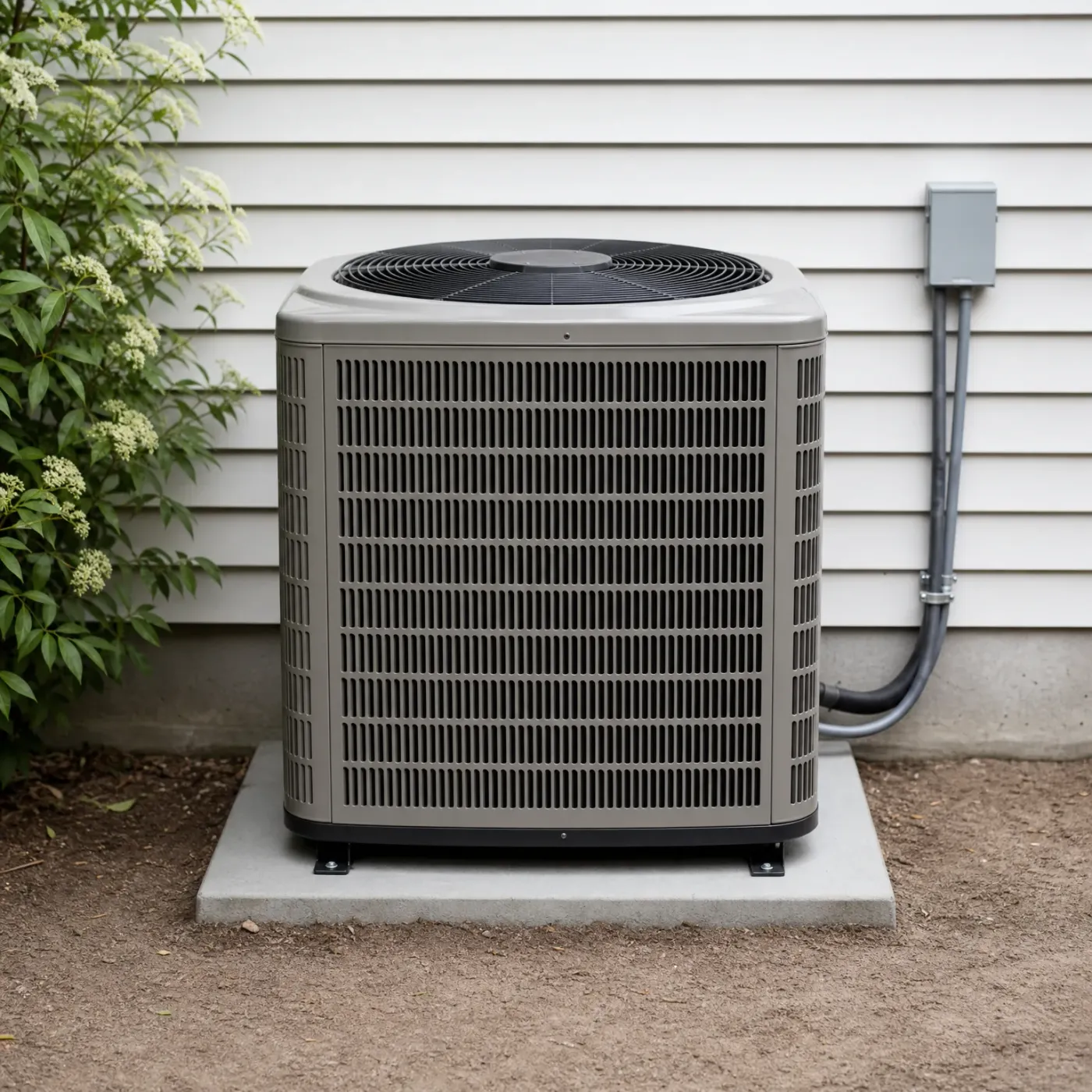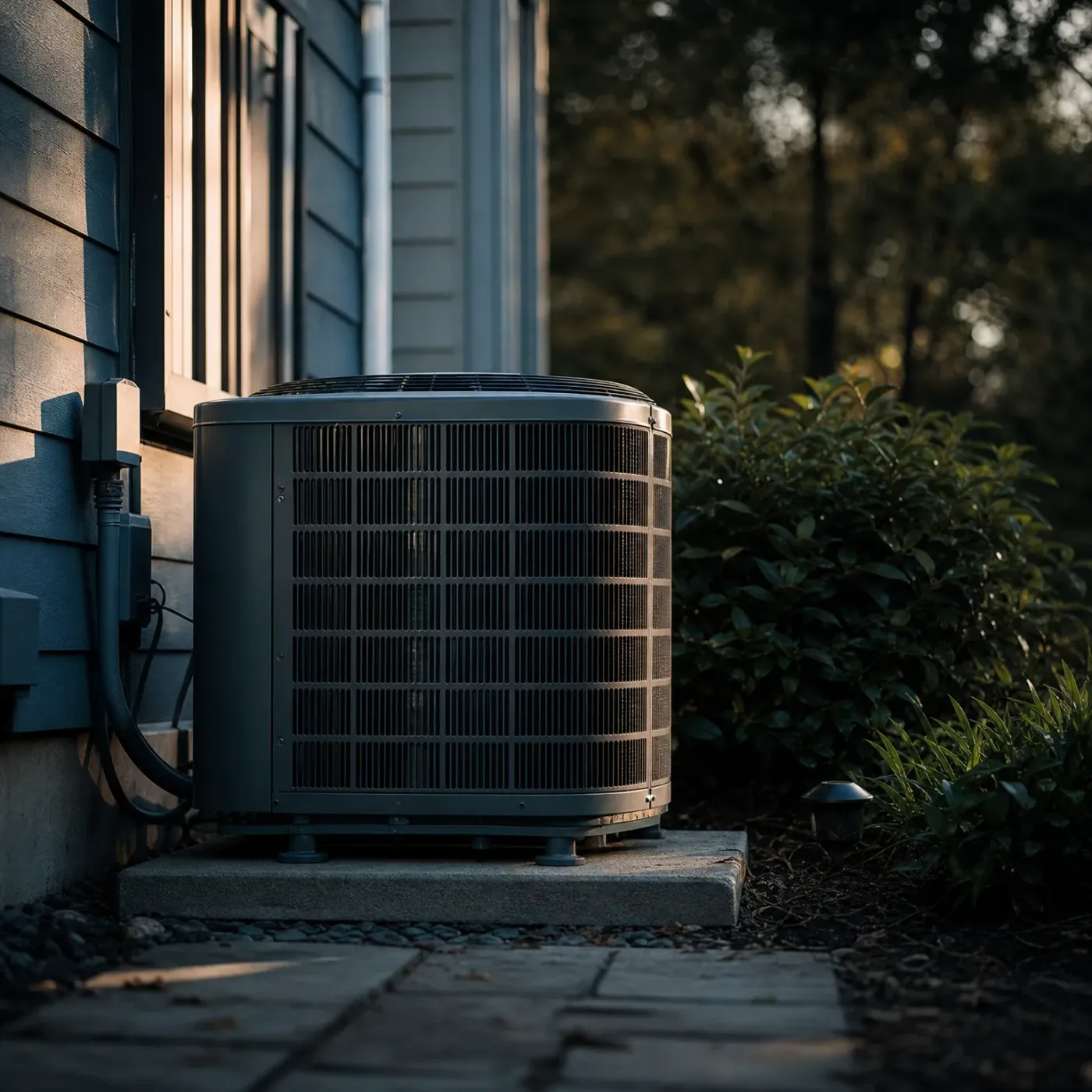




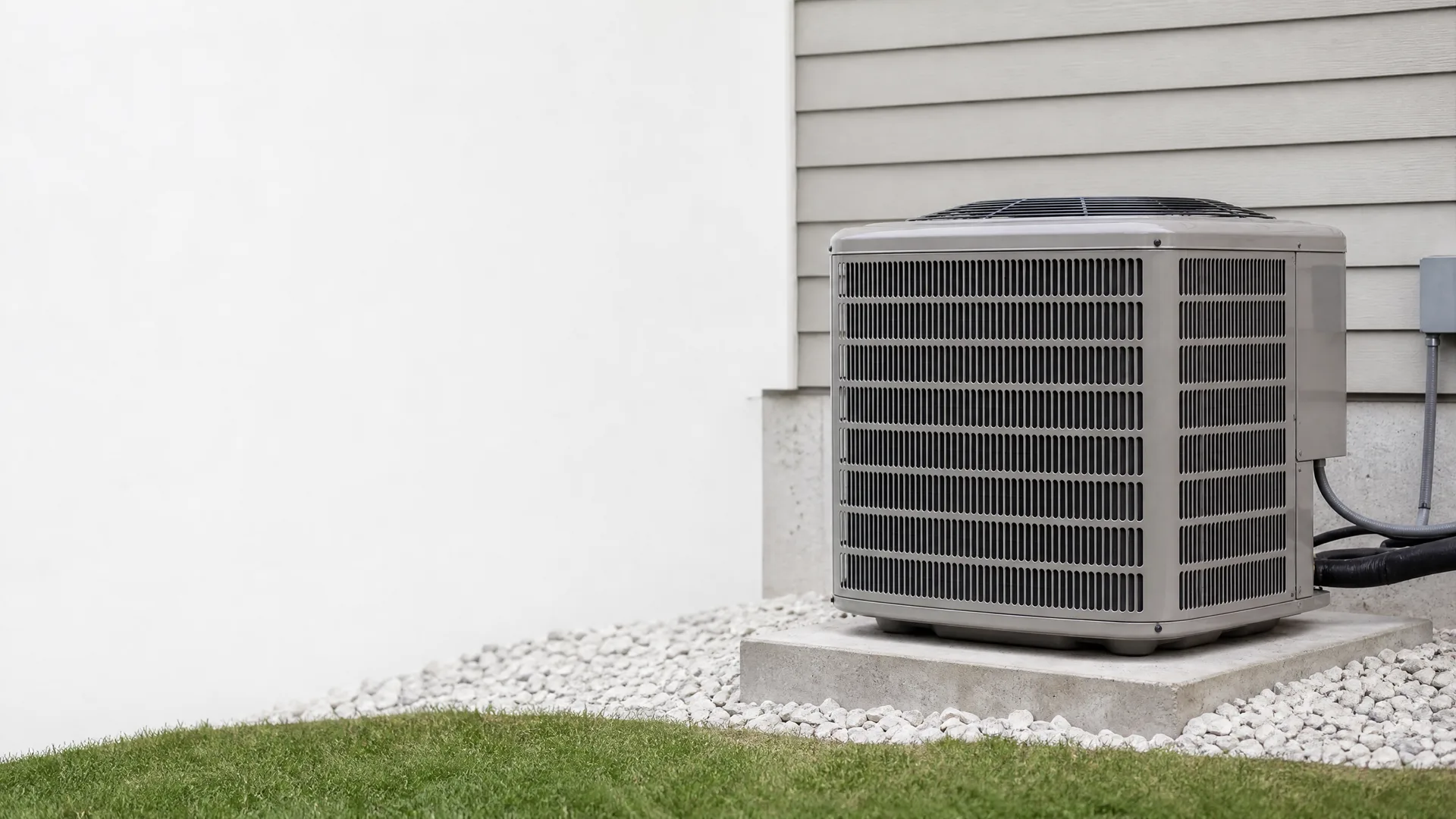
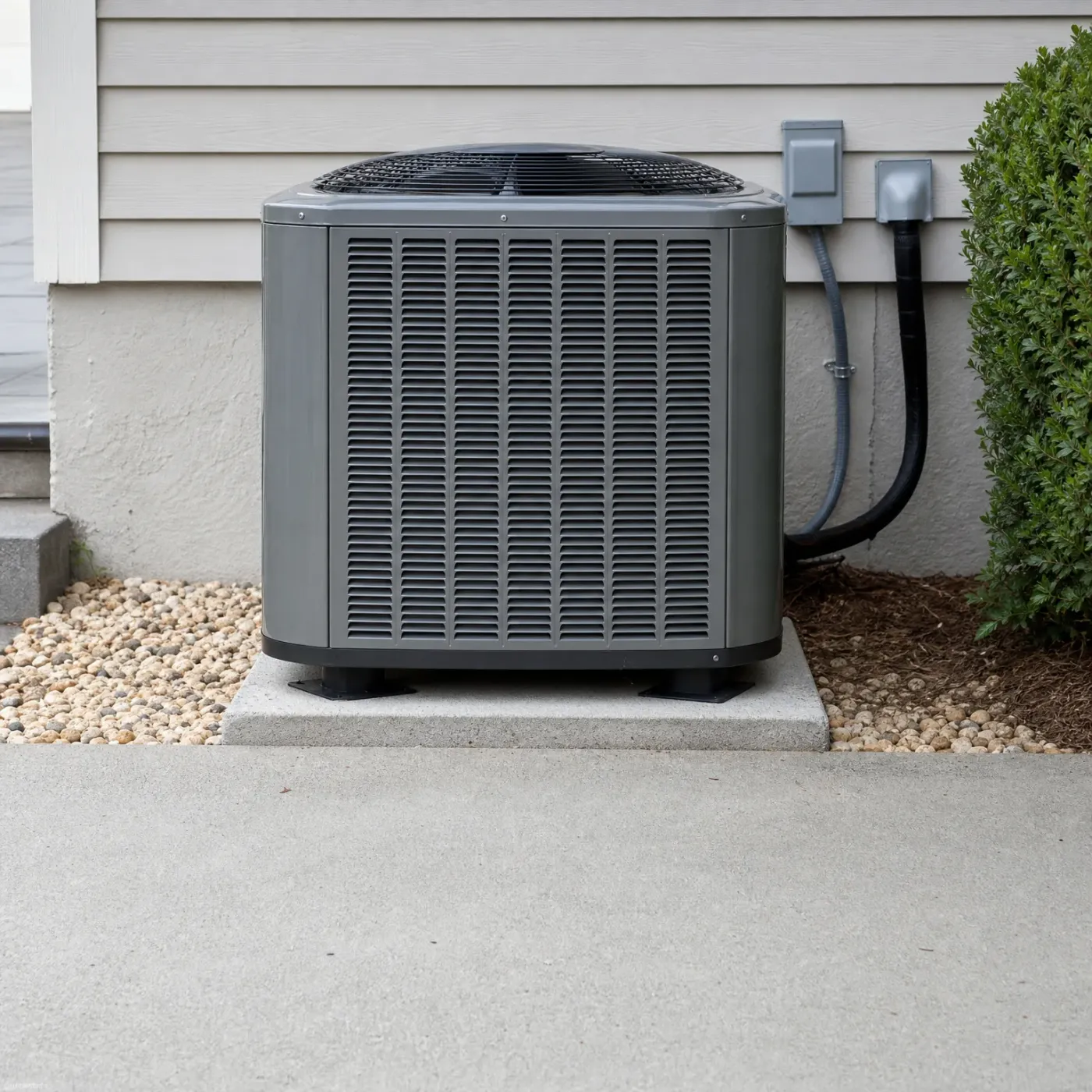
An outdoor air conditioning condenser unit on a concrete pad beside a house with horizontal siding, with an electrical disconnect box on the wall and shrubs to the right in low evening light.

The right pro for this job

Is a variable-speed AC worth it in Oklahoma

A variable-speed AC runs at low capacity most of the day and only ramps up when the heat really pushes, instead of switching on and off at full blast. In a state where summer humidity sits heavy for months, that changes comfort and the power bill. This page walks through when that difference is worth paying for, and can match you with a contractor who looks at your house and gives you a straight answer.

Find my pro

For most Oklahoma homes, yes. A variable-speed AC holds a lower, steady output through the long stretch of muggy days instead of blasting cold air and shutting off, and that steady runtime is what actually pulls moisture out of the air. A single-stage unit cools the house fast then quits, leaving humidity behind even after the thermostat is satisfied. Here, with summers that stay sticky for months, that difference shows up as a house that feels drier at the same temperature. It also means fewer hard starts on the compressor, since the system isn't slamming to full power every cycle. Power is cheap in Oklahoma, so the bill savings matter less than the comfort does. If your house already runs humid with the AC you have now, a variable-speed system is the upgrade that fixes it.

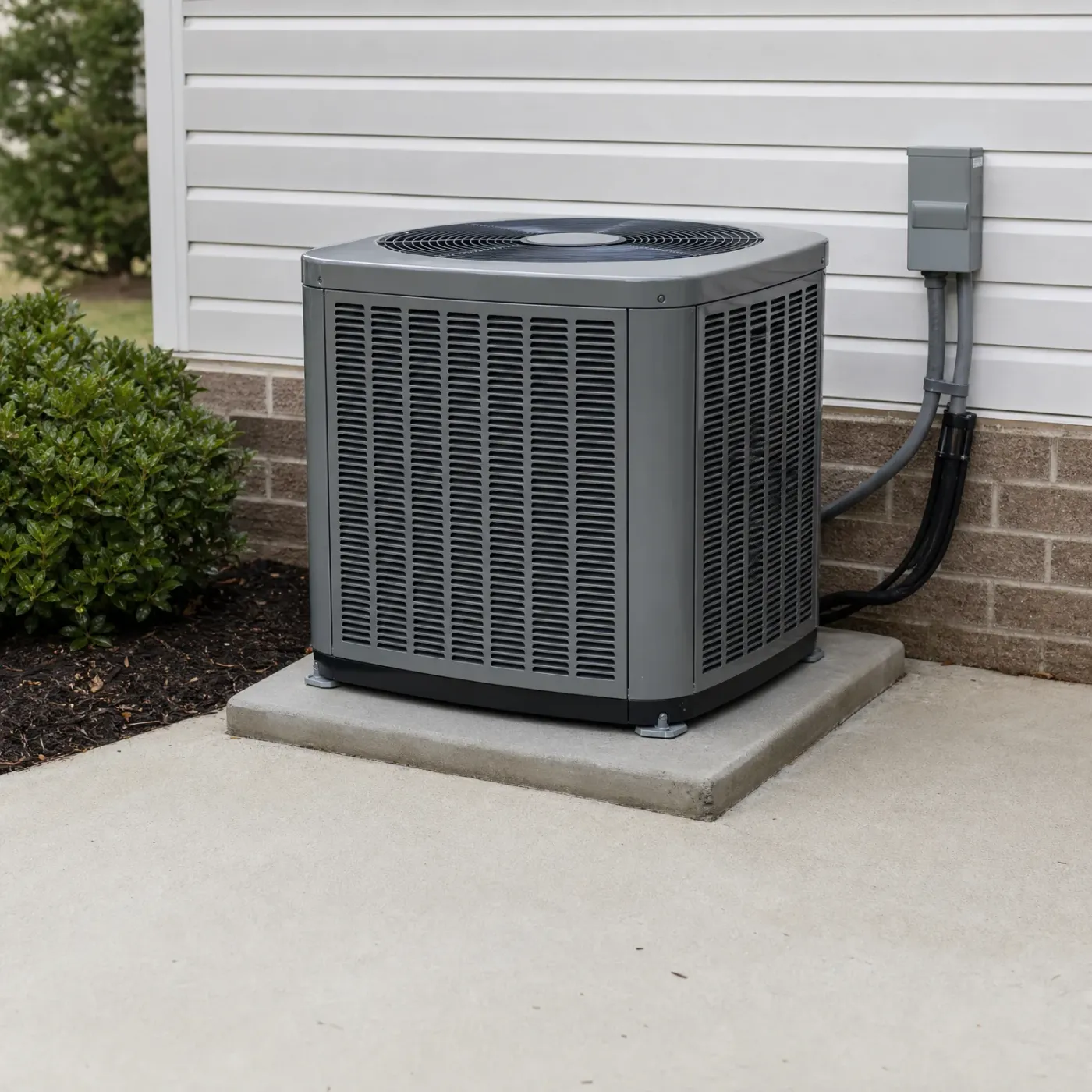
A gray outdoor air conditioner condenser unit on a concrete pad beside a house with white horizontal siding and a brick foundation, with a wall-mounted disconnect box and conduit, and a green shrub with mulch at left.
A single-speed system cycling on and off still gets the house cold, with a clean unit and good airflow doing the work outside.
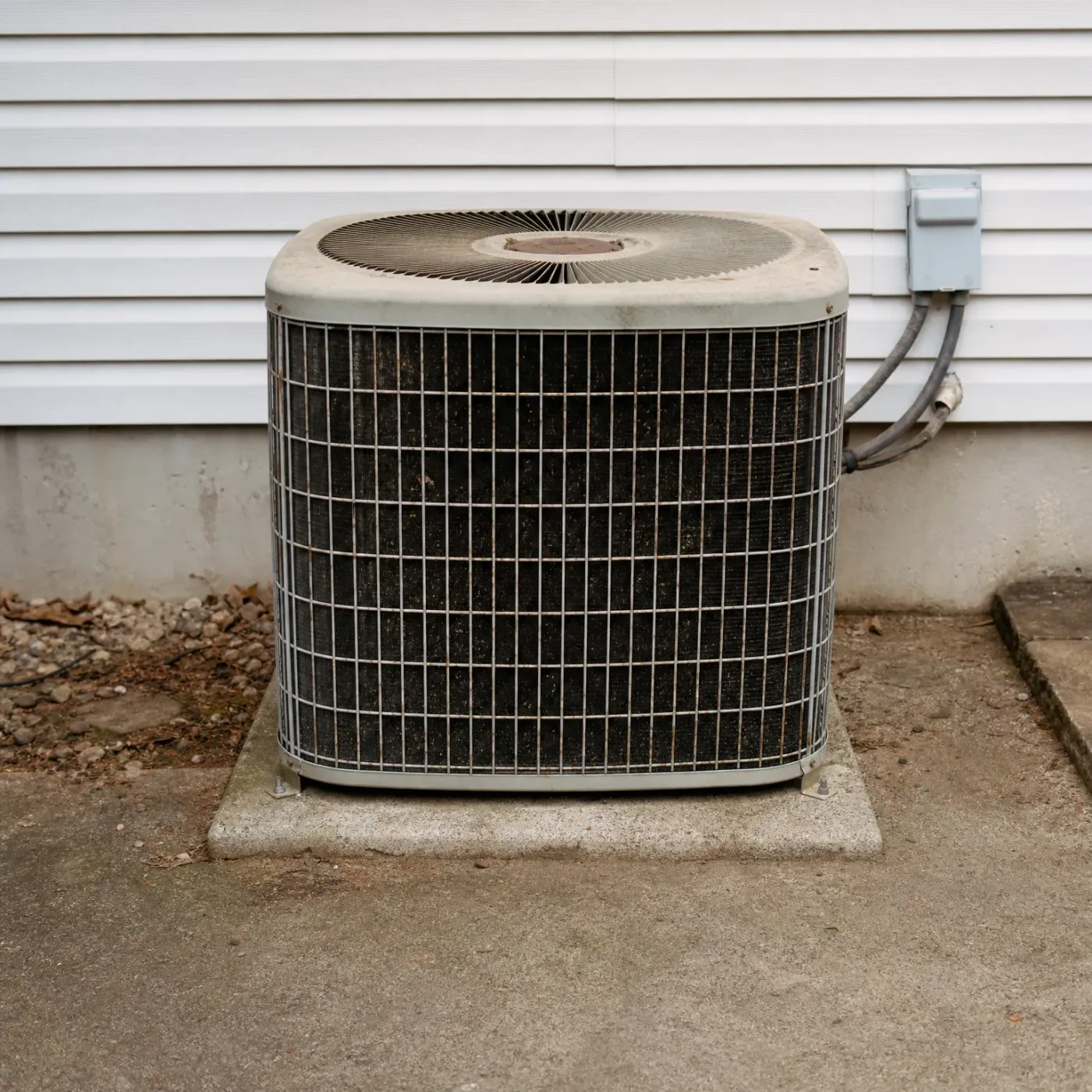
An outdoor air conditioning condenser unit on a concrete pad beside a house with white horizontal vinyl siding, with a gray electrical disconnect box and refrigerant lines on the wall behind it.
A dirty, aging single-stage unit struggles to keep up once August humidity settles in, and the power bill shows it.
A gray-haired bearded man in a dark coat and scarf dusted with snow stands smiling in a dimly lit entryway with a white front door, a side table with a lit lamp, an oval mirror, and a patterned rug.
An older bearded man in a dark snow-dusted coat and gray scarf stands just inside a dimly lit home entry, with a framed picture, lit table lamp, and an adjoining room with a fireplace behind him, and snow visible through the open door.
A gray-haired, bearded man in a dark snow-dusted coat stands smiling in a dimly lit entry hall with a staircase, a lit table lamp, a framed picture, and a living room visible through a doorway.
An older man with gray hair and a beard, wearing a dark jacket dusted with snow, stands smiling in a dimly lit hallway with lamps and a living room visible behind him.

Single-Stage vs Variable-Speed

Single-Stage

  • Costs less to install, since the equipment and the labor are both simpler.
  • Cools the house down fast when it kicks on, which some people just prefer.
  • Works fine in a home with good ductwork and a thermostat that doesn't call for much fine-tuning.
  • Runs loud compared to a variable-speed unit, since it's either off or at full blast.
  • Cycles on and off all day during a hot Oklahoma stretch, and each restart pulls a surge of power.
  • Leaves the air more humid between cycles, since it's not running long enough to wring the moisture out.

Variable-Speed

  • Runs long and low most of the day, which is what actually dries the air out over a muggy Oklahoma summer.
  • Costs more upfront than a single-stage system, both for the unit and the installation.
  • Keeps the house at a steadier temperature instead of swinging a few degrees between cycles.
  • Needs ductwork sized right for it, or the lower airflow it's designed around won't reach every room.
  • Runs quieter, since it's rarely at full speed.
  • Pays back some of that higher cost over time through lower power draw, since power here is cheap but the unit still runs fewer hard-starts.
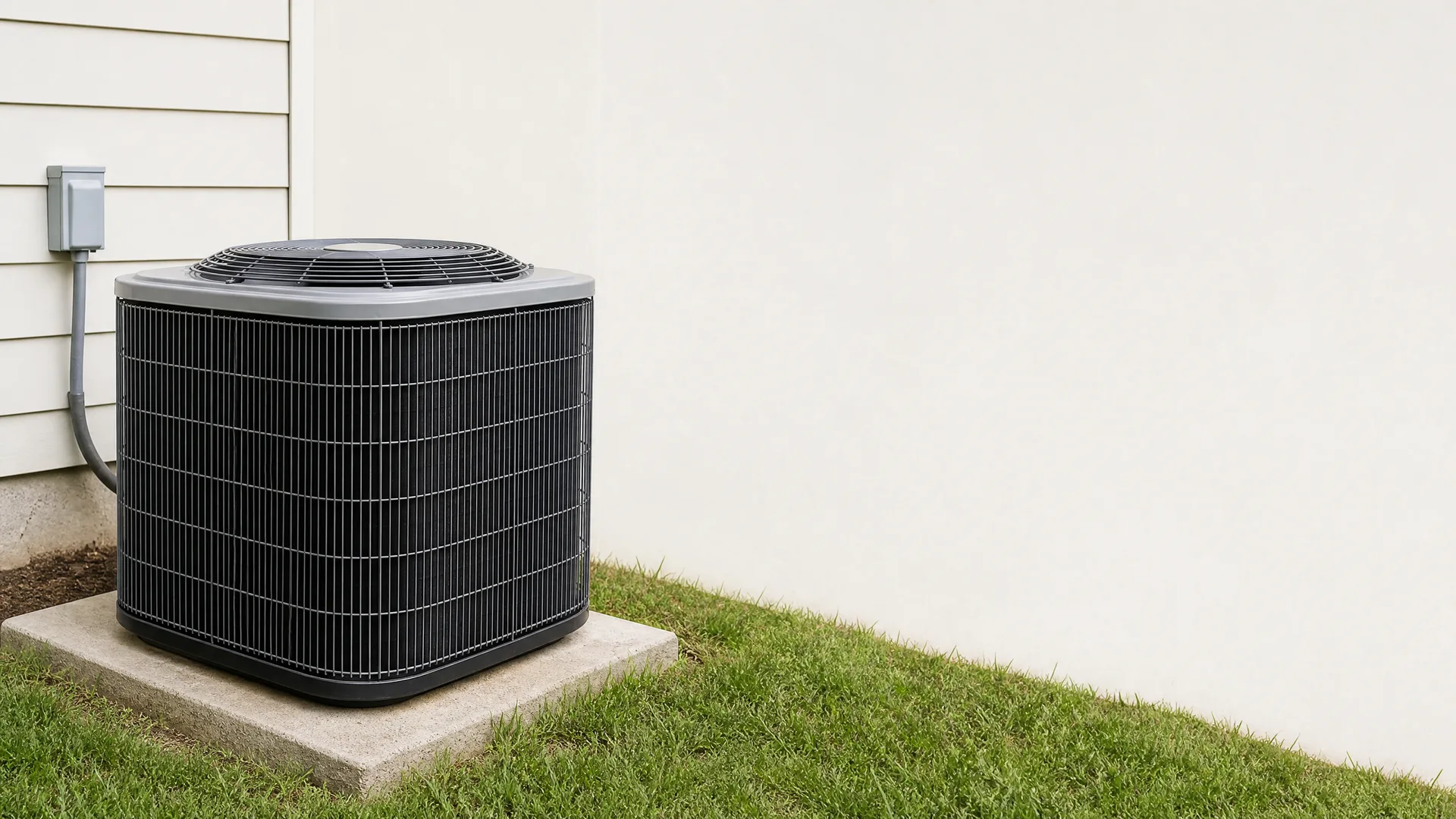
An outdoor air conditioner condenser unit on a concrete pad beside a house wall, with a gray electrical disconnect box and conduit above it and grass in the foreground.

Why low and steady beats blasting

A single-stage unit only has one speed, full on. It cools the air fast, hits the thermostat setting, and shuts off before it has pulled much moisture out of that air. A variable-speed system runs longer at a lower output, and the longer the air moves across the coil, the more water it sheds. That's the mechanical reason Oklahoma houses feel drier at 74 degrees with one system than the other.

A gray outdoor air conditioner condenser unit on a concrete pad beside a house with horizontal lap siding, surrounded by white gravel and a lawn, with a white wall at left.

What the compressor is actually doing

A single-stage compressor has two states, off and full load. A variable-speed compressor adjusts its output in small steps, matching what the house needs at that moment instead of overshooting it. On a mild 78-degree evening it might run at a third of capacity. On a 102-degree afternoon it climbs toward full. That range is what keeps it running longer stretches at lower draw, rather than hard starts and stops all day.

How does a variable-speed AC actually keep the house drier?

You've read that steady runtime pulls moisture out of the air, but it helps to know what that steady runtime actually changes about the equipment's operation, since that's the part that explains the result rather than just restating it.

It keeps the coil cold and wet longer instead of just cold

A single-stage system cools the air in short, full-blast bursts. The coil gets cold fast, the thermostat is satisfied, and the unit shuts off before much air has actually passed over that cold coil. A variable-speed system runs at a lower capacity for a much longer stretch, so air keeps moving across the coil at a slower, steady rate. That slower pass gives the coil time to condense water out of the air instead of just dropping its temperature. The water drains out through the condensate line instead of staying in the air. In an Oklahoma summer, where the air outside is already heavy with moisture, that longer contact time is what actually dries the house out, not just cools it down.

A gray outdoor air conditioner condenser unit on a concrete pad beside a house with horizontal siding and a stucco foundation, with a disconnect box and conduit on the wall, decorative gravel, mulch, and a shrub nearby.

A unit that's keeping up

The coil is clean and the airflow around it is clear. Whether it's single-stage or variable-speed, a condenser like this can hold its set temperature through an Oklahoma summer without much strain, as long as it gets cleaned and checked on schedule.
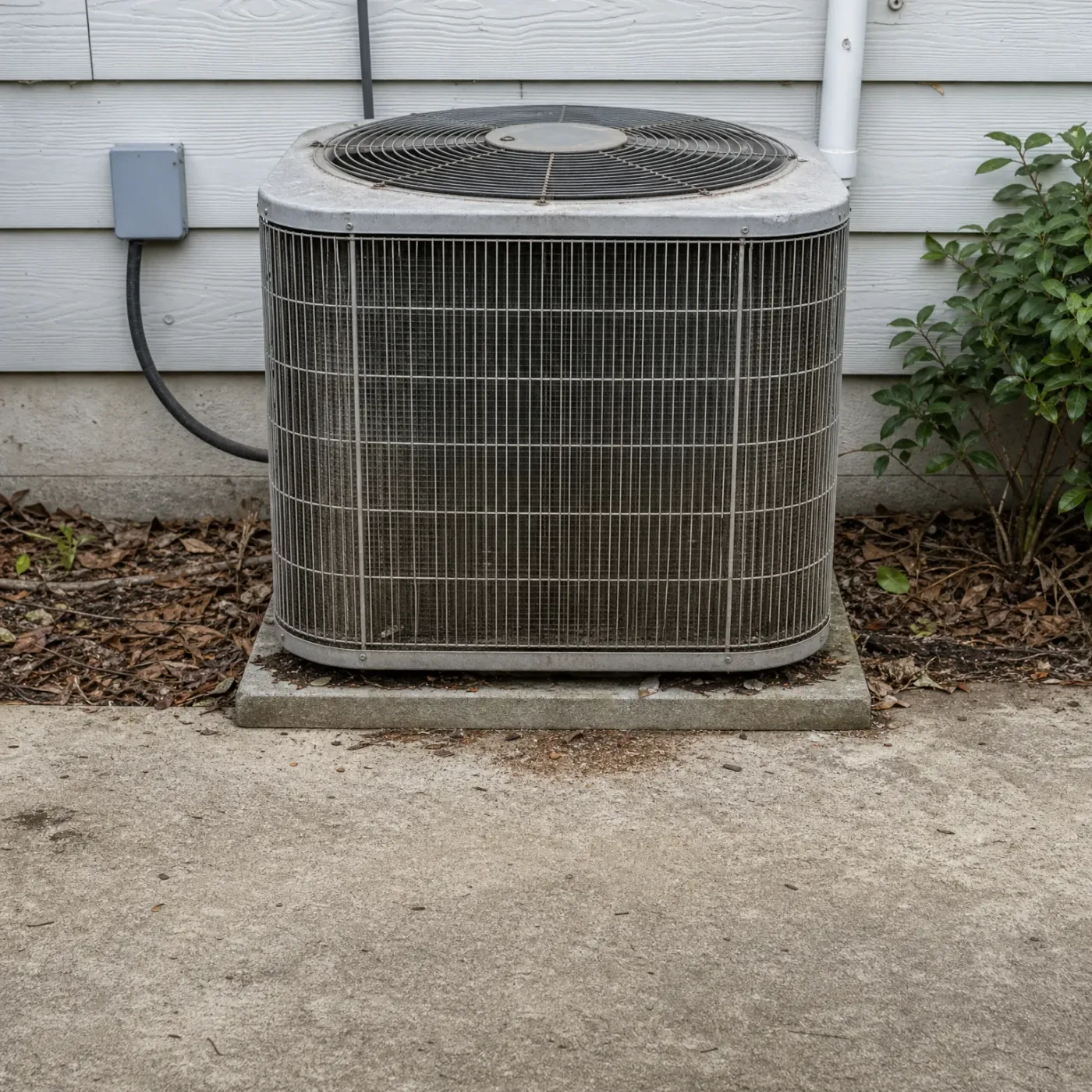
An outdoor air conditioning condenser unit on a concrete pad beside a house with horizontal lap siding, with an electrical disconnect box and conduit on the wall, mulch and a green shrub to the right, and a concrete walkway in the foreground.

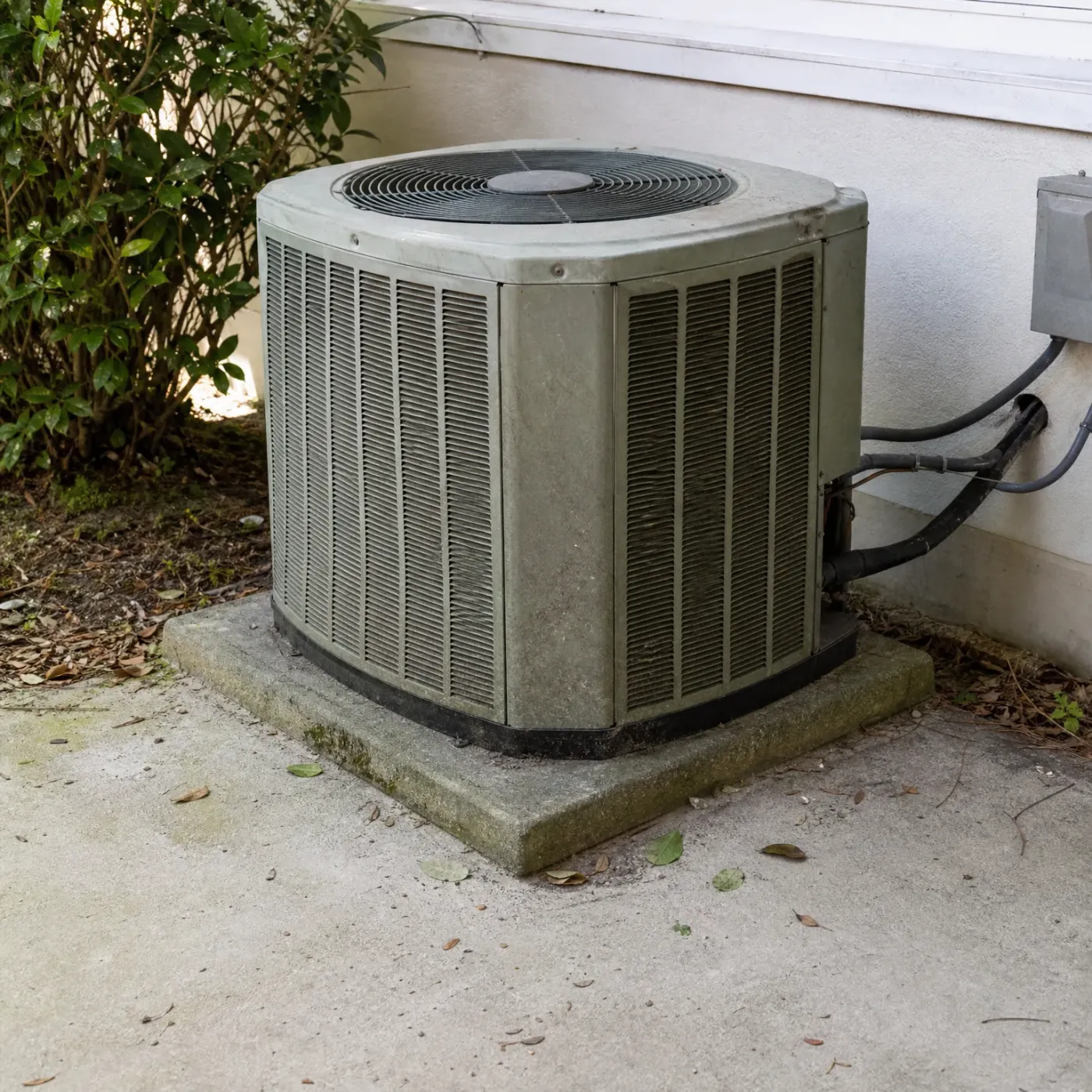
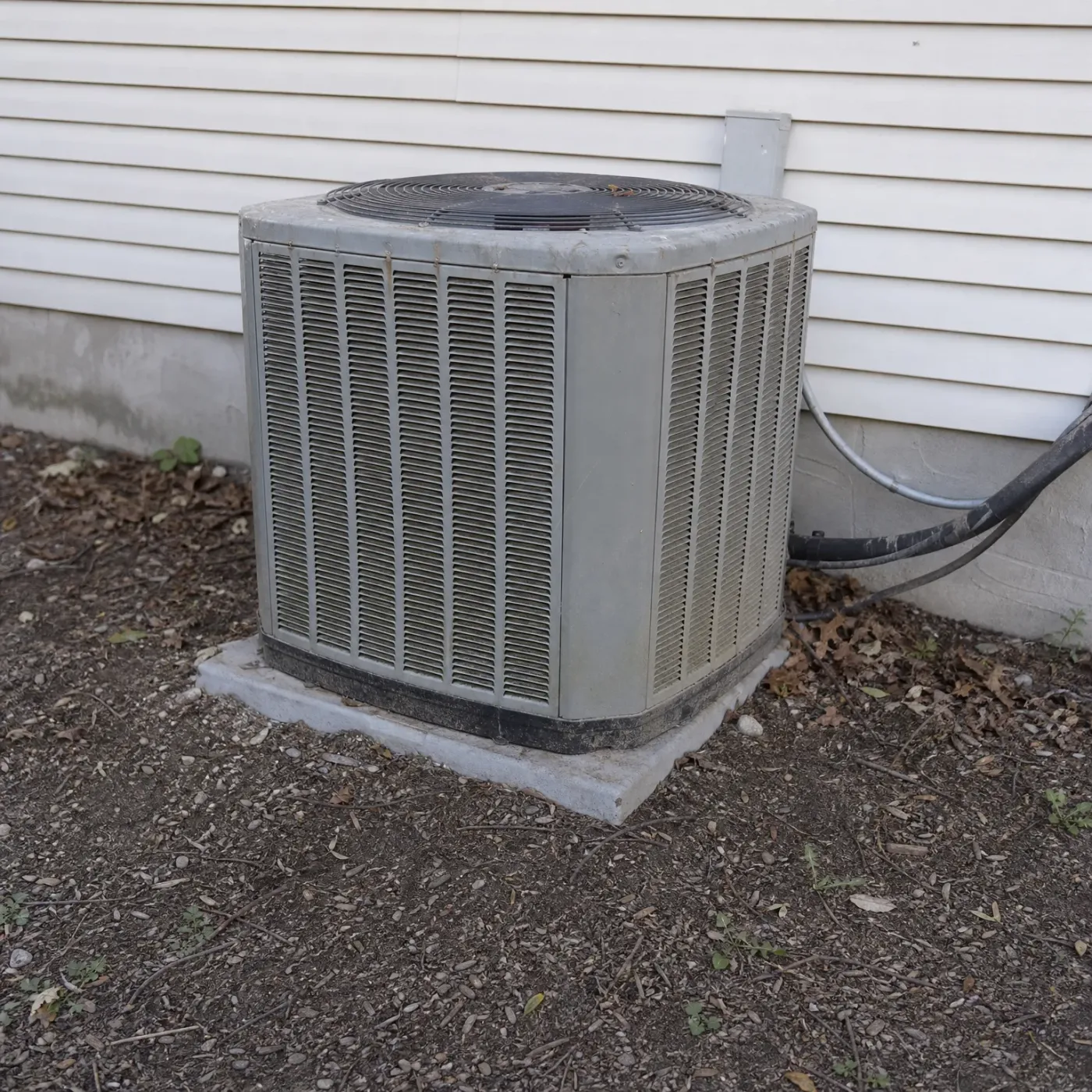
A unit that's falling behind

Dirt packed into the coil grilles blocks the airflow the unit needs to dump heat outside. A single-stage system running flat out already has no lower gear to fall back on, so once it's this dirty, August humidity exposes it fast.

Why does the house still feel damp even when it's cool?

You set the thermostat to 72 and the house gets there, but it still feels sticky. The air conditioner shuts off before it has run long enough to pull the moisture out, so the temperature reads fine while the air stays heavy. You might notice it most in a closed-up bedroom, or in how the sheets feel at night, or a faint musty smell in a closet or bathroom that doesn't get much airflow. Wood floors can feel tacky underfoot. Left alone through a full Oklahoma summer, that extra moisture in the house gives mold and mildew a place to start, especially in rooms that don't get much air movement. It's not the thermostat lying to you. It's the system shutting off too soon to finish the job.

An outdoor air conditioner condenser unit on a concrete pad beside a house with light horizontal vinyl siding, surrounded by bare dirt, gravel and dry leaves, with refrigerant lines and conduit running along the wall.
Before you get your air conditioner installation
A gray outdoor air conditioner condenser unit on a concrete pad beside a house with horizontal lap siding, with a flowering shrub at left and a disconnect box with conduit on the wall at right.
After you get your air conditioner installation

Matched to your air conditioner job

You've read what a variable-speed system does and what it costs you to skip it. The question left is whether it's worth paying more up front for a unit that holds the house dry through July and August instead of just cooling it. That's an install decision, and it matters more here than in a drier state, because an Oklahoma summer gives a single-stage unit months to fall behind on moisture even while it keeps the temperature right. Gas heat and cheap power mean the AC is doing most of the work your utility bill reflects all summer, and that's the machine a variable-speed upgrade changes. Getting it installed right, matched to your ductwork and your house, is what decides whether you actually get that steady, low output or just a bigger single-speed unit with a higher price tag. A contractor who installs these regularly can tell you which one your house actually needs.

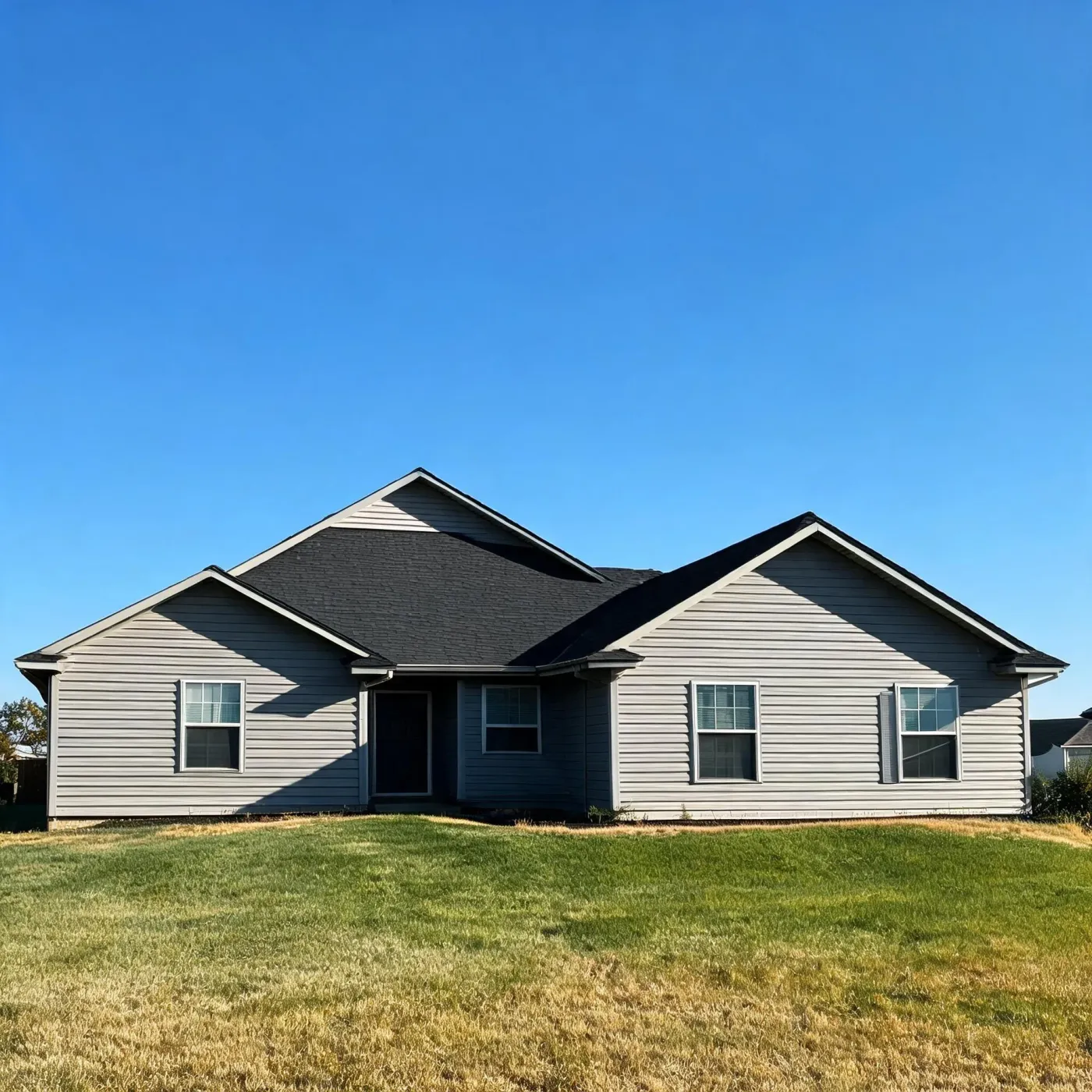
A single-story house with gray vinyl siding, dark shingled gable roofs, and white-trimmed windows, set behind a partly dry green lawn under a clear blue sky.

That stickiness you feel isn't a guess. Averaged across Oklahoma homes through June, July and August, the dew point runs 66°F, according to NOAA climate data. That's thick air, the kind that sits on your skin even after the thermostat says the house is cool. A single-stage AC cools that air fast and shuts off, leaving a lot of that moisture behind. A variable-speed unit runs longer at a lower output, so more air passes over the coil and more water gets pulled out of it before the system ever stops. Same thermostat setting, drier house.

NASA POWER T2MDEW county cells weighted by homes

A woman wrapped in a thick beige fleece blanket sits on a sofa with an open book on her lap, beside a lit table lamp, with a frost-covered window behind her.
An older woman with gray hair in a bun and glasses, wearing a beige knit sweater, smiles while looking to the side in a warmly lit kitchen, with a loaf of bread on the counter in the foreground and a snowy scene outside the window.

Lower electric bills through summer

A variable-speed system spends most of its time running low and slow, which uses less power than a unit kicking on at full blast again and again.

Connect with a pro

Higher cost at install

The equipment and labor both cost more upfront than a single-stage system. You're paying for the compressor that can hold a low setting for hours at a time.

Connect with a pro

Power costs 13.21 cents per kilowatt-hour statewide

At 13.21 cents per kilowatt-hour, every hour your AC spends blasting at full power costs more than one spent running low and steady. Since a variable-speed unit avoids those full-blast cycles, it keeps more of that rate out of your summer bill.

EIA-861 2025 statewide residential average

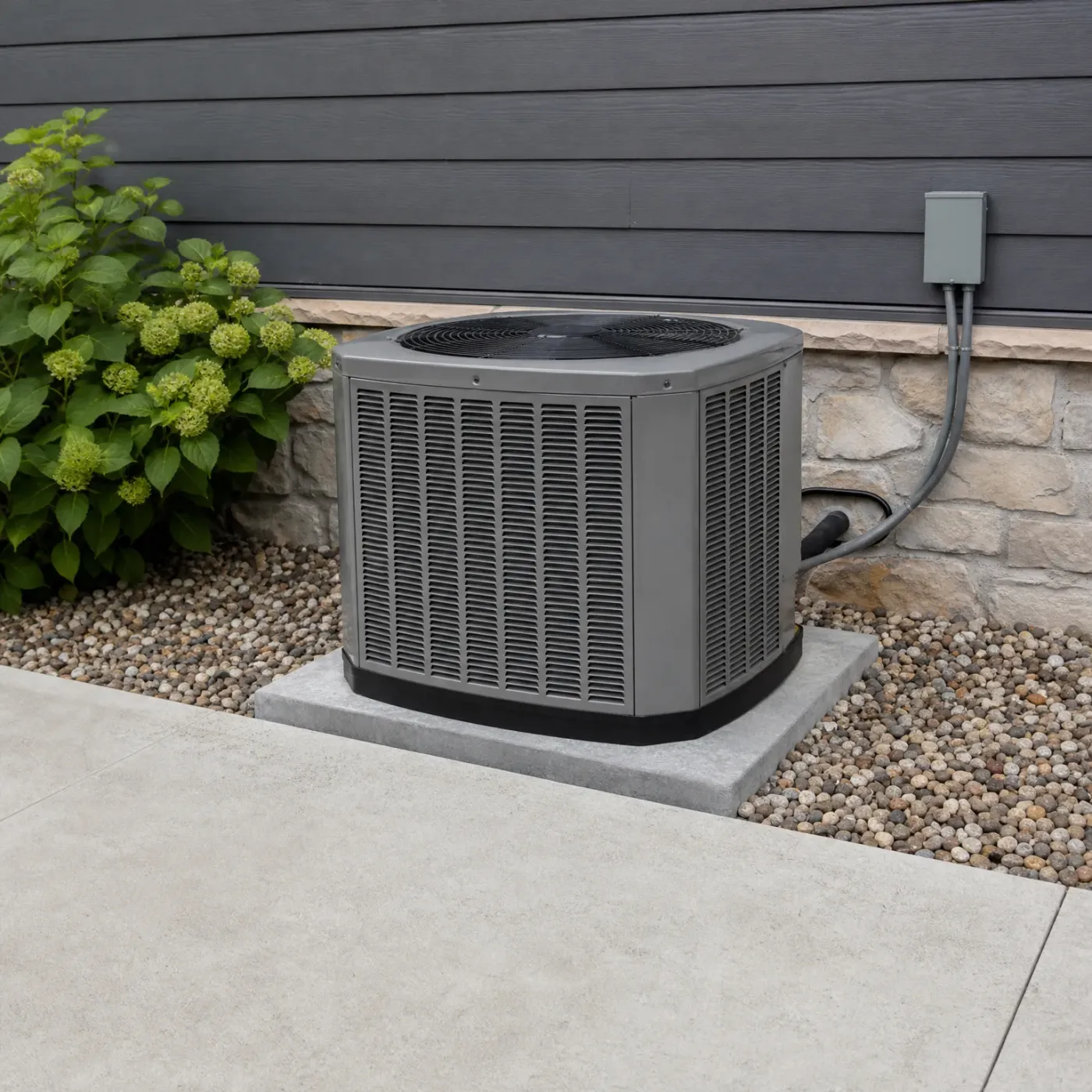
A gray outdoor air conditioner condenser unit on a concrete pad beside a house with dark horizontal siding and a stone base, surrounded by gravel, with a flowering shrub at left and a concrete walkway in front.

Running clean

This outdoor unit sits clear of leaves and clutter, fins open to the air, lines running straight into the wall. A condenser like this can move the heat out of the house the way it's supposed to, whether it's single-stage or variable-speed, and that's what a new install gives you from day one.

An outdoor air conditioner condenser unit sits on a concrete pad beside a stucco wall, with refrigerant lines and conduit running to the wall and a shrub to the left.

Worn down

Grime has built up on the fins and the casing, and that buildup makes the unit work harder to do the same job. An older single-stage system in this shape is the one most likely to lose the fight against August humidity, running the house cold while the air still feels thick.

A smiling man in a denim shirt and white t-shirt stands in an open dark doorway of a stucco house, facing a woman with long brown hair and a green jacket seen from behind in the foreground.

So is it worth it

For most houses in Oklahoma, a variable-speed AC earns its keep. It runs low and steady through the muggy stretch instead of blasting on and off, so the house comes out drier at the same thermostat setting and the summer bill reflects less time spent at full power. A single-stage unit still cools the house. It just works harder to do it once July and August settle in, and the air inside shows that difference even when the temperature doesn't.

Where you land on that tradeoff depends on your house, your ductwork, and what the unit you have now is actually doing in your attic or your side yard. That's not something a page can tell you. A contractor who's looked at your system can. If you send in your information, you'll be matched with one who works in your area and knows this equipment, and they'll reach out to walk through what your house needs before you spend anything on it.

A gray upholstered sofa with a matching cushion sits beside a potted plant and a wooden table holding a small green plant in a stone pot, near a curtained window.
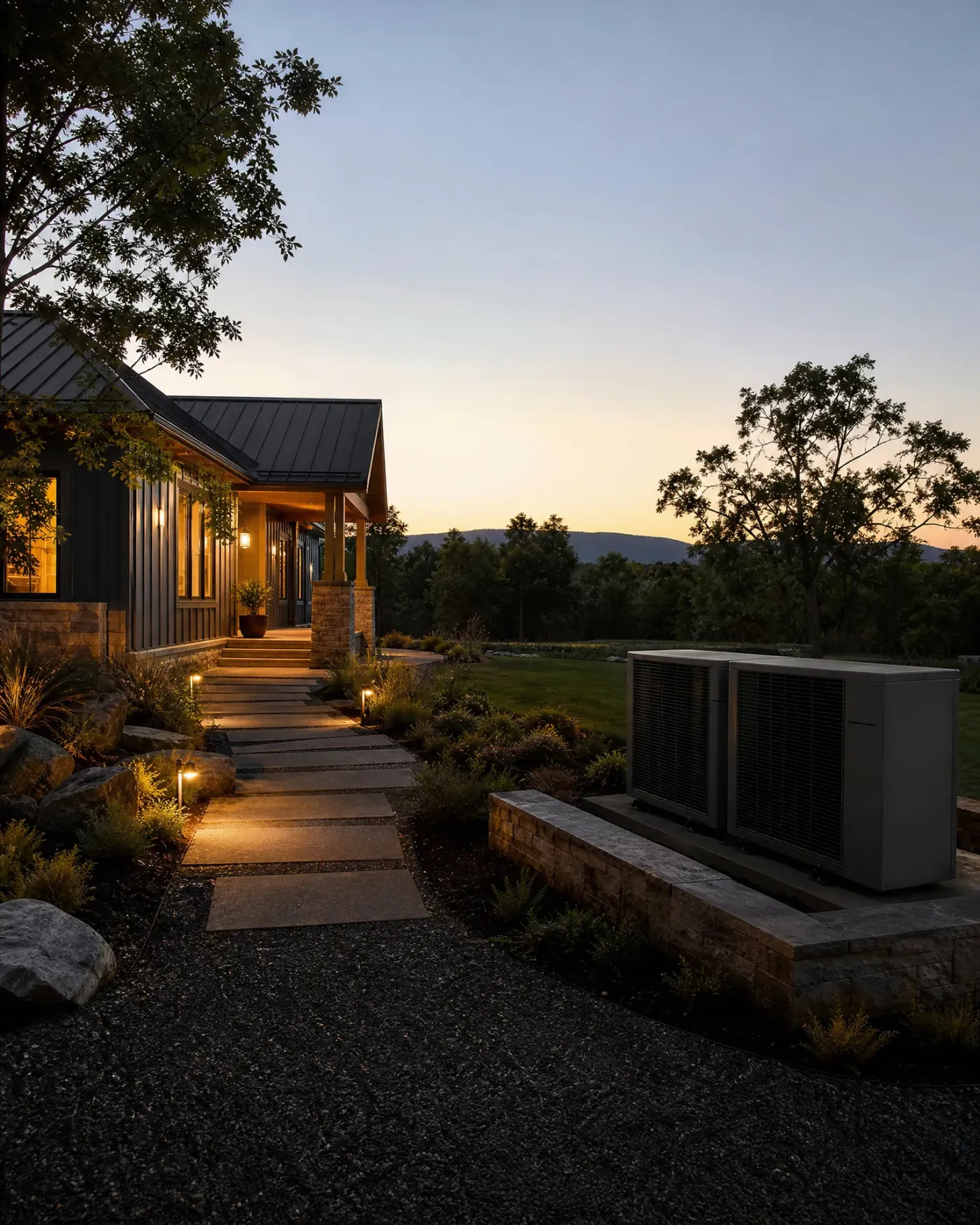
At dusk, a dark board-and-batten house with a standing-seam metal roof and lit entry walkway of stone pavers, with two large outdoor heat pump units on a stone-walled pad at right and trees and hills in the background.

Air Conditioner Installation

A local pro for your air conditioner installation

Step 1 of 3: Equipment
  • A corner of a room with an upholstered wood-framed armchair holding a floral pillow, a round side table with a ceramic lamp, books and a vase of greenery, a framed landscape painting on the wall, a patterned rug, and a sunlit multi-pane window.
    • Get in touch with a local installer about a new air conditioner.
    • Describe your air conditioner job, and a local pro who handles it gets in touch.
  • Interior corner with a wood-framed window showing green foliage outside, a framed landscape print on a beige wall, and a rounded stone vase of leafy branches on a wooden cabinet.
    • One request ends the search for an air conditioner installer.
    • Once you send the form, finding a pro is off your list.
  • A pale ceramic vase holding olive branches sits on a dark wooden countertop beside a carved wooden dough bowl, next to a wood-framed window and a light painted plank wall.
    • Skip collecting and comparing quotes for the new air conditioner.
    • Skip the round of in-home estimates for a new air conditioner.
  • A dark wood round side table holding a brass lamp with a cream shade, a blue-and-white patterned bowl, and a white textured pot of greenery, beside an upholstered chair with a gray patterned cushion and a white-framed window showing green trees and flowering shrubs.
    • One installer gets your project, so there's no bidding war over it.
    • Only one pro gets your request, so you hear from one company.