Signs of a bad AC capacitor in Oklahoma

Step 1 of 3: Equipment

A bad capacitor usually shows up as an AC that hums but won't start, or a fan that spins slow and struggles to get going. Some units click and try a few times before giving up. Others shut off on their own a few minutes after starting, especially on a hot afternoon when the compressor is working hardest. The capacitor holds the electrical charge that kicks the compressor and fan motor into motion, and once it weakens, those motors don't get the jolt they need. In Oklahoma, where the AC runs hard through long, muggy summers, that strain adds up faster than in milder climates. A failing capacitor won't always stop the system outright at first. It might just run longer than it should to cool the house, or short cycle on and off. Either way, it's a part that fails on its own timeline, not a sign of a bigger problem with the unit.

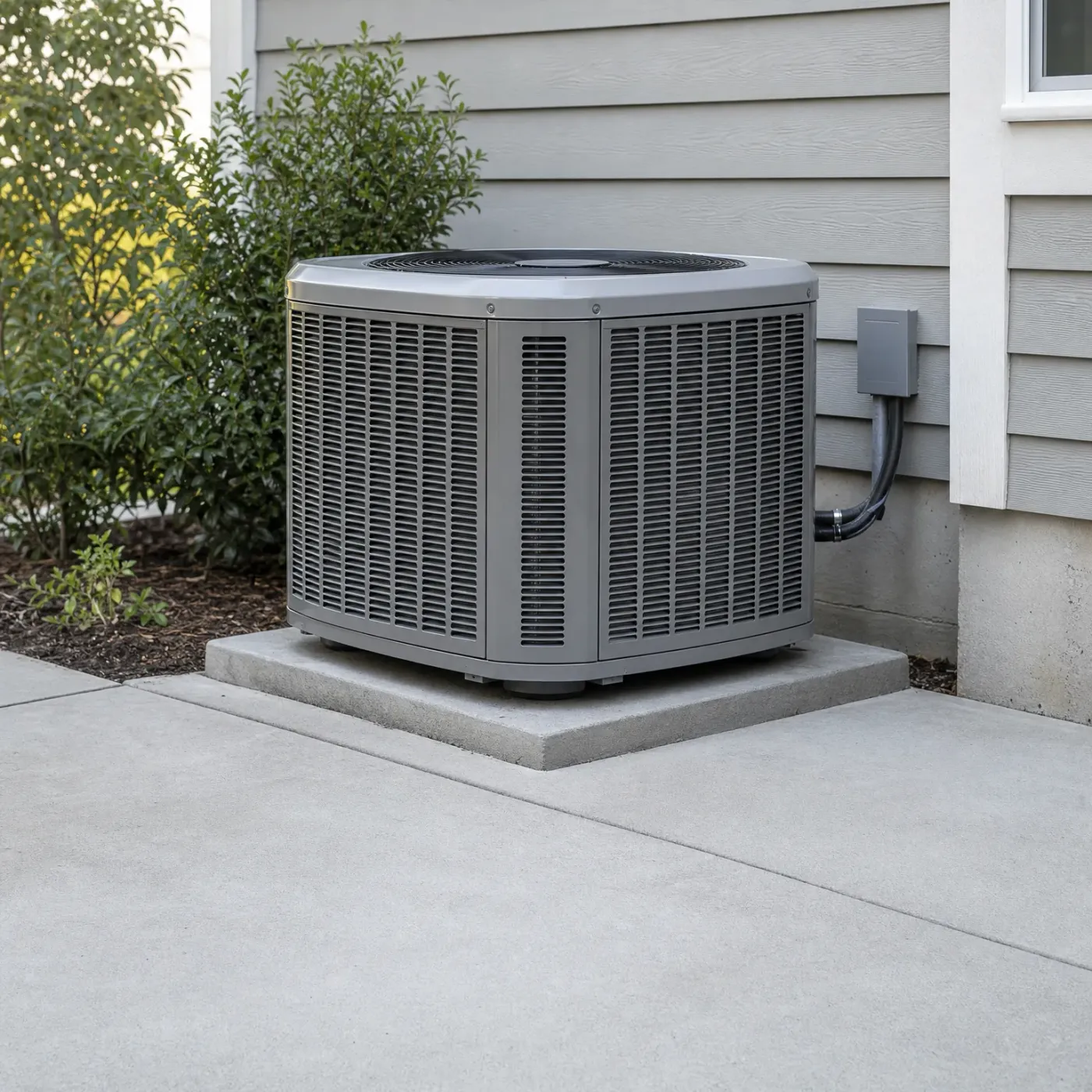
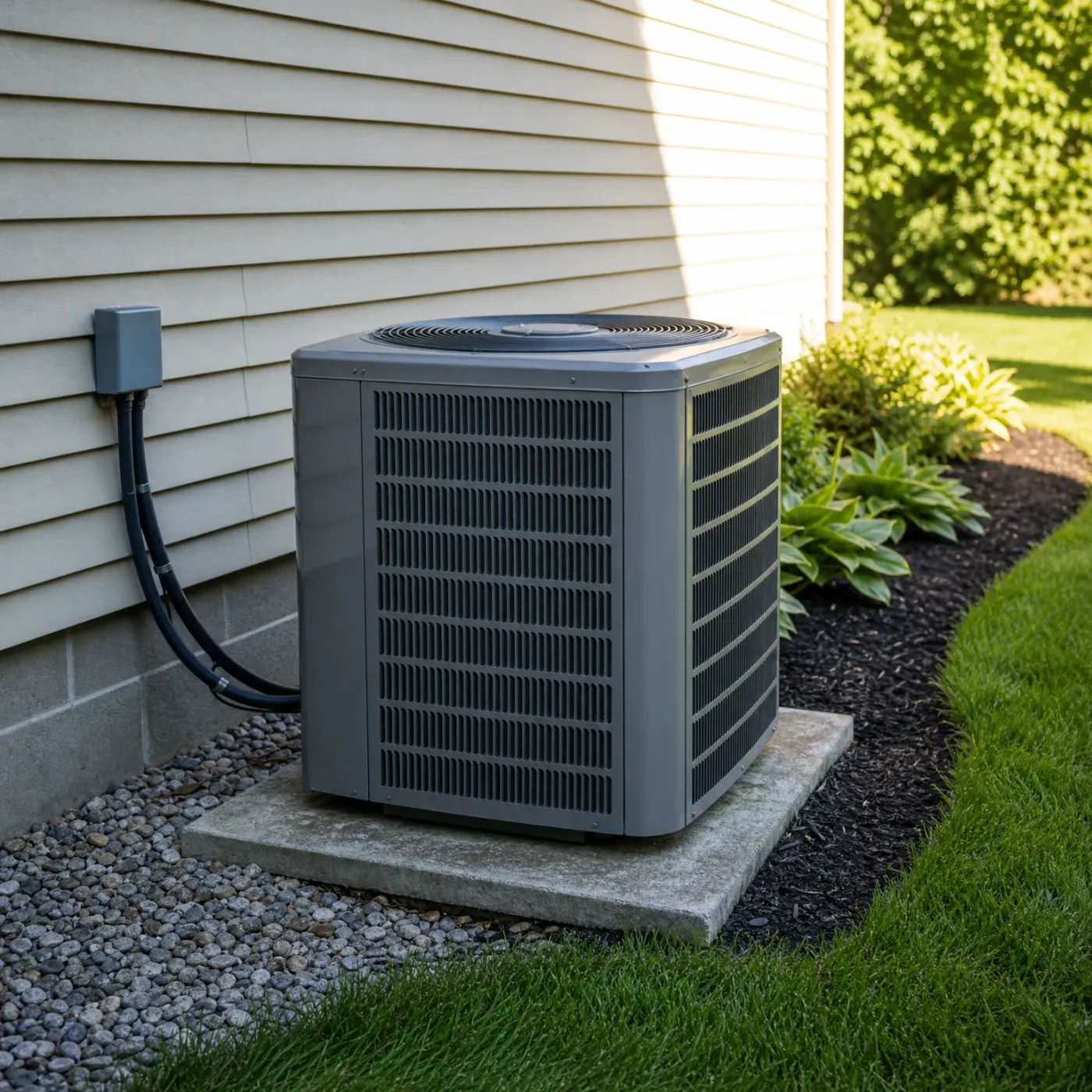
A gray outdoor air conditioner condenser unit on a concrete pad beside a house with horizontal vinyl siding, surrounded by mulch, flowering shrubs, and lawn.

Starts up and holds steady

A good capacitor gives the compressor and fan motor the jolt they need to start, then keeps them running smooth. The fan spins right up to speed. The unit settles into a steady hum and stays there, cycling normally even on a hot Oklahoma afternoon.
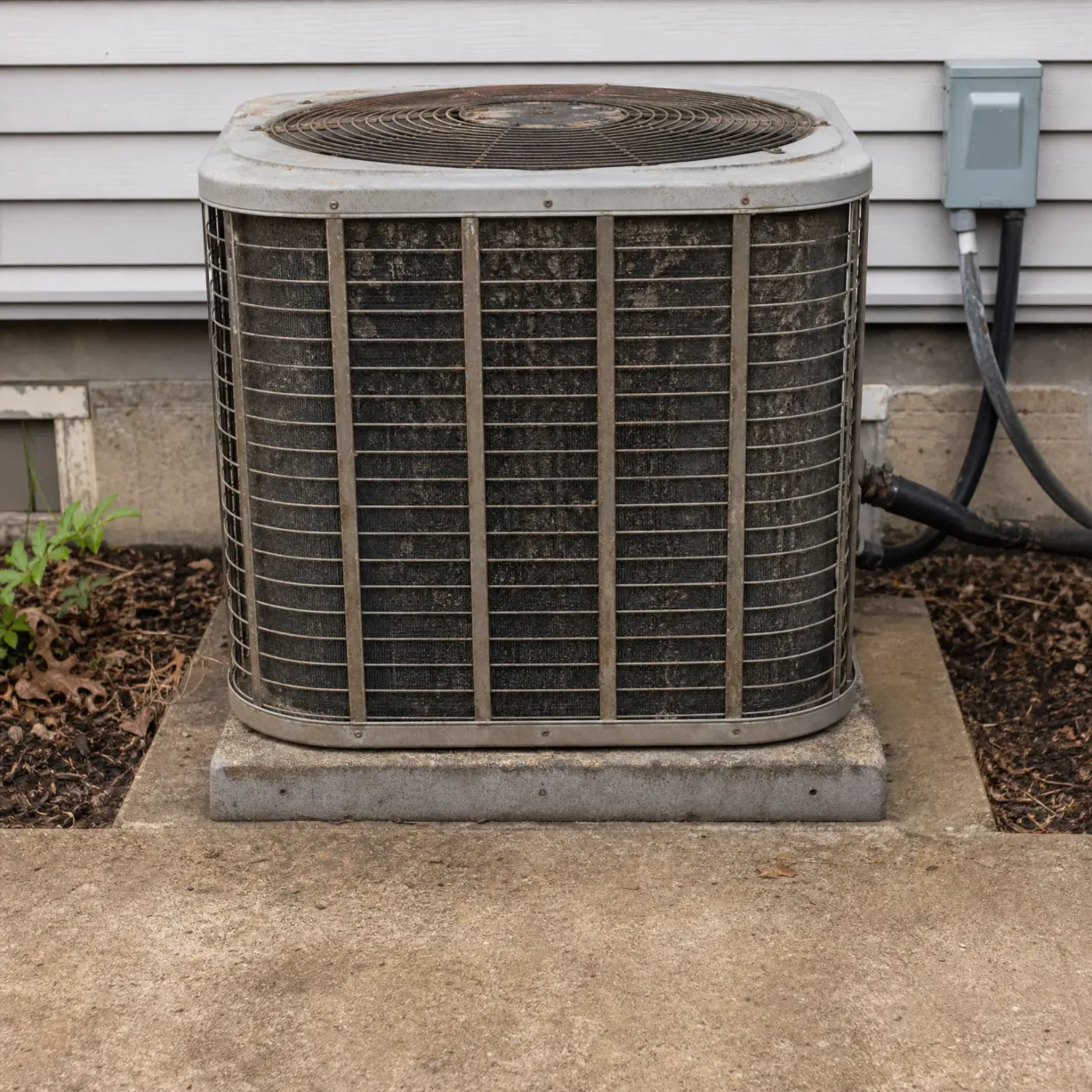

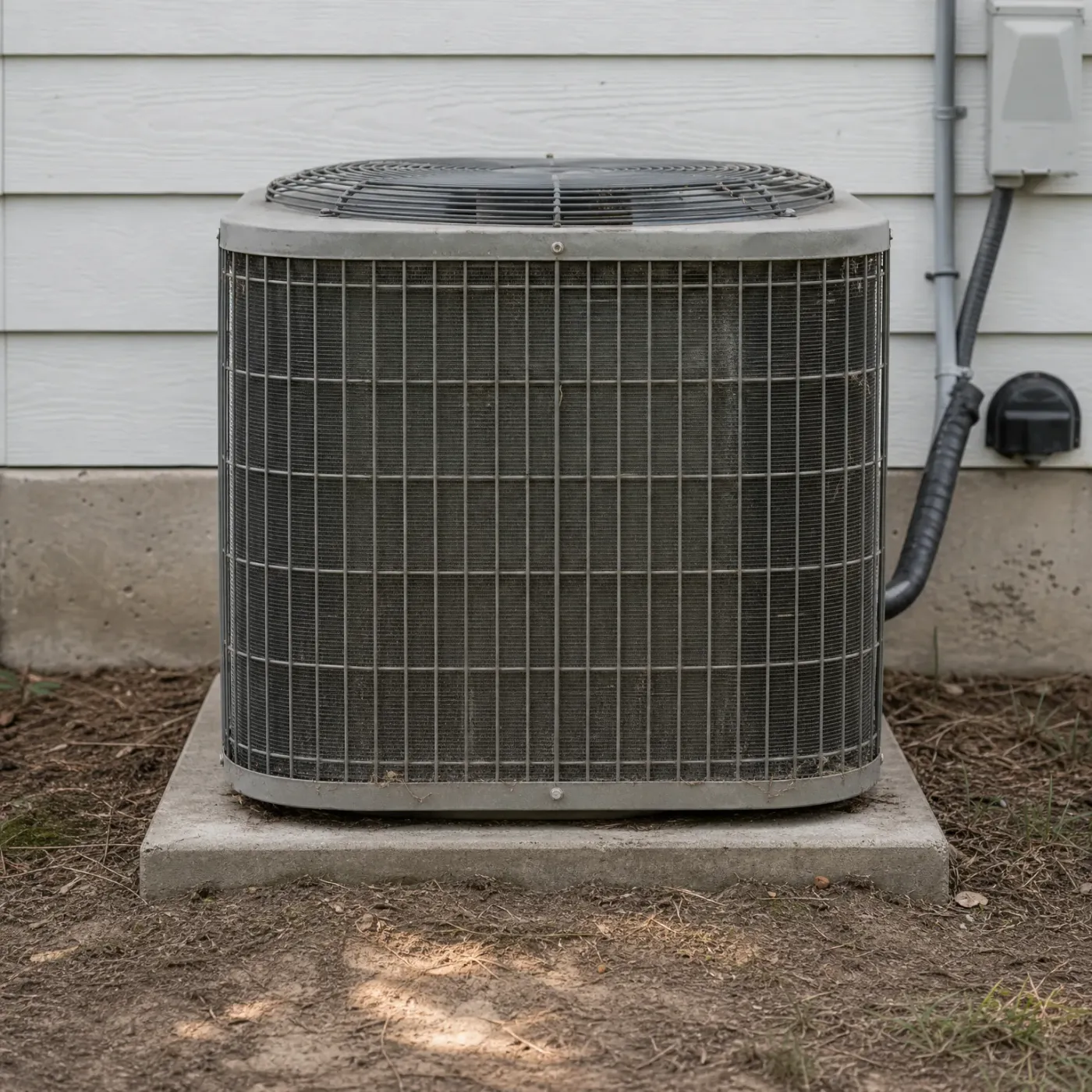
A weathered outdoor air conditioning condenser unit on a concrete pad beside a house with light horizontal siding, an electrical disconnect box and conduit on the wall, and mulched soil on either side.

Struggling to keep going

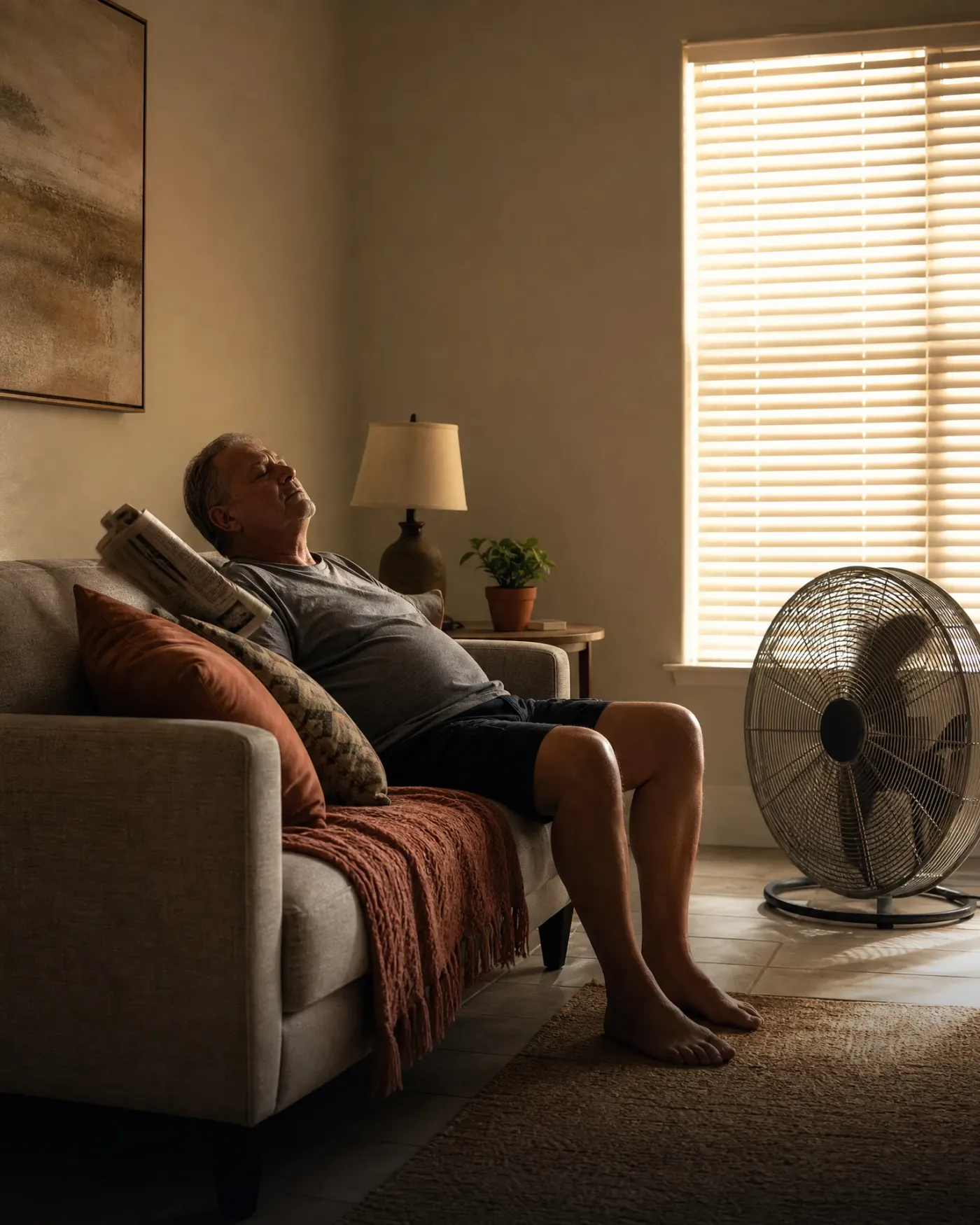
A failing capacitor can't deliver that steady charge. The fan may turn slowly or not at all while the compressor hums. Grime on the coil fins makes a weak unit work harder still, so a capacitor already struggling gives out sooner.

A man with grey hair and stubble in a dark sweater sits on a grey sofa indoors, looking off to the side, with a potted plant and a sunlit window behind him.
A man with gray hair, a beard and glasses, wearing a dark green sweater, sits on a gray sofa in a sunlit living room with a potted plant, table lamp and wooden sideboard behind him.
A middle-aged man with graying hair and a short beard sits on a blue sofa in a living room, looking toward a window, with a bookshelf, lamp and framed picture in the background.
A man with graying curly hair and a dark green sweater sits on a gray sofa in a sunlit living room, looking off to the side, with a framed picture, shelving, an armchair and a window with sheer curtains behind him.

How a Capacitor Fails

  • The capacitor stores a charge and releases it in one burst to spin the compressor and fan motor.
  • A weak capacitor still sends some charge, which is why the motor hums instead of starting clean.
  • Capacitors are rated in microfarads, and a weak one tests below that rating on a meter.
  • Oklahoma summers push the capacitor hardest in the late afternoon, when the compressor works longest to keep up.
  • Heat breaks down the gel inside a capacitor faster than cold does, which is why summer is when most fail.
  • A capacitor that bulges on top or has leaked oil around the casing has already failed internally.

A capacitor's job is simple. It holds an electrical charge and dumps it in one burst to get the compressor and fan motor spinning. That burst matters because those motors can't start turning on their own. Without it, or with a weak version of it, the motor just sits there and hums under its own weight.

Capacitors carry a microfarad rating, printed right on the side, and that number tells you what it's supposed to deliver. A meter reading below that rating means the capacitor is on its way out, even if the unit is still limping along. It doesn't fail all at once. The gel inside breaks down a little more each time the unit runs, and heat speeds that up far more than cold ever does. That's why capacitors tend to go in summer rather than winter.

In Oklahoma, the hardest stretch on a capacitor is late afternoon, when the compressor has been working for hours trying to keep the house cool and cycles on again and again. Each cycle is another jolt the capacitor has to deliver, and a weak one has less to give every time.

By the time you can see a problem, like the top bulging or oil leaking out around the casing, the capacitor has already failed on the inside. The outside just hasn't caught up yet.

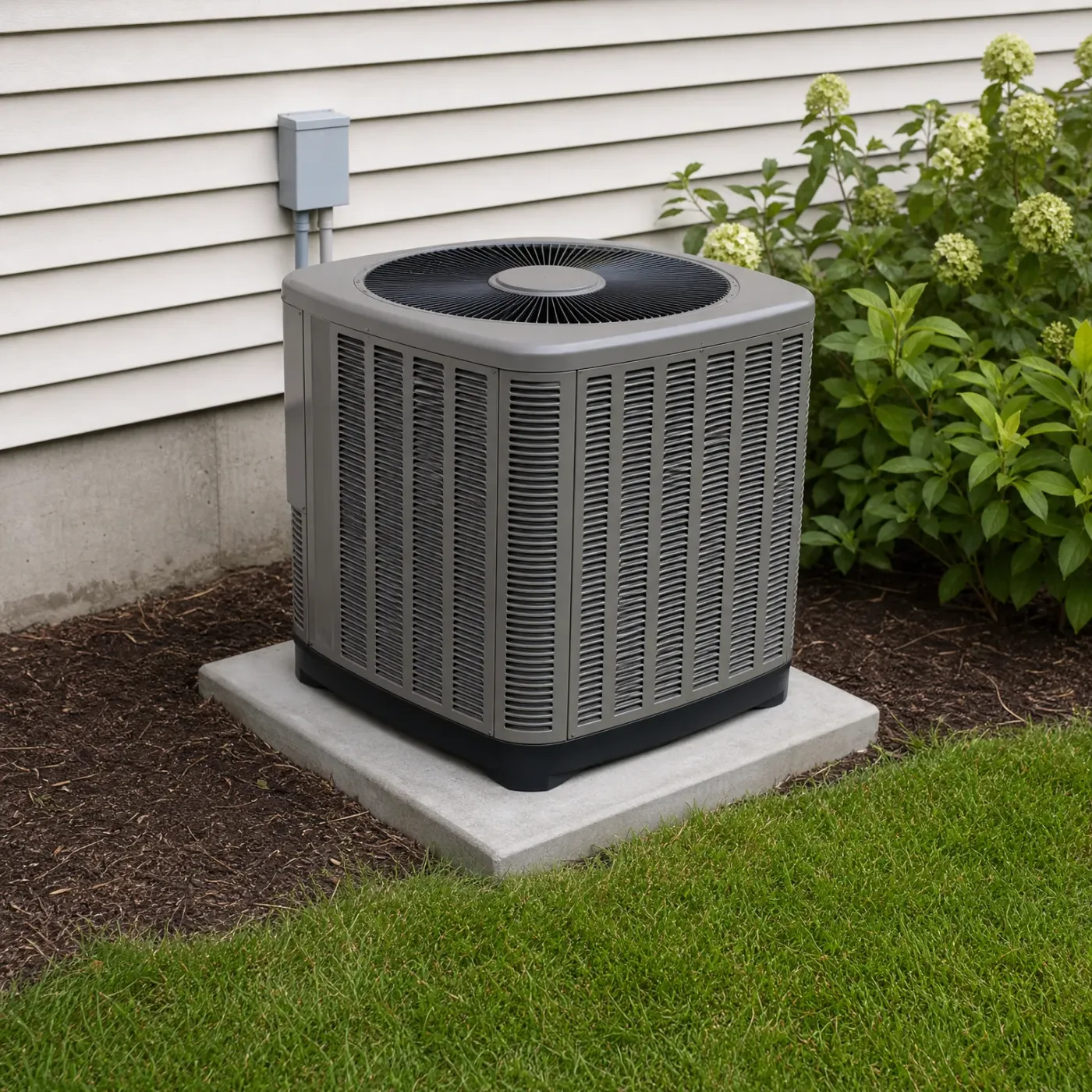
An outdoor air conditioning condenser unit on a concrete pad beside a house with horizontal lap siding, with a conduit and electrical disconnect box on the wall at right.
Before you get your air conditioner repair
A gray outdoor air conditioner condenser unit on a concrete pad beside a house with horizontal lap siding, with a wall-mounted disconnect box and conduit to its right and shrubs to the left.
After you get your air conditioner repair

A local pro for your air conditioner repair

Only one pro gets your request, so you hear from one company.

It costs nothing to send, and you don't have to hire anyone.

Heat wears capacitors down faster

A capacitor loses its ability to hold a charge over time, and Oklahoma summers push that along. Every time the unit cycles on, the capacitor takes a jolt of stress, and on a 95 degree day it might cycle a dozen times or more. The heat inside a sun-exposed outdoor unit adds to the strain. A capacitor rated to last several years in a mild climate can wear thin sooner here, especially on a system that runs hard from May through September.

A quick test tells you for sure

A technician can check a capacitor with a multimeter in a few minutes. The capacitor has a microfarad rating printed on its side, and the meter reads what it's actually holding. If the reading falls much below that number, it's weak, even if the unit is still limping along. This test settles the question without guessing from symptoms alone, and it rules out other causes, like a bad contactor or a motor issue, before anyone replaces a part that wasn't the problem.

A woman with shoulder-length brown hair wearing a beige knit cardigan sits in a gray upholstered armchair near a window, looking off to the side with a slight smile, with bookshelves blurred in the background.
A woman and a sleeping child wrapped together in a cream knitted blanket on a couch, with a potted plant, framed photo and lit lamp in the background.
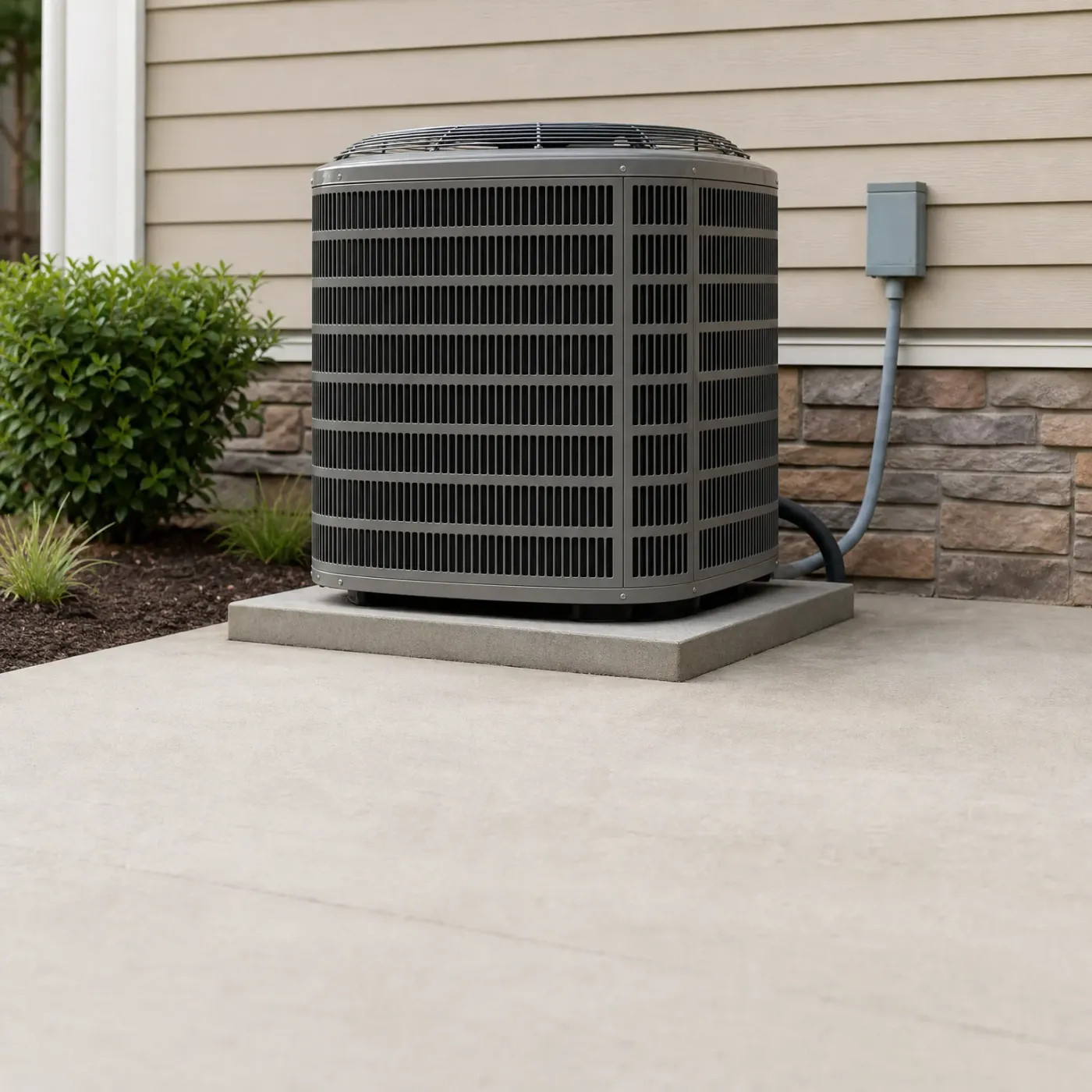
A gray outdoor air conditioning condenser unit on a concrete pad beside a house with horizontal siding and a stone veneer base, with a wall-mounted disconnect box and conduit, next to a shrub bed and a concrete patio.

Running normally

The fan spins up fast and settles into a steady hum. The compressor kicks on without hesitation, even when it's been sitting all day in the Oklahoma heat. You can stand next to it and hear the cycle do what it's supposed to do, start, run, shut off, start again.

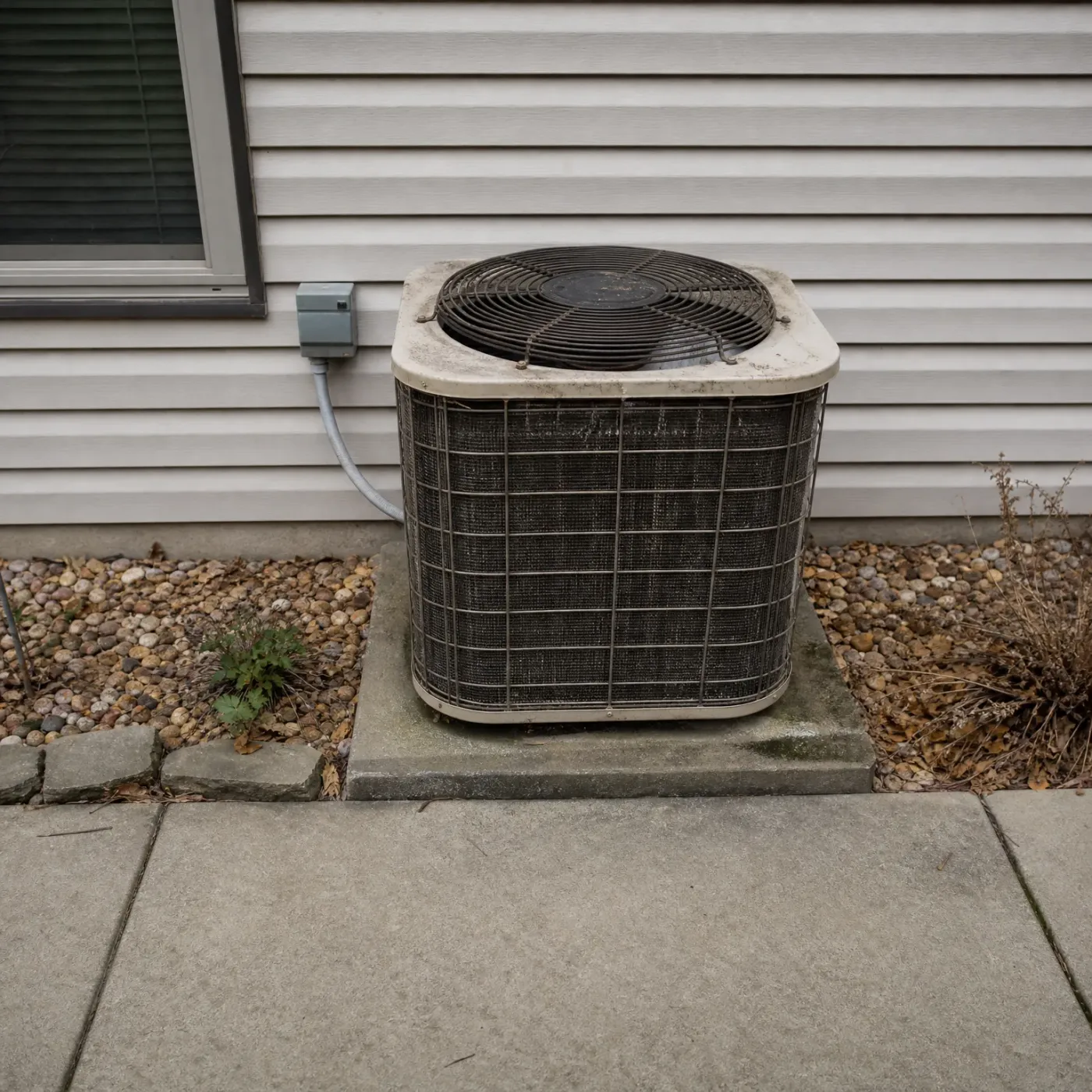
An outdoor air conditioner condenser unit on a concrete pad beside a house with light gray vinyl siding, with a gray electrical disconnect box and conduit on the wall, gravel beds and dried plants nearby, and a concrete sidewalk in the foreground.

Capacitor giving out

The unit sits there and hums without turning over, or the fan spins slow like it's fighting something. It might click a few times before it catches, or start fine and quit a few minutes later. Weeds and gravel don't cause this. A weak capacitor does.

Power costs 13.21 cents per kilowatt-hour statewide

At 13.21 cents a kilowatt-hour, running a failing capacitor costs you more than the repair would. A weak one makes the compressor draw extra current just trying to start, cycling harder on the hot days when your AC already works the most.

EIA-861 2025 statewide residential average

A man seen from behind raises his hand to wave at a woman standing in the open front doorway of a single-story house with gray shingle siding, white columns and a gabled porch entry.

A humming or slow-starting AC means the capacitor, and it's worth checking now

If your unit hums, clicks, or struggles to get the fan going, that points to the capacitor. It's a small part, but your AC won't run right without it, and in Oklahoma heat a struggling unit doesn't get a break to recover. Letting it go usually ends with the compressor straining on every cycle until something else gives out.

A contractor who works on AC units all summer in your area has seen this exact failure plenty of times and knows what to check first. Getting matched means one local, licensed contractor looks at your specific unit and reaches out to you directly, not a handful of companies competing for the job. That's a straightforward way to get a second set of eyes on a part that's easy to misdiagnose from a hum alone.

A gray upholstered sofa with a textured cushion sits beside a dark round side table holding a vase of green foliage, with a table lamp and sheer-curtained window behind.
A gray outdoor air conditioning condenser unit on a concrete pad beside a house with light horizontal siding, with gravel, dark mulch, shrubs and lawn nearby and a conduit box on the wall.

Get the right pro for your air conditioner

Get a local pro

Your request stays with one local pro.

No charge to send it. You decide if you hire them.