






Sooner AC Cooling

The R-410A phase-out and new AC units in Oklahoma

A local installer who puts in air conditioners gets your project.

Match me with a pro

Why can't I just get R-410A refrigerant anymore for my AC?

You went to get your AC recharged or replaced a unit and heard that R-410A is being phased out, or your contractor mentioned it won't be around much longer. You're not looking to switch refrigerants on purpose. Your old unit ran on R-410A fine for years, and now you're wondering if it's disappearing, if that means your system is in trouble, and what any of this has to do with you keeping your house cool through an Oklahoma summer.

R-410A isn't banned, but new AC units can't be built with it anymore

As of January 2025, manufacturers stopped making new air conditioners that use R-410A. The EPA phased it out because of its effect on the atmosphere, the same reason R-22 was phased out years before it. R-410A itself isn't illegal and existing units can still be serviced and recharged with it, but the supply is capped and will shrink over time. New systems now run on R-32 or R-454B instead. If your AC is still working, this changes nothing for you right now. If you're buying a new unit, it will run on one of the new refrigerants, not R-410A, no matter who installs it or where in Oklahoma you live.

A woman with long wavy brown hair in a grey ribbed sweater sits on a couch indoors, looking toward a window, with a potted palm-like plant and fireplace behind her.
A woman with long brown hair wearing a green V-neck top and beige cardigan sits on a light sofa, looking off to the side, with a dining table, lamp and framed picture in the background.
A woman with long dark hair in a cream knit sweater sits on a beige sofa indoors, looking toward a bright window with a houseplant and framed picture in the background.
A woman with long dark hair in a green knit sweater sits on a couch indoors, smiling and looking toward a window with a blurred room behind her.
A woman in a cream cardigan and jeans stands with one hand raised facing an open front door of a gray horizontal-siding house, with a black lantern wall light, a potted shrub with yellow flowers, and a stone-faced porch column.

What this means if your AC quits this summer

If your outdoor unit breaks down in July, replacing just the condenser isn't simple anymore. Older R-410A systems were matched sets, and a contractor can't pair an R-410A coil with a new R-454B condenser. If your system is old enough that parts for it are getting hard to find, a breakdown now often means replacing the whole system instead of one part, and doing it while your house is sitting at 85 degrees.

That's a decision nobody wants to make in a hurry, comparing specs and quotes while a loved one is sweating it out in the heat. Getting matched with a contractor who already knows which Oklahoma homes need a full swap versus a simple fix means you're not the one sorting through that alone, calling three companies and explaining the same problem three times before anyone shows up.

A living room corner with a beige upholstered armchair holding navy and striped cushions, a small round wooden side table with a carved bowl and a potted green plant, a framed landscape picture on a pale wall, built-in shelving, and a curtained window.
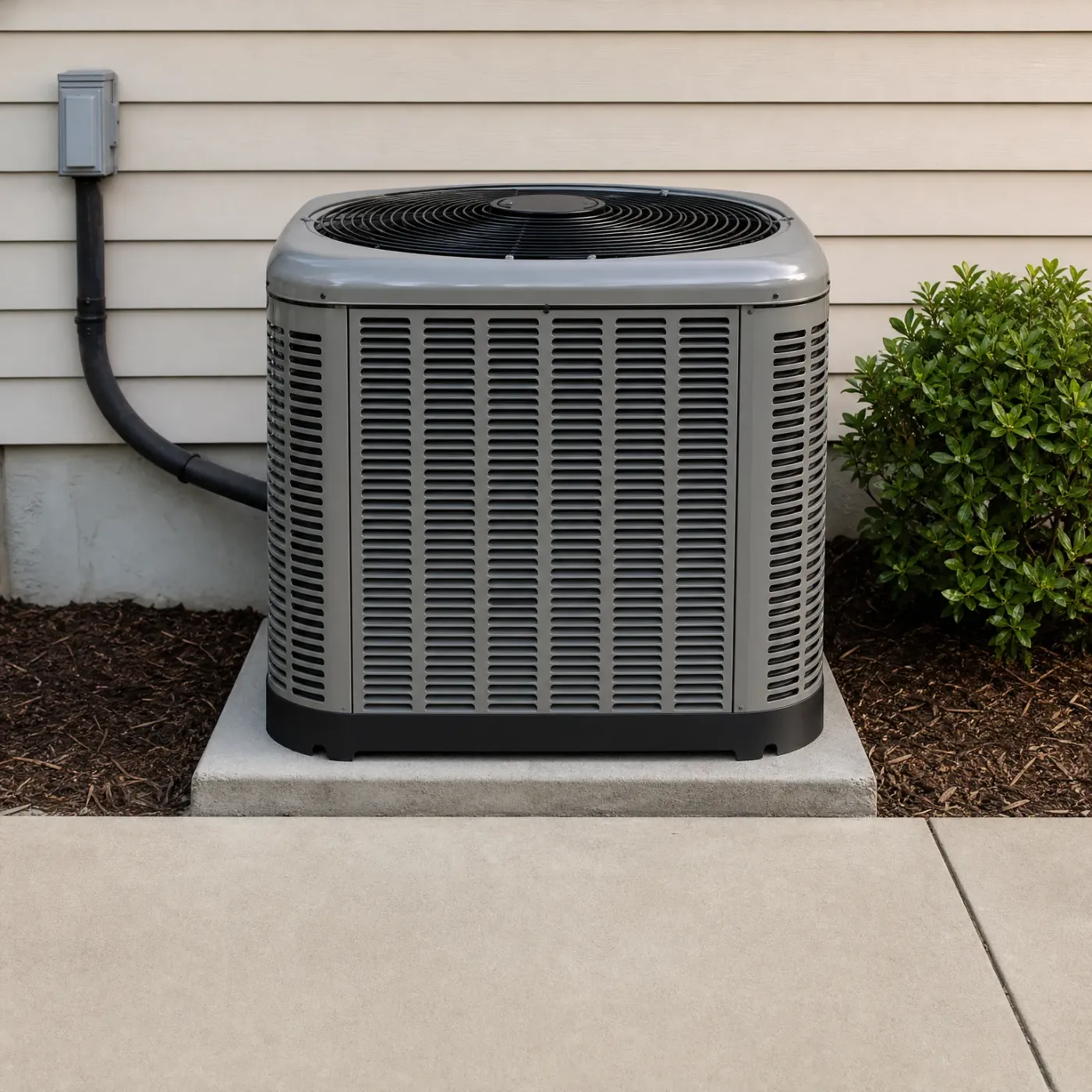
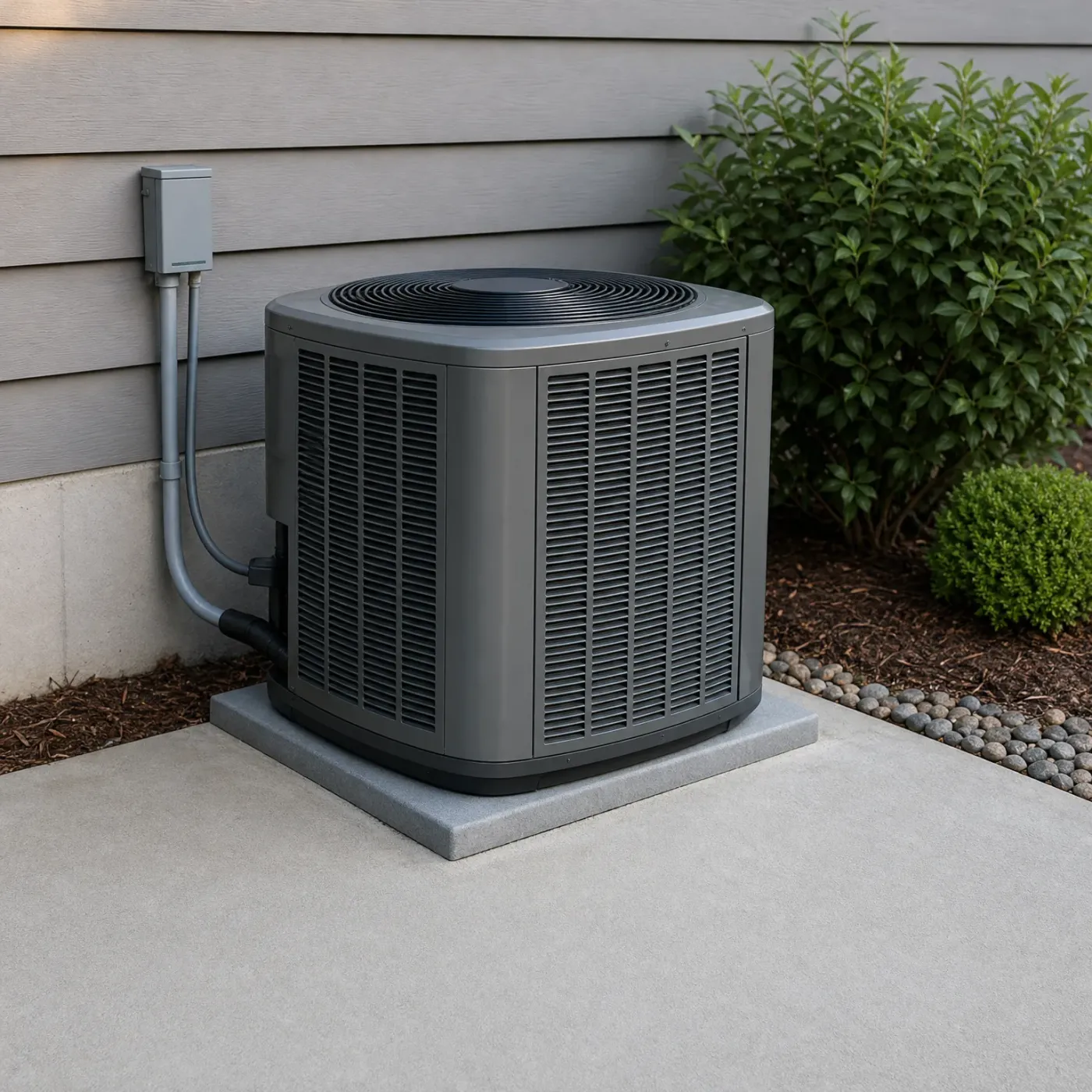
A gray outdoor air conditioning condenser unit on a concrete pad beside a house with horizontal lap siding, with a conduit and electrical disconnect box on the wall and a green shrub in mulch to the right.

A working R-410A system

This is what a healthy setup looks like: a clean condenser on its pad, the line set running tight to the wall, nothing blocking airflow around it. If this is your unit and it's cooling fine, there's no reason to touch it. R-410A systems can still be serviced and recharged for now.
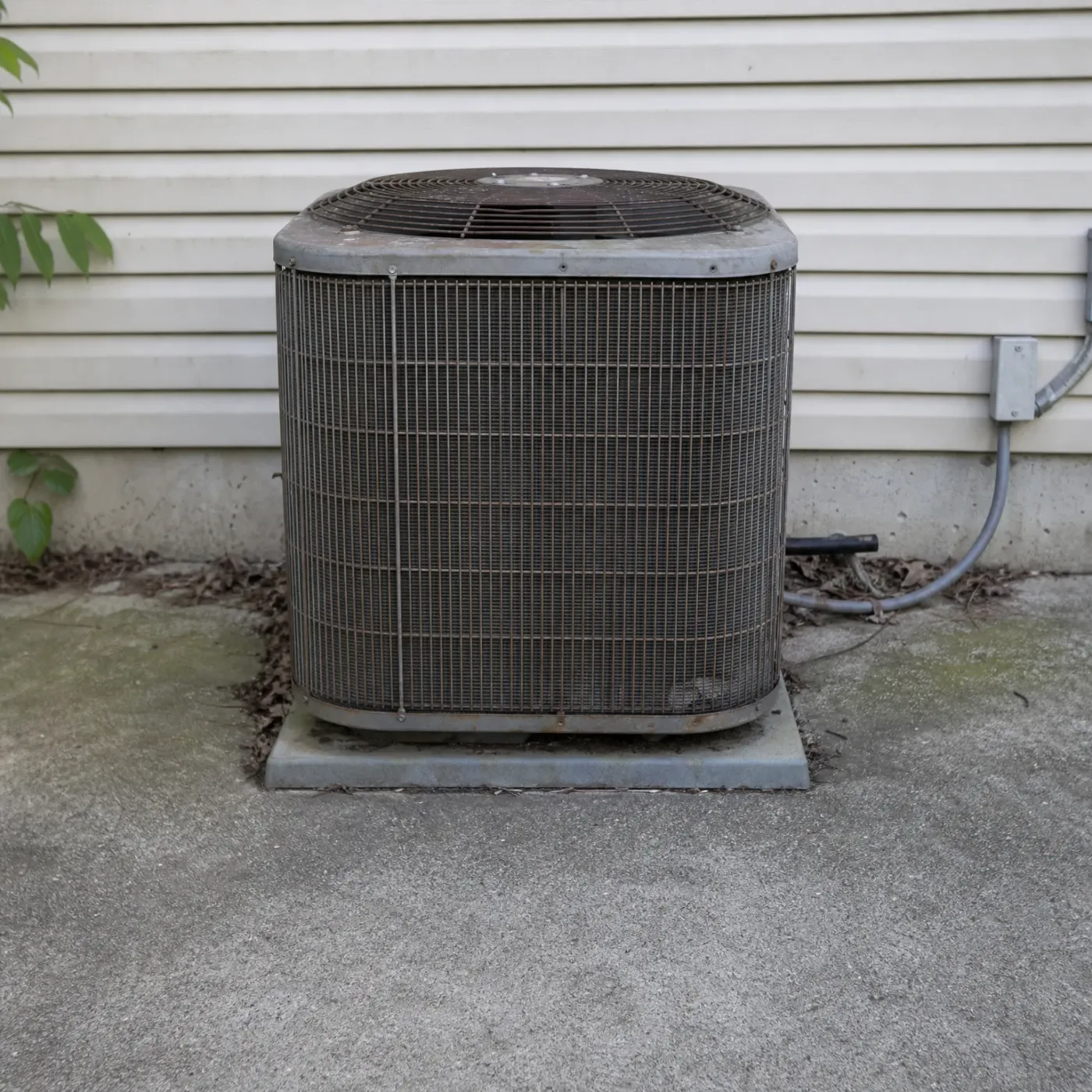
A weathered outdoor air conditioner condenser unit on a concrete pad beside a house with horizontal vinyl siding, with a conduit and disconnect box on the wall to the right.

A unit on its way out

Dirt packed into the grille, leaves piled against the base, years of weather on the cabinet. A condenser in this shape is the one likely to fail on a hot day, and that's when the R-410A phase-out stops being a background issue. A full matched-set replacement, on R-454B, is what a contractor will price out.

Repair Now or Replace the System

Repair the old system

  • Works if the broken part is still available and the rest of the R-410A system is sound.
  • A condenser swap alone isn't an option anymore since coils and condensers have to be matched, so a repair means fixing what's there, not replacing one piece.
  • R-410A itself is still legal to use and service through 2025, so recharging an existing system is still possible for now.
  • Costs less upfront than a full changeover, but you're keeping a system built around a refrigerant that's being phased out.
  • If the compressor or coil fails instead of a smaller part, repair may not be realistic at all.

Replace with a new system

  • New units sold now run on R-454B, so you're not tied to a shrinking refrigerant supply.
  • A full changeover means new coil, new condenser and in some cases new line set, since R-454B isn't a drop-in for R-410A equipment.
  • Oklahoma summers push AC units hard for months at a time, and a new system starts that stretch with nothing worn down yet.
  • Costs more upfront than a repair, since it's a full equipment swap rather than fixing one component.
  • Once it's in, you're not stuck finding parts for a refrigerant that's on its way out.
A gray outdoor air conditioner condenser unit on a concrete pad beside a house with horizontal lap siding, with a wall-mounted disconnect box and conduit at left and a green shrub and mulch bed at right.
A condenser like this one, running fine on its pad with the disconnect wired in, doesn't need to be touched.
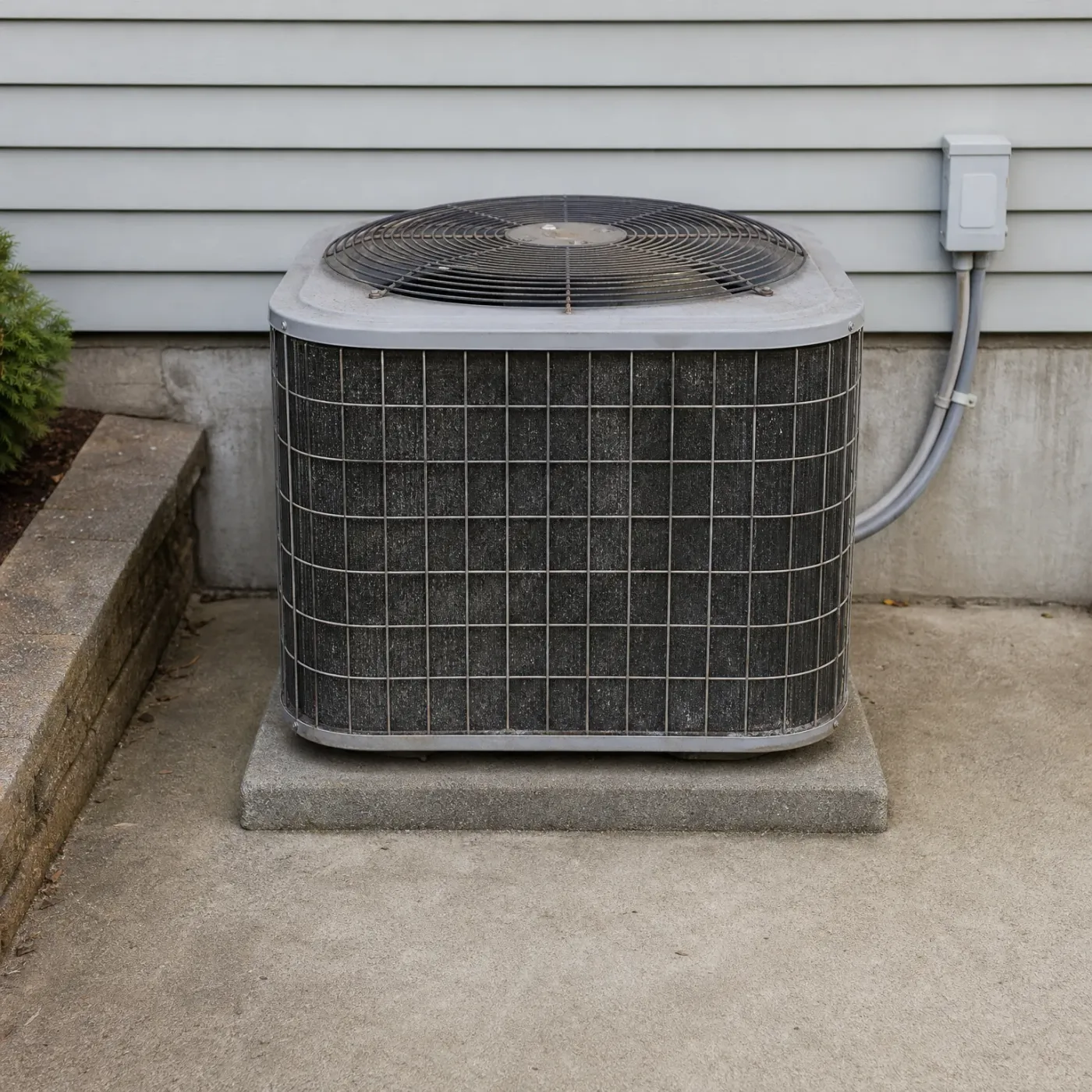
An outdoor air conditioner condenser unit on a concrete pad beside a house with horizontal lap siding, with a conduit running to a gray electrical disconnect box on the wall.
A unit like this one, down in the middle of an Oklahoma summer, may run into an R-410A system that can't be patched the way it used to.
A gray-haired woman in a cream knit sweater stands in a dimly lit kitchen at night, looking to her right, with a round loaf of bread in the foreground and a dark window and potted plant behind her.
A woman with her hair in a bun holds a sleeping young child against her chest, both wrapped in a textured beige knit blanket on a sofa in a dimly lit room with a lamp, framed picture, and bookshelf behind them.

A pro who works on air conditioners

An Oklahoma summer doesn't leave much room for a dead AC to sit while you figure out what to do about it. If your R-410A system is still running well, there's no decision to make yet. But once a contractor tells you the condenser can't be matched or the part you need isn't stocked anymore, you're choosing between a repair that may not hold and a full switch to R-454B, and that's not a call to make by reading about it online. It helps to have someone look at your actual unit, your actual coil, and tell you what your options really are. Finding that person usually means calling around, explaining your system to each one, and waiting on quotes that are hard to compare. You don't have to do that part. Hand off the finding and get back to the part that matters: a working AC before the heat really sets in.

R-410A isn't being pulled off the shelf overnight. What's actually happening is a federal phasedown on production and import of it, under rules the EPA set through the AIM Act, which is why manufacturers stopped building new R-410A equipment at the start of 2025. The refrigerant itself still exists, and a contractor can still recover it, recharge a system that has a leak fixed, or pull it from a unit being replaced. What's going away is new condensers and coils built to use it. That's why the replacement side of this is different from the repair side. R-454B is the refrigerant showing up in new systems instead, and it runs at different pressures than R-410A, which is part of why a contractor can't just swap one into an old line set. Over the next several years, as parts for R-410A systems get harder to source, this is the thing that pushes more of these jobs from repair into full replacement.

Power costs 13.21 cents per kilowatt-hour statewide

At 13.21 cents a kilowatt-hour, every hour your AC runs costs something you can see on the bill. A new R-454B system sized right for your house won't change that rate, but it runs less to hold the same temperature when your old unit is straining through a July afternoon.

EIA-861 2025 statewide residential average

Where this leaves you

  • R-410A isn't gone, but new equipment using it stopped being built at the start of 2025.
  • A repair keeps your system going as long as the part you need is still out there.
  • A failed condenser on an older R-410A system usually can't be matched to a new coil.
  • R-454B systems sized for your house cost less to run at 13.21 cents a kilowatt-hour than a struggling old unit.
  • Whether you repair or replace comes down to what's broken and what's still available for it.

R-410A still works. It's just not being built into new equipment anymore, and that one fact decides everything else here. If your system is running fine, you don't need to do anything. If something breaks, what happens next depends on what broke and whether the part is still out there. A failed capacitor or fan motor is an easy fix on any system, old or new. A failed condenser on an older unit is a different problem, because a contractor usually can't pair an R-410A coil with a new condenser once the old one is gone. That's when repair stops being an option and replacement becomes the only path forward, and a right-sized R-454B system will cost less to run at 13.21 cents a kilowatt-hour than an old unit straining to keep up. None of this is a decision you have to make today if your AC is cooling your house the way it should. But when it does break, especially in the middle of an Oklahoma summer, you don't want to spend that time calling around to find out which contractors even carry R-454B equipment, explaining the same problem to three different companies, and trying to compare quotes you don't have the background to judge. Getting matched with a contractor who already knows this system and can tell you straight whether it's a repair or a replacement skips that part entirely.

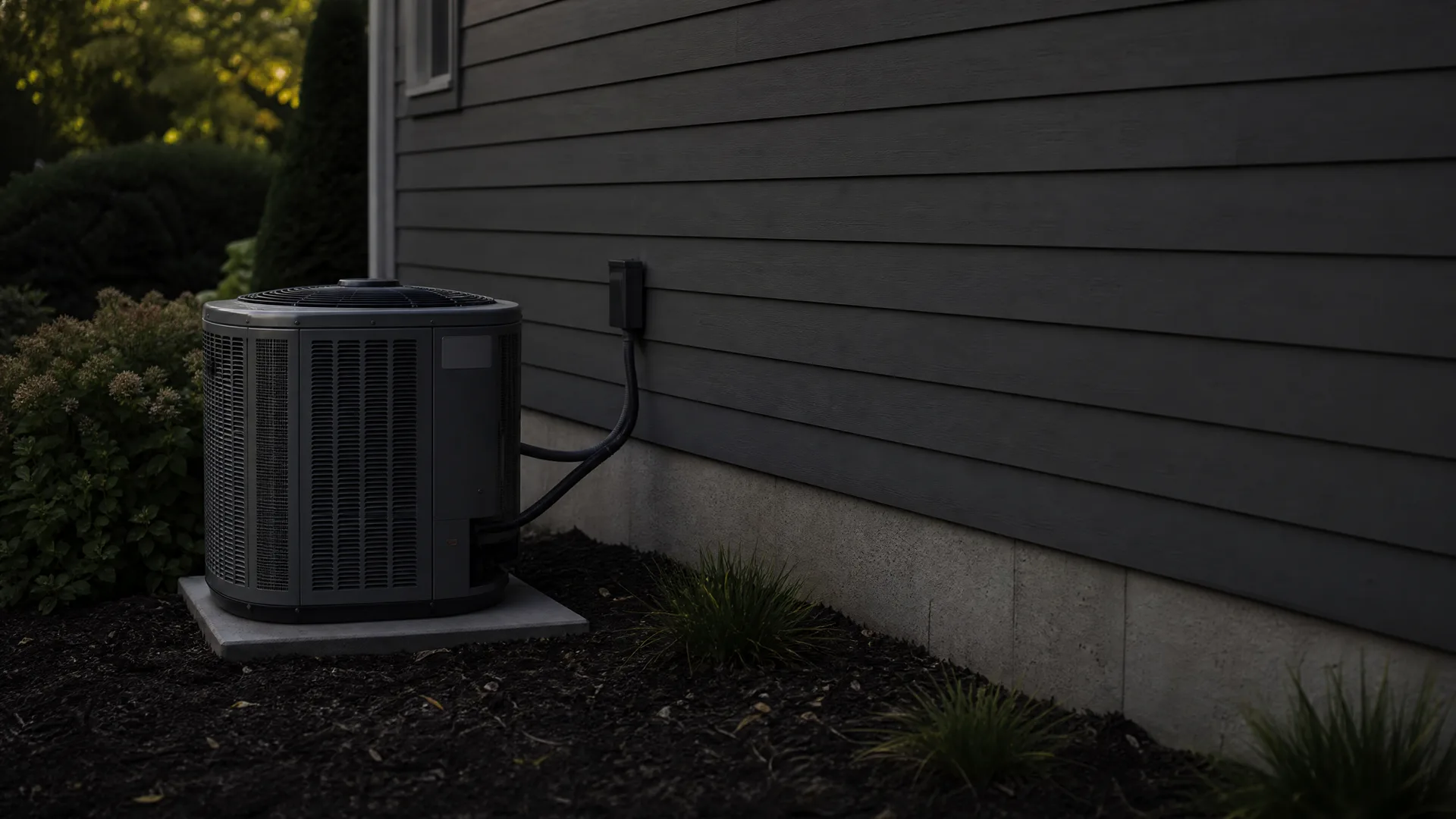
An outdoor air conditioner condenser unit on a concrete pad beside a dark horizontal-lap sided house, with mulch beds, shrubs and ornamental grasses nearby.

Get your air conditioner to the right pro

Describe your air conditioner job once, to one pro.

Step 1 of 3: Equipment