
Why your AC outdoor fan isn't spinning in Oklahoma
Why isn't my AC outdoor fan spinning?
It's the middle of summer in Oklahoma, the heat is already sticky, and your AC is running inside but the outdoor unit sits there doing nothing. No fan movement, maybe a faint hum, maybe nothing at all. You caught it before the house got unbearable, which is good, because a fan that won't spin usually means the compressor is still trying to work without any way to get rid of heat.
Usually a bad capacitor or a failed fan motor
Most of the time a condenser fan that won't turn has a weak capacitor, the part that gives the motor its initial kick to start spinning. When it wears out, the motor hums but can't get moving. A failed fan motor itself is the other common cause, especially after years of running through Oklahoma summers where the unit works long hours to keep up with the heat. Less often it's a tripped breaker or a bad contactor cutting power to the outdoor unit entirely. Whatever the cause, the indoor blower may still be moving air while the outdoor unit does nothing, which lets the system overheat if it keeps running. Shutting the system off at the thermostat until someone looks at it protects the compressor from damage.
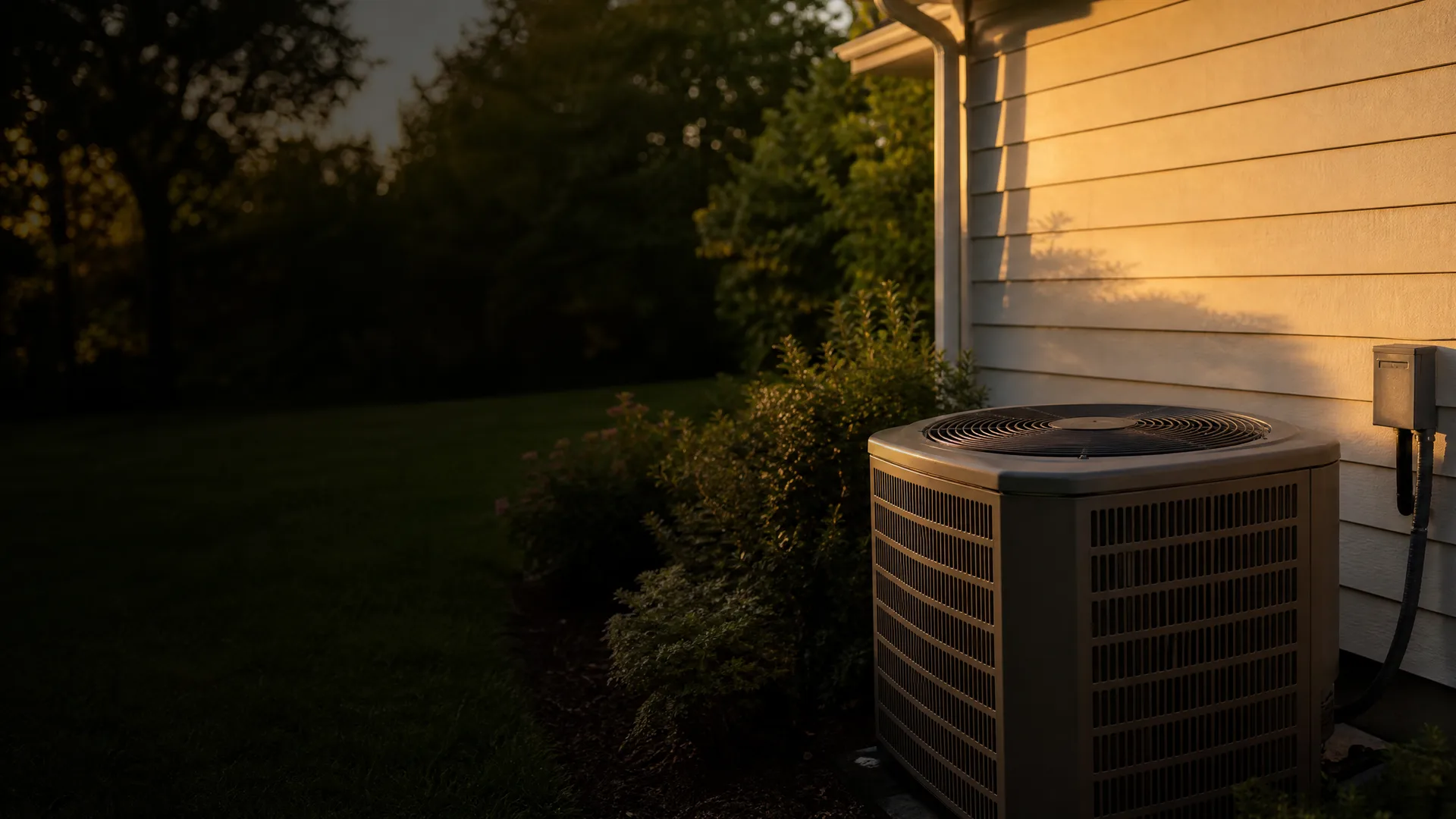
You're out back around seven, grass still warm under your feet, and the light's gone that heavy gold color it gets before dark. The condenser is humming low, same as always, except the fan on top isn't turning. You crouch down and look through the grille. Nothing moving. Inside, you can hear the system still running, air pushing through the vents, but out here it's just that hum and the smell of hot metal. A moth circles the porch light behind you. You wait a few seconds thinking it'll kick on, the way it sometimes does, but it doesn't.
Power costs 13.21 cents per kilowatt-hour statewide
That low rate is the one thing working in your favor right now. A dead fan means the compressor can end up running without the heat actually leaving the unit, and on a stuck system that still adds up. At 13.21 cents a kilowatt-hour, a condenser caught early costs you a lot less than one left to run that way for days.
EIA-861 2025 statewide residential average
The fan hums but won't turn
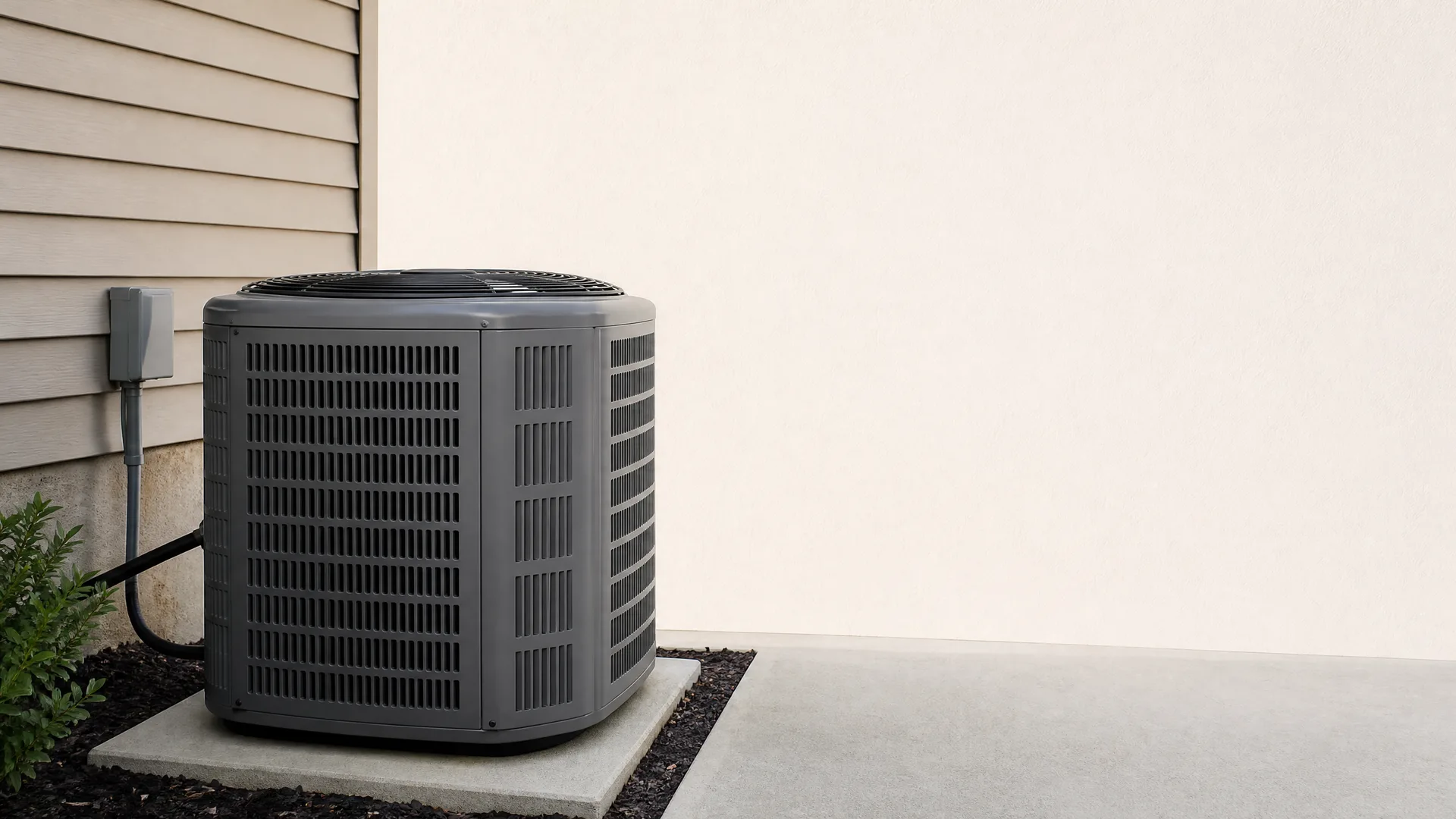
Press your ear close and you hear a low hum from the unit, but the blades stay still. That points to the capacitor. It stores the charge that kicks the fan motor into motion, and when it weakens, the motor gets power but not the push it needs to start spinning. Sometimes a gentle push on the blades with a stick gets it moving for a minute, proof the motor itself is fine. That's a short repair, not a new unit.
Nothing happens at all
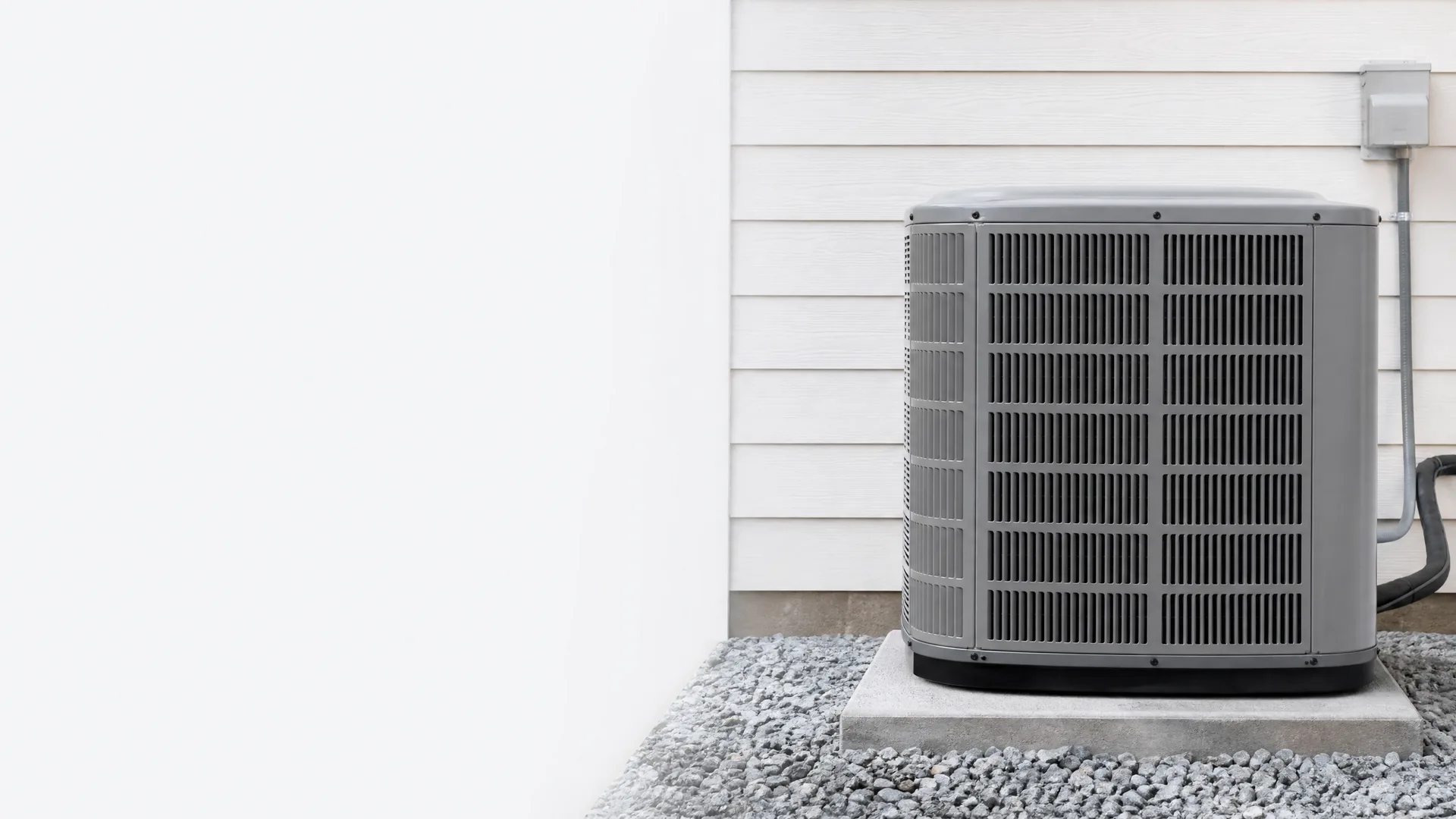
No hum, no movement, nothing when the system calls for cooling. That's a different problem. Check your breaker panel first, since a tripped breaker will shut the whole outdoor unit down with no sound at all. If the breaker's fine, the motor itself may have failed, or a wire feeding it came loose. Either way, the compressor could still be running without airflow to cool it, which is worth having looked at soon.
Fix It Now or Let It Ride
Fix it now
- A seized motor, a bad capacitor, or a tripped control board is usually a part swap, not a teardown of the whole unit.
- The compressor and coil are untouched, so once the fan turns again the rest of the system picks up where it left off.
- A local contractor who works on these units every summer can usually spot a dead capacitor or a bad motor on sight.
- Oklahoma power is cheap enough that getting the fan going again stops the compressor from running up the bill for nothing.
- Most outdoor fan failures are one part, not a chain reaction, if you catch it before the compressor overheats.
Let it ride
- A compressor that keeps running without the fan clearing heat off the coil is working against itself every minute it's on.
- Heat that should leave through the fan backs up into the compressor, and that's the part you don't want to replace.
- The longer a stuck fan runs unnoticed, the more likely the compressor takes damage that turns a small repair into a bigger one.
- Oklahoma summers don't give the system downtime to recover; the AC keeps cycling and keeps stressing the same stuck motor.
- Waiting doesn't fix a seized motor or a dead capacitor; those parts don't come back on their own once they've failed.
Hand off the air conditioner problem
Your request goes to one pro, not a list of companies.
After you send the request, you're done searching.
Sending the form costs nothing.
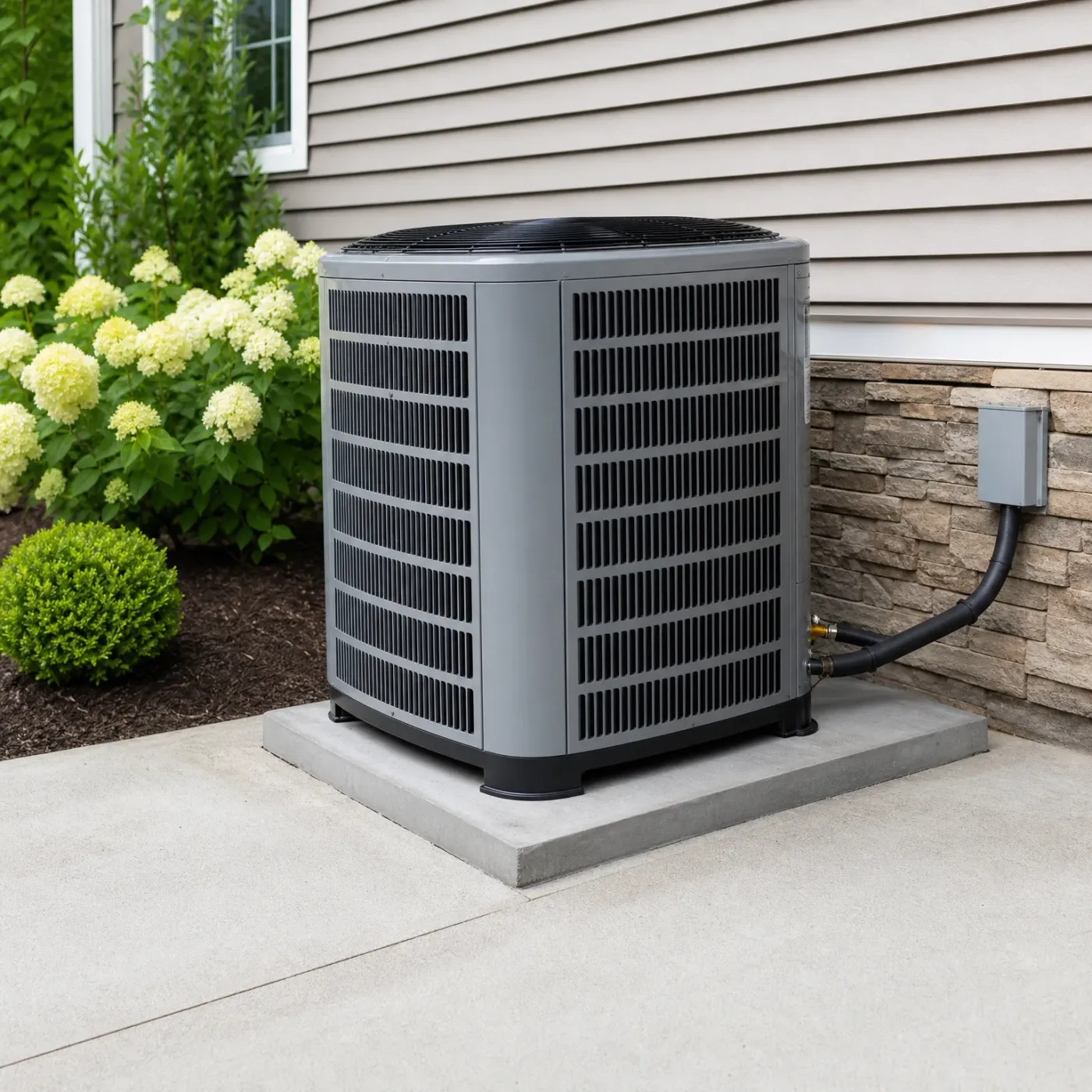
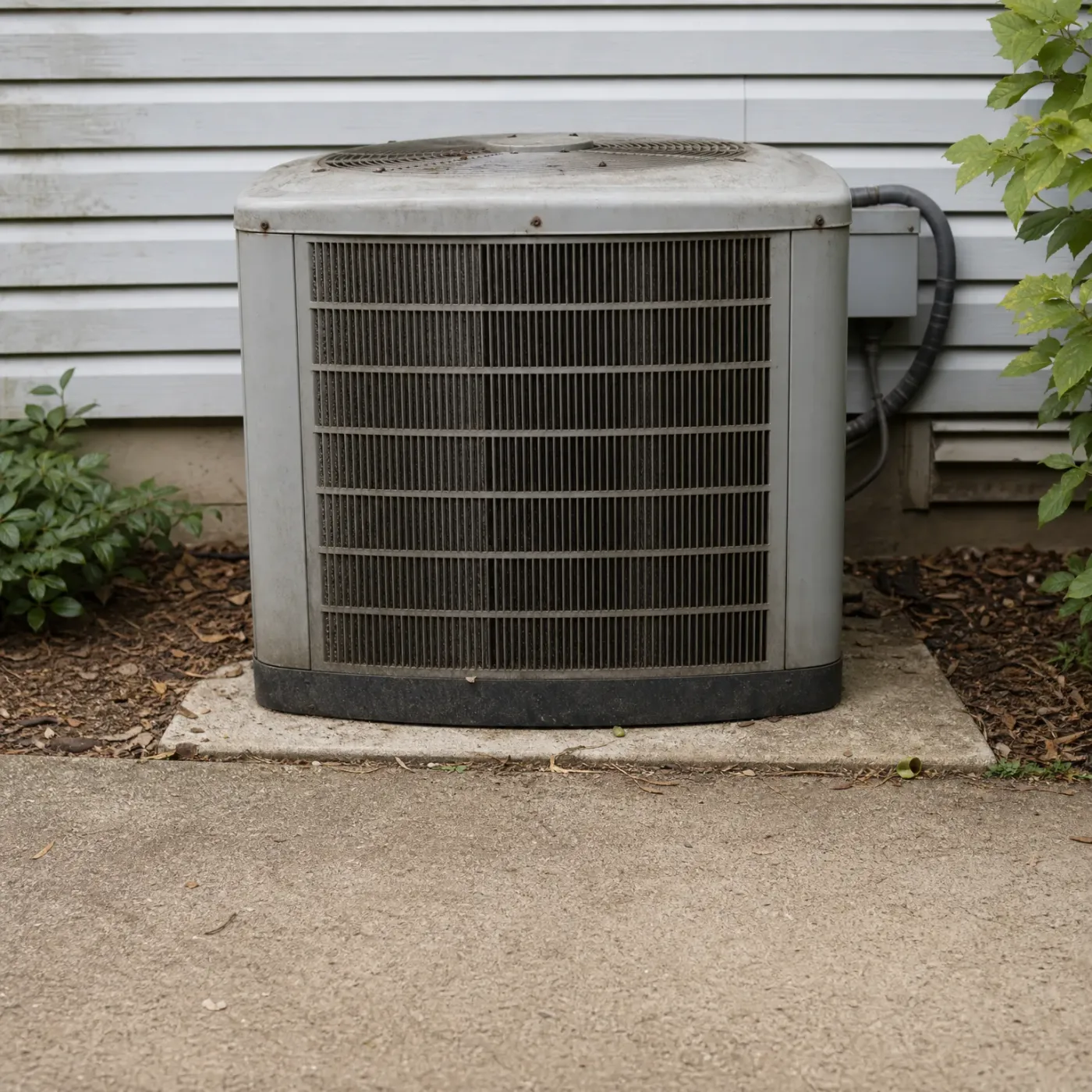
Inside the outdoor unit there are two separate jobs being done by capacitors, one for the compressor and one for the fan motor, and they don't fail together. The fan one is usually the weak link. Before it quits for good, it can run the motor slow and uneven for a while, which is worth noticing if you've heard the fan sounding off lately. There's no belt driving the blades, the motor shaft holds the fan directly, so a slipping or worn belt was never going to be the cause. If the motor itself is pulling too much current, from worn bearings or windings going bad, the breaker outside can trip and take the compressor down with it, since both share the same 240-volt circuit. And sometimes nothing is actually broken. The control board will cut power to the whole outdoor unit on purpose if it reads pressure or temperature running high, and from the ground that looks exactly like a dead fan. Any of these can leave you standing in the yard looking at a condenser that's gone quiet.
What's Actually Stopping The Fan
- The outdoor fan motor has its own run capacitor, separate from the one that starts the compressor, and either can fail on its own.
- A fan motor pulls current through its windings every time it tries to start, and worn bearings or windings make it draw more than the breaker allows.
- Most outdoor units use a direct-drive fan bolted straight to the motor shaft, so there's no belt to check or replace.
- The control board reads a high-pressure or high-temperature signal and can cut power to the outdoor unit on purpose, which looks identical to a dead fan from the ground.
- A capacitor that's failing but not dead yet will sometimes let the fan limp along slower than it should, which is its own warning sign before it quits outright.
- The compressor and the fan run on the same 240-volt circuit outside, so a tripped breaker there stops both at once even though only the fan looks affected.



A tech checks the capacitor first, since it fails most often.
A multimeter test on the fan motor windings rules out a short.
The contactor gets checked to confirm power is reaching the unit.
A failed part gets replaced and the fan is run to confirm the fix.
What you're probably noticing right now
The air inside is warmer than the thermostat says it should be, even though the system is running. Outside, the compressor hums but the fan on top stays still. Maybe it twitches and stops. Sometimes the breaker trips after a while, or the unit shuts off on its own and won't restart for a few minutes. You might notice the air coming from your vents isn't as cold as it was an hour ago. None of this is quiet enough to ignore, and leaving a stuck fan running puts strain on the compressor, the most expensive part in the unit, every minute it keeps trying to cool against heat that isn't leaving.
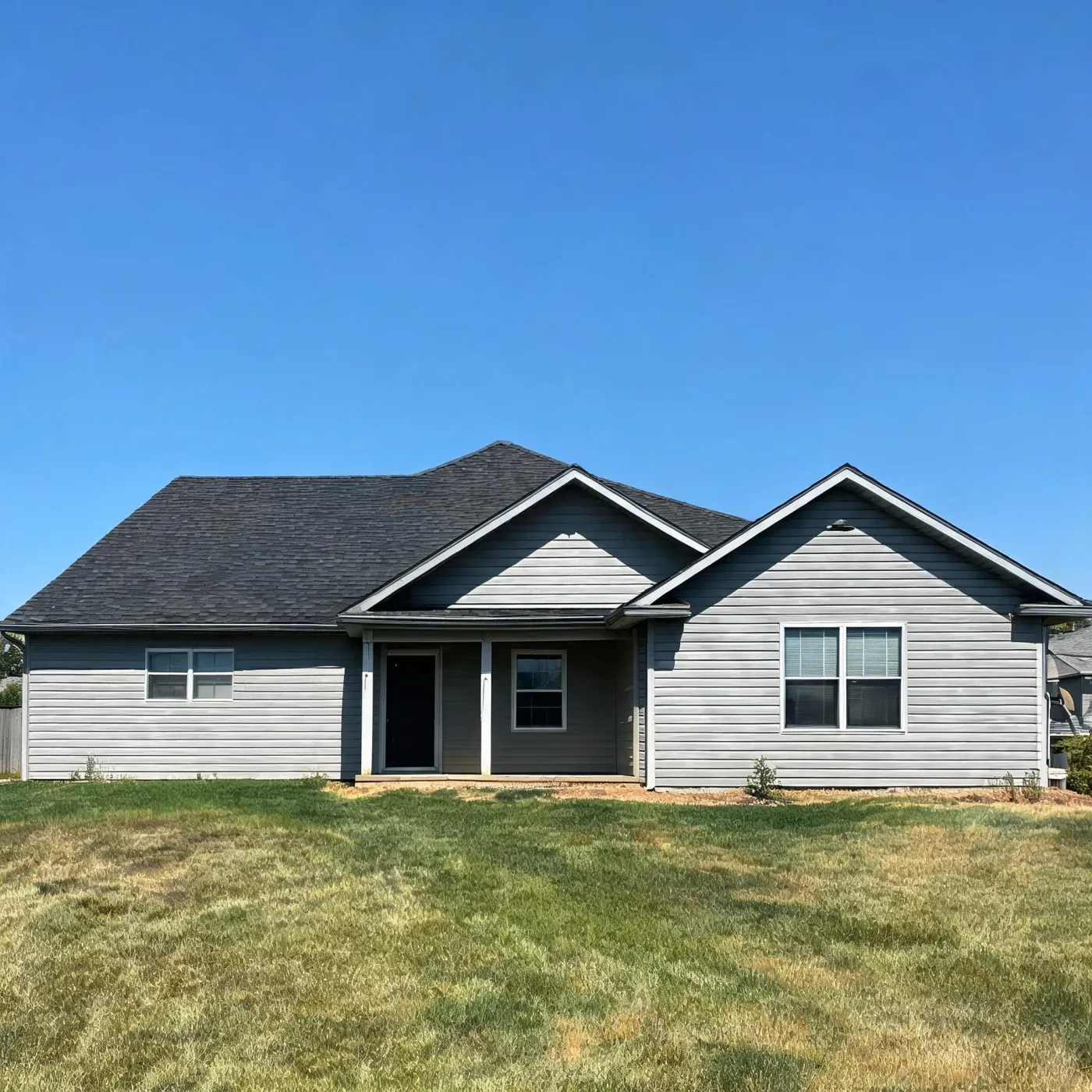
That heavy, hard-to-breathe feel Oklahoma summers have comes from the dew point, which averages 66°F across June, July and August. That's humid enough that your air conditioner isn't just cooling the air, it's wringing water out of it too, and the coil does both jobs at once. With the outdoor fan not spinning, the coil can't dump that heat into the air outside, so it backs up into the refrigerant. Run it long enough like this and the compressor is working against heat that has nowhere to go. The indoor air stays damp and clammy even with the system running, because the moisture it pulled out has nowhere to go either.
NASA POWER T2MDEW county cells weighted by homes
A fan that won't turn is almost always a capacitor, a motor, or a contactor, and none of those three take long to run down once the outdoor unit sits there straining against the heat. You know that already, which is why you're reading this instead of waiting to see if it fixes itself. The part that gets matched to your request lives in Oklahoma and works on condensers like yours all summer, the kind that sees this exact failure often enough to know which of the three it usually is before the cover even comes off. You'll hear from one contractor, not a handful, so there's no juggling calls or comparing strangers while your house sits warm. Once that request is in, the work of tracking someone down is off your plate. The fan staying still doesn't mean the system is done. It means one part needs attention, and the rest of the unit is waiting on it.

Send one request and you're done looking
You're not committing to anything by asking.
A stuck fan doesn't fix itself by morning. The compressor keeps running against heat that has nowhere to go, and that's wear on parts a seized motor or dead capacitor is already stressing. Send the request now and a local contractor who handles this exact problem every summer takes it from here.