

Running clean
An AC that smells fine looks like this. The condenser sits on its pad with clear space around it, and air moves through the fins without resistance. Nothing inside is fighting dirt or dust to do its job.
A burning smell from your AC usually means dust burning off a part that's running hotter than it should, or a wire or motor overheating inside the unit. If you just turned the system on after it sat idle, a little burning smell from dust on the coil is normal and should clear in a few minutes. If it doesn't clear, or if it smells sharp and electrical like burning plastic, that's a different problem. It often points to a motor bearing seizing up, a failing capacitor, or wiring that's overheating somewhere in the system. Running your AC hard through an Oklahoma summer puts real strain on these parts, and a motor or capacitor under strain can overheat well before it fails outright. An electrical burning smell means you should shut the system off at the thermostat and not run it again until someone licensed has looked at it. Running it further can turn a repair into a bigger one, or start a fire.
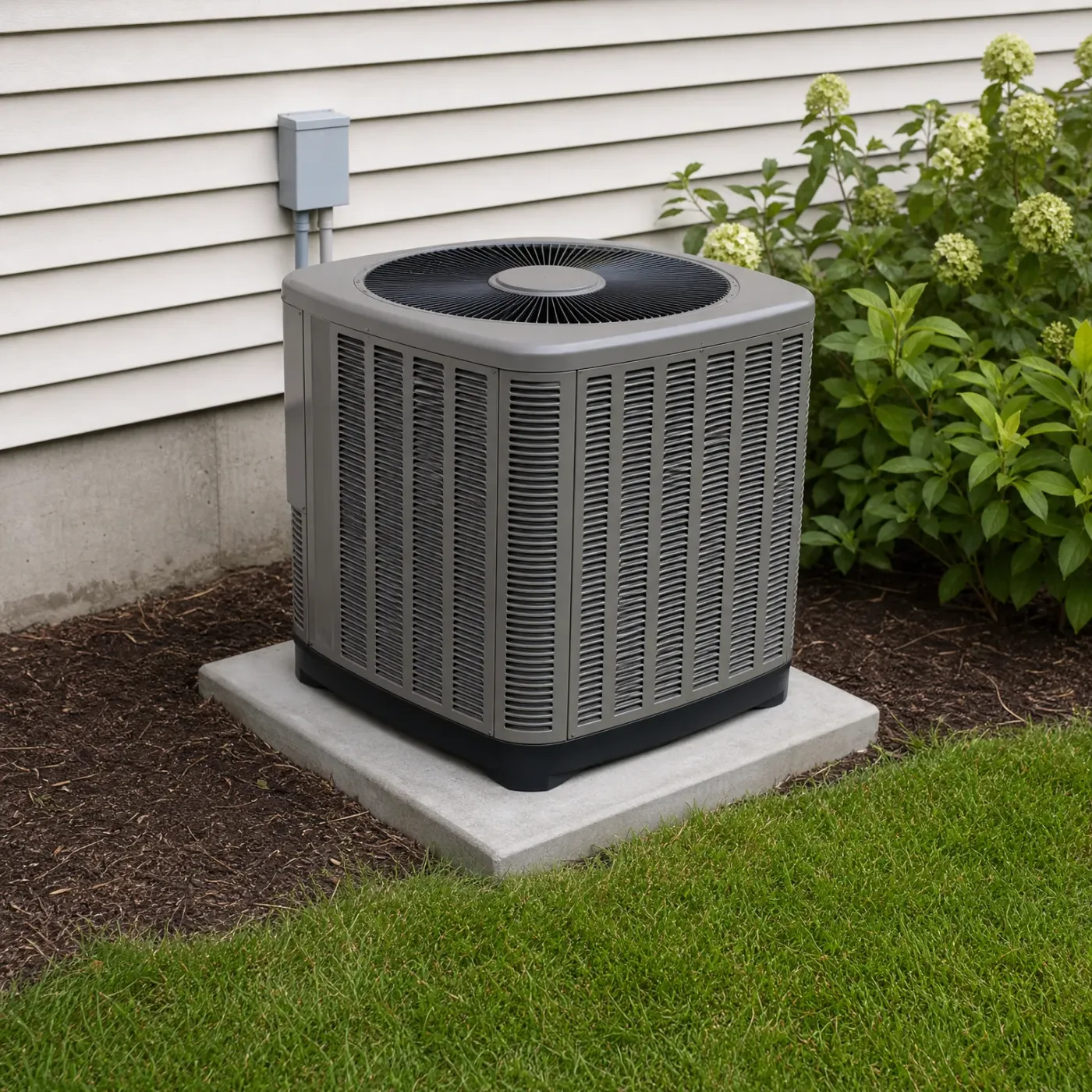
An AC that smells fine looks like this. The condenser sits on its pad with clear space around it, and air moves through the fins without resistance. Nothing inside is fighting dirt or dust to do its job.
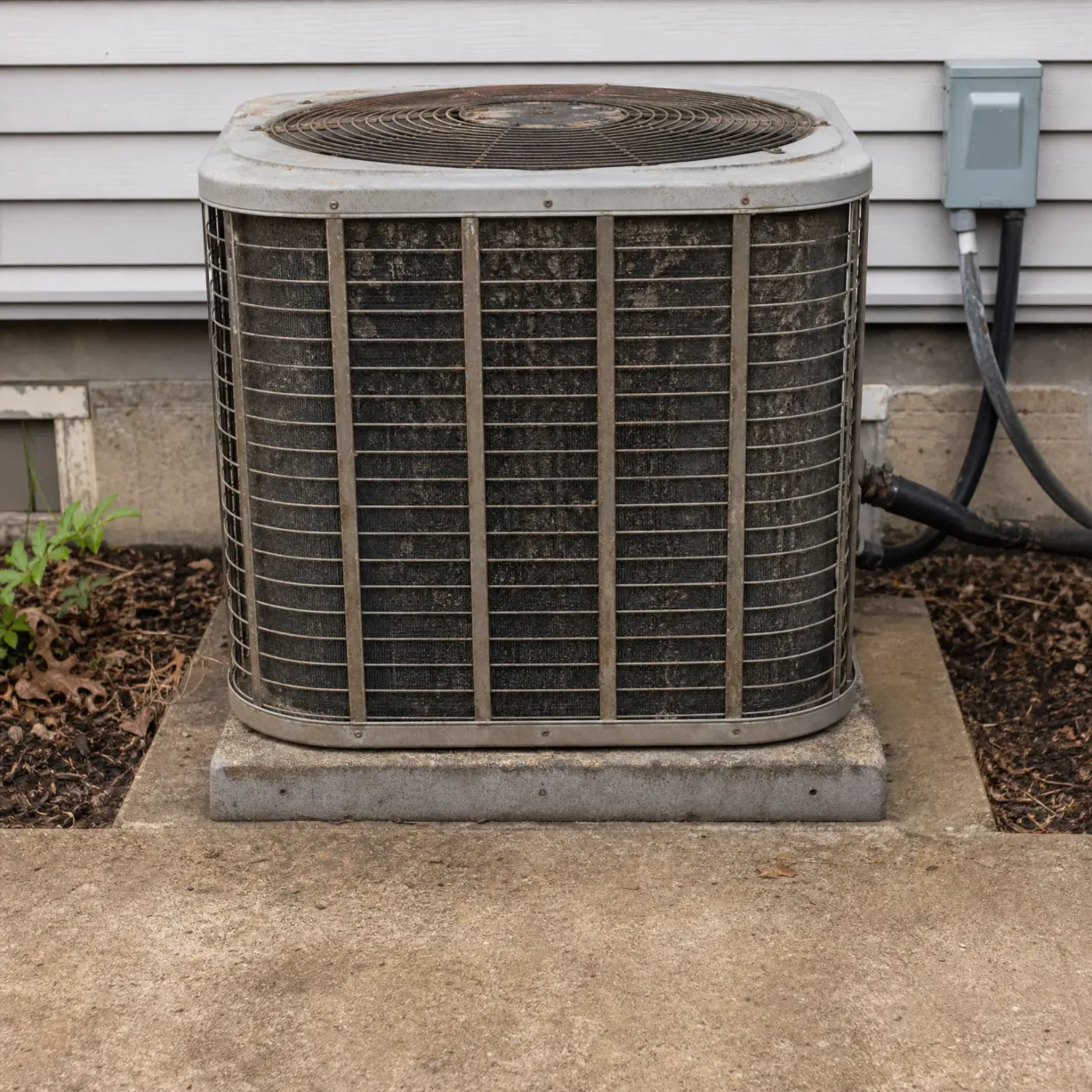
Coat the fins and cage in dirt like this and the unit has to work harder to pull air through. That extra strain shows up as heat, in the motor or along the wiring at the disconnect box, and heat is what you're smelling.




Most burning smells trace back to one of two places. The first is the run capacitor, a small part that gives the compressor and fan motors the push they need to start and keep turning. When it weakens, the motor has to work harder than it should, and the extra heat that builds up is what reaches your nose, often with a buzzing sound alongside it. The second is electrical. Heat like that in a connection or a length of wire can leave a smell closer to melted plastic, and it tends to show up at the disconnect box or inside the unit itself. Oklahoma summers don't help. The outdoor unit sits out through the heat and the storms, and that takes a toll on wiring over the years. If the system ever shuts itself off along with the smell, a motor is probably running too hot and the limit switch is stepping in to protect it. A contractor checks the capacitor's output and looks over the wiring before replacing anything, since more than one part can be behind it.

Oklahoma summer air carries a dew point that averages 66°F across June, July and August, a figure from NOAA climate data. That's heavy, sticky air, and your AC has to pull more moisture out of it to keep the house comfortable. The harder the system works to wring out that moisture, the hotter its motor and electrical parts run, and heat is what turns ordinary dust on a coil or wire into that burning smell. If the smell shows up on the muggiest days and fades when the air dries out, that's worth telling the contractor who comes out. A local tech who works on Oklahoma systems all summer has likely seen that exact pattern before and knows which part tends to give out first under it. You'll get matched with one, so you're dealing with a single licensed contractor who knows your area, not a pile of callbacks.
NASA POWER T2MDEW county cells weighted by homes
A burning smell is not something to sit on, and in Oklahoma, where the AC runs hard through a muggy summer, a part that's already stressed can go from smelling hot to failing outright in short order. Once you send this, you're not the one tracking down who's free, who answers the phone, or who actually works on your brand of unit. The request goes to one licensed contractor local to your part of Oklahoma, not a handful of companies competing for the job, so you're not stuck fielding calls all afternoon trying to pick one. Someone who works on AC units all summer here has smelled this before and knows the handful of parts that usually cause it. That's the person this gets handed to. You noticed the smell. Let the search for who fixes it be someone else's job now.
A burning smell from your AC comes down to one of two things. Either it's dust burning off a part that just started running after sitting idle, or it's a part working harder than it's built to and running hot because of it. The first one clears up on its own in a few minutes. The second one doesn't, and it won't fix itself.
A weak capacitor makes the compressor or fan motor pull more current than it needs, and that extra draw shows up as heat before it shows up as a failure. Dirt packed into the condenser fins does something similar from the outside in, blocking airflow until the motor behind it is straining to push air through anyway. Either way, the smell is the system telling you a part is already working past where it should be.
Summer in Oklahoma doesn't give that part much chance to recover. Long run hours mean less downtime between cycles, and a capacitor or motor that's already stressed has less room to coast. That's why a smell that would be a minor issue in a mild climate can turn into a failed part here faster than you'd expect.
The test is simple. If the smell shows up once, when the system kicks on, and fades, it's dust. If it lingers, or comes with a buzzing sound, it's mechanical, and it needs a look before it decides for you when the system quits.


A burning smell is a part telling you it's working harder than it should, and in Oklahoma summers that part doesn't get a break. Send the request and a licensed contractor local to you takes it from there, someone who works on this equipment all season and knows what a weak capacitor or a dirt-choked coil looks like before it fails outright. You'll hear from one contractor, not a handful of companies competing for the job.