

Why your AC unit is buzzing in Oklahoma
Send the request today and let an air conditioner pro reach out to you.
Send it todayA buzzing AC unit usually means a loose or failing part is vibrating against metal, and it's worth shutting the system off until someone looks at it. The most common cause is a weak run capacitor, the small cylinder that gives the compressor and fan motor their starting push. When it wears out, the motor struggles to start and hums or buzzes instead of running smooth. Loose fan blades, a failing contactor, or hardware that's worked itself loose on the outdoor unit can all buzz the same way. In Oklahoma, where the outdoor unit runs hard through long, muggy summers, these parts take more wear than they would somewhere milder, and a capacitor near the end of its life often fails on one of the hottest days of the year. Left alone, a buzzing unit can stop cooling altogether or damage the compressor, which costs far more to replace than the part that's buzzing now. Getting it checked before that happens is the difference between a repair and a replacement.
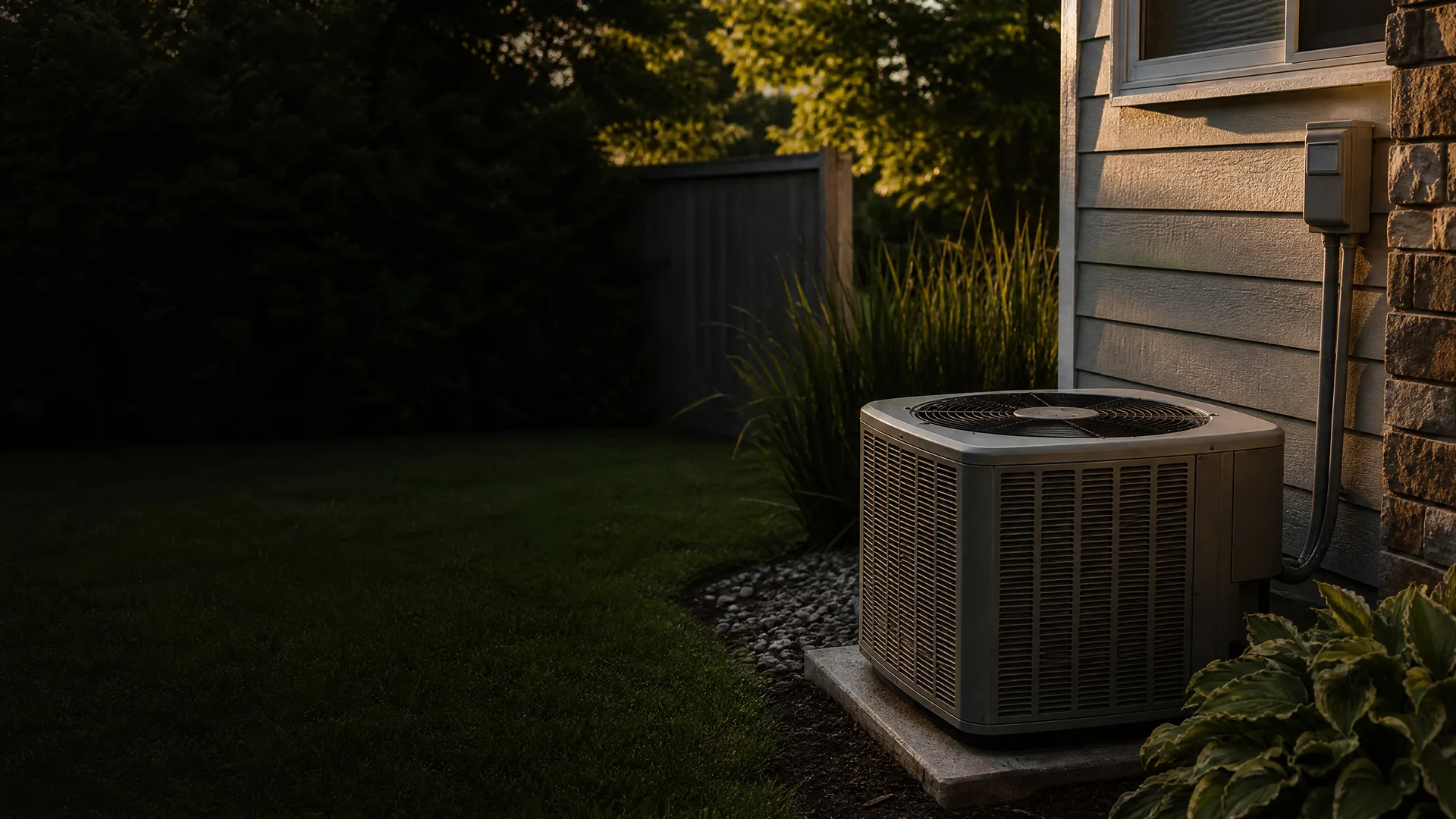
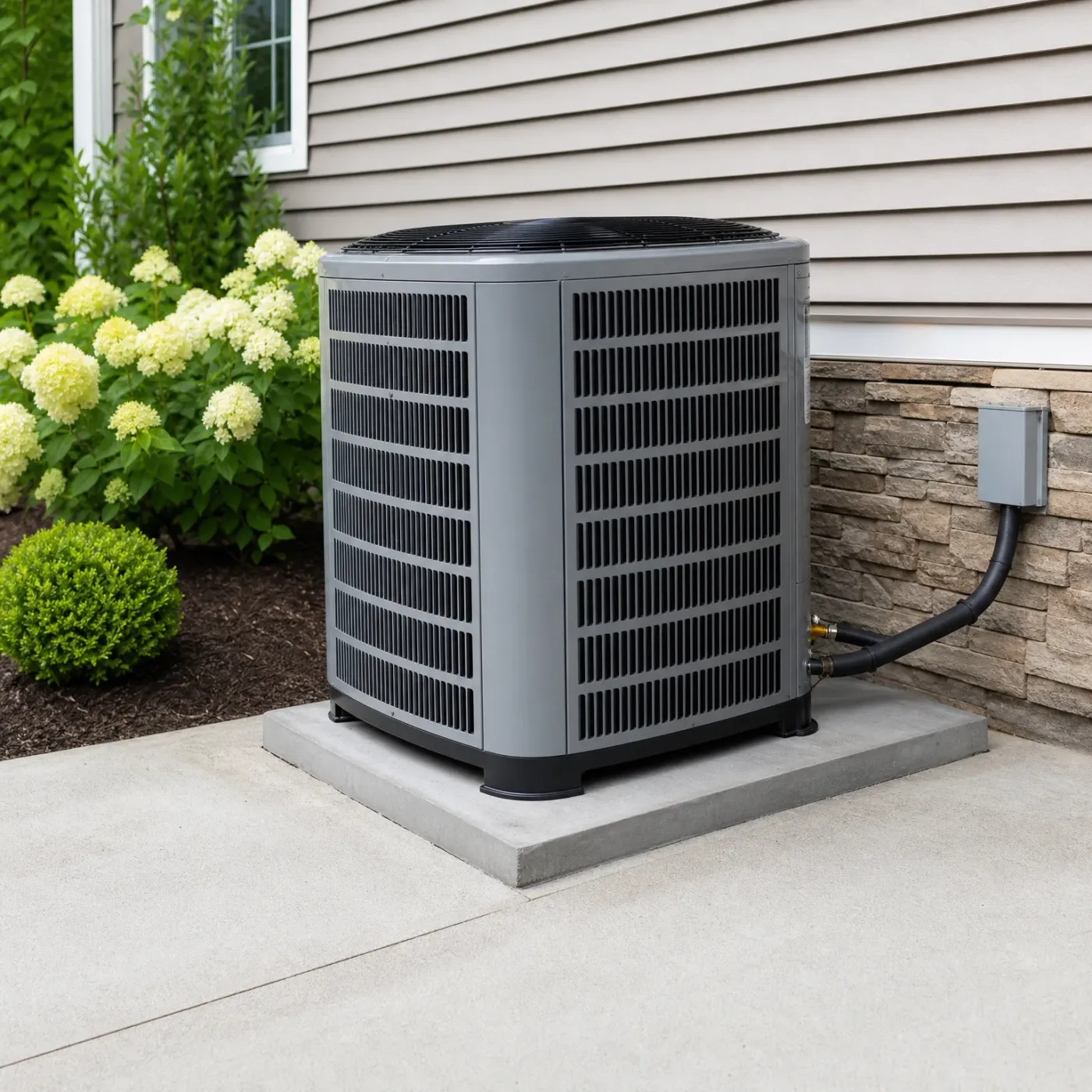
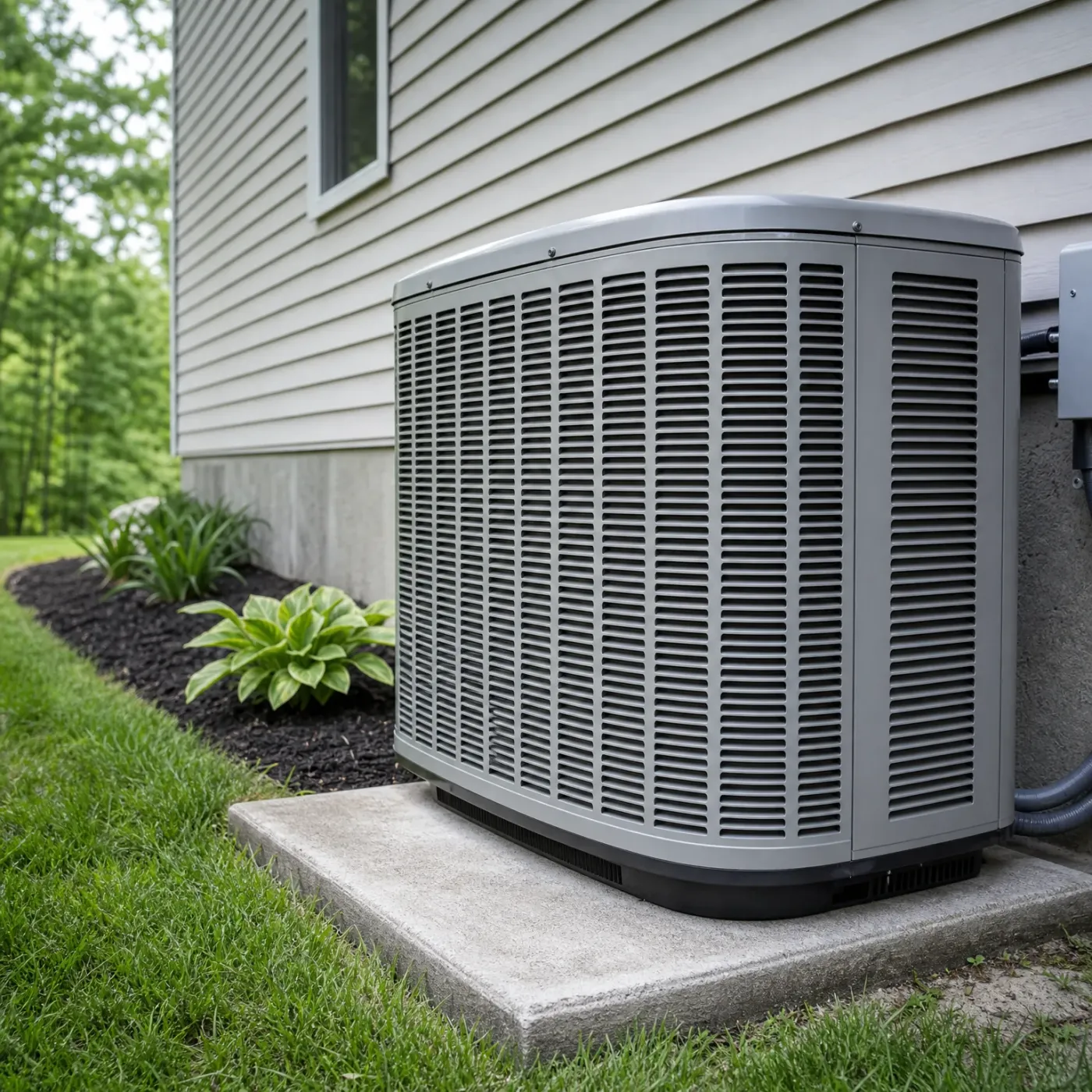
You're out back around seven, grilling while the light goes gold over the fence line. The condenser's been humming behind you the whole time, the way it always does on a sticky August evening in Oklahoma. Then the sound changes. It's still running, but the fan on top has stopped spinning. Just a low buzz now, steady, coming from inside the unit. You crouch down and look through the grille. The blades are still. You cup your hand near the top and feel warm air pushing out but no real draft. Inside, the house is still cooling for now. You turn off the breaker at the disconnect and go back to the grill, watching the still fan from across the yard.
Is That Buzz Normal, or Trouble
Loud but running fine
- A buzz that stays steady and the air coming through the vents is still cold means the unit is likely still doing its job.
- Rattles from a loose panel or a fence post nearby can sound like the unit itself when it's not.
- If the buzz started after a storm or high wind, check for debris against the outdoor cabinet before assuming a part failed.
- A capacitor that's just starting to weaken can buzz for weeks before the system actually stops cooling.
- Turning the unit off and on again and listening for whether the buzz returns right away tells you something about whether it's getting worse.
Buzz with a real problem underneath
- If the air stops getting cold while the buzz continues, the compressor is straining against a part that's already failed.
- A buzz paired with the outdoor fan not spinning means the capacitor has likely gone and the compressor could overheat if it keeps running.
- Contactor points that have started to weld themselves together will buzz and can keep the unit running even after you've switched it off at the thermostat.
- A refrigerant line rattling against the cabinet wall from a loose mount will wear through metal if it's left running.
- Any buzz that gets louder over a few days instead of staying the same points to a part failing rather than settling.




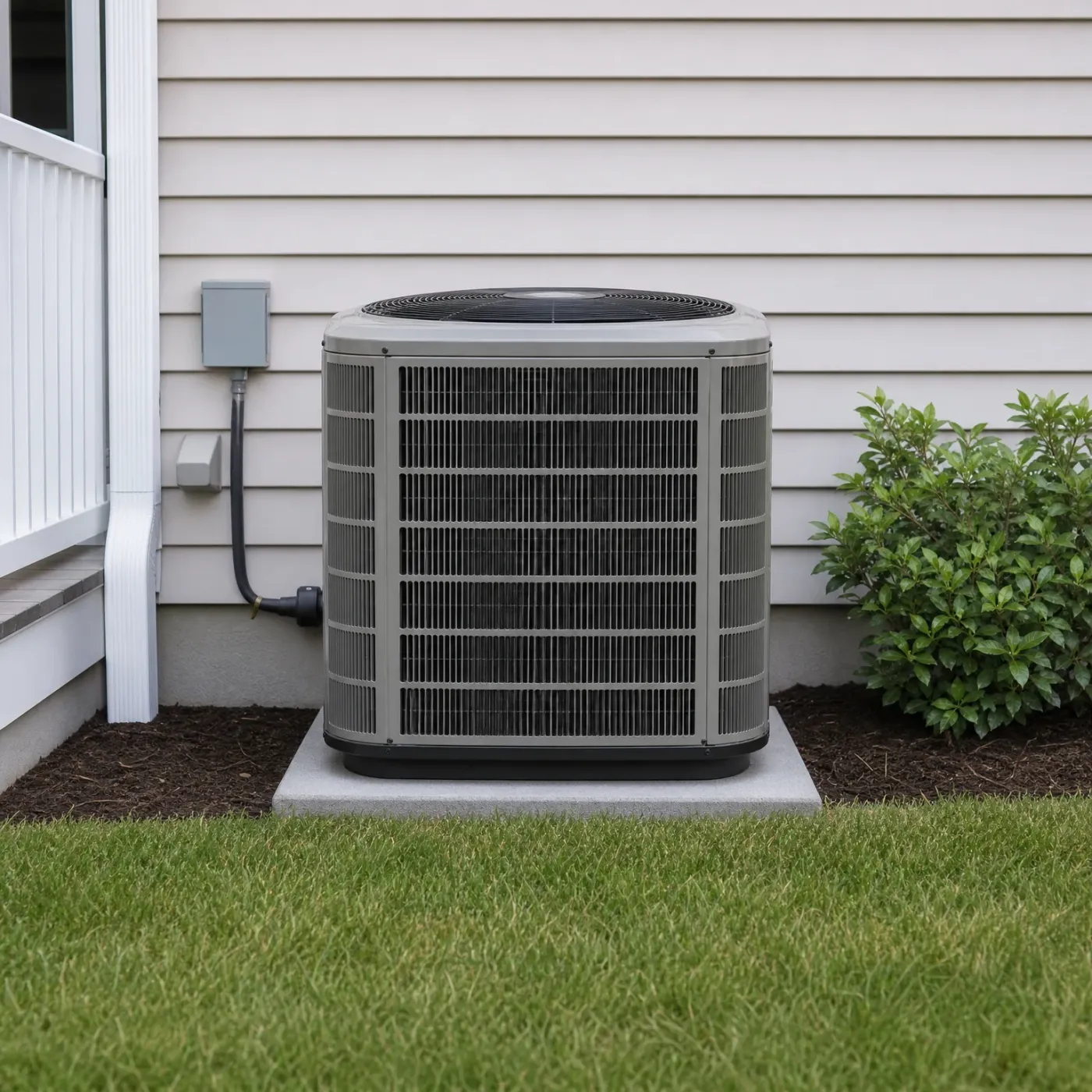
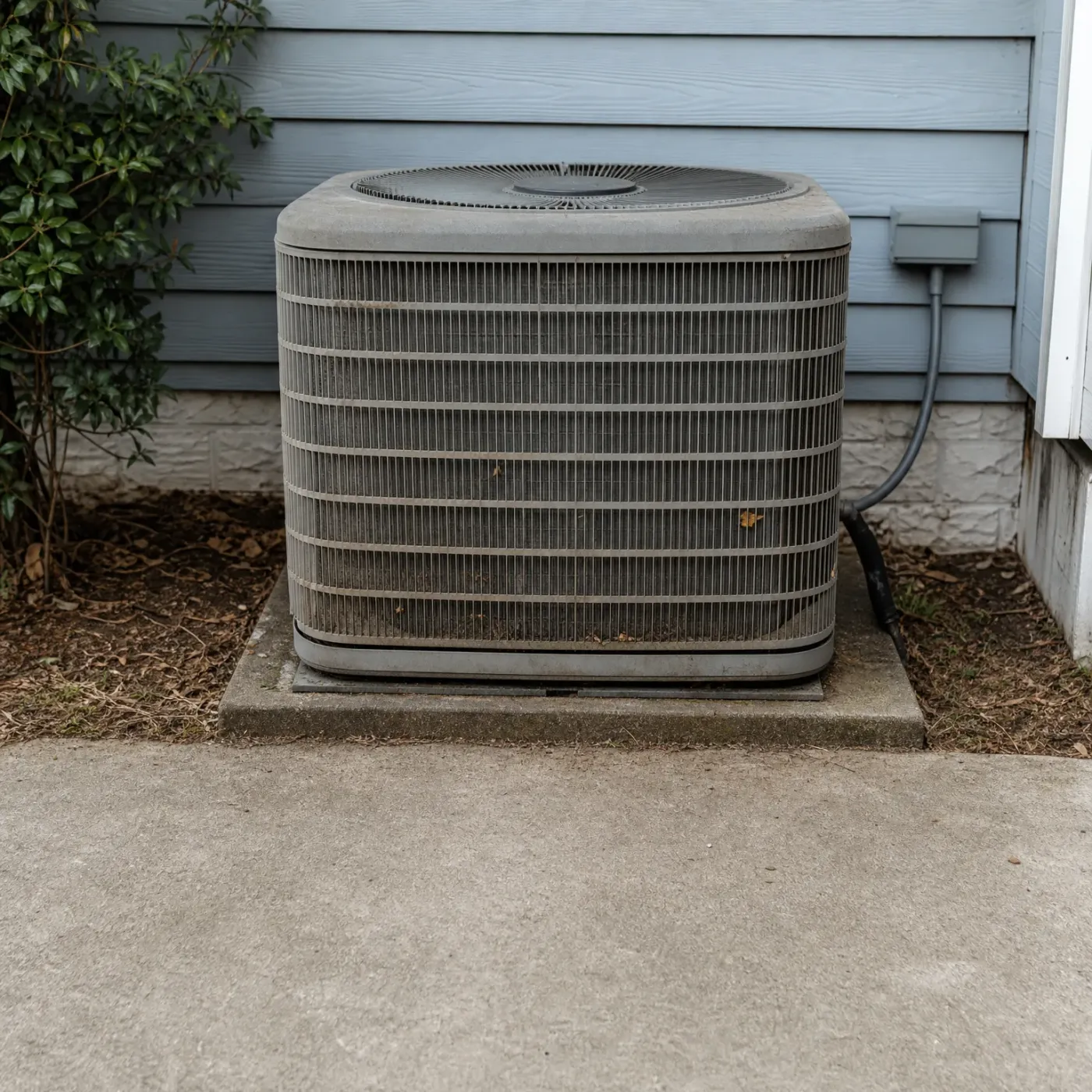
A buzz has to come from somewhere, and the path runs through a handful of spots. The fan blade sits close to its shroud, so a bend from a stick or hail puts it in contact with the housing on every turn. The contactor, the relay that sends power to the compressor, pits over time and starts to buzz as it struggles to seat. Panels work loose on their screws and vibrate against each other at whatever speed the compressor is running. The compressor itself can buzz on startup when it's pushing against pressure it shouldn't have to work that hard against, which usually traces back to a capacitor that isn't giving it the kick it needs. Refrigerant lines shake loose from the clips holding them and knock against the cabinet or the siding. Even the wiring can pick up a motor's vibration and carry the sound somewhere else entirely. None of these fix themselves, and most get worse the longer the unit keeps running that way.
Where the buzz actually starts
- The outdoor fan blade sits close to its housing, and a bent blade will tick or buzz with every rotation as it clips the shroud.
- A failing contactor, the relay that switches power to the compressor, can buzz as its contacts pit and stop seating all the way.
- Loose screws on the cabinet panels let sheet metal vibrate against itself at the compressor's running speed, which reads as a steady buzz.
- The compressor itself can hum or buzz when it's starting against high pressure, which is often the capacitor not giving it enough of a kick.
- Refrigerant lines that have worked loose from their clips will buzz against the cabinet or the wall as they vibrate under pressure.
- A copper line bundled with wiring, or wiring running loose near the fan motor, can buzz as the motor's vibration travels into it.
Hand off the search today
Your request goes to one pro, not a list of companies.
Get the air conditioner repair search off your mind today.
It costs nothing to send, and you don't have to hire anyone.
Power costs 13.21 cents per kilowatt-hour statewide
At 13.21 cents a kilowatt-hour, running a buzzing compressor longer than you have to adds up fast, since a failing part makes the motor work harder for the same cooling. Getting it looked at quickly keeps that strain, and the bill, from climbing.
EIA-861 2025 statewide residential average

Power reaches the contactor, the relay that starts the compressor.
The capacitor sends a jolt that gets the motor spinning.
A worn part starts vibrating loose against the cabinet or housing.
That vibration shows up as the buzz you hear outside.
What does that buzzing mean for your house right now
Walk out to the unit and you'll likely hear it before you see anything wrong. The buzz might come and go with the compressor cycling on, or it might hold steady the whole time it runs. Inside, you may notice the air isn't as cold as it was, or the system seems to run longer to get the house down to temperature. Some households catch a faint burning smell near the unit, which usually points to an electrical part working harder than it should. Left alone, a loose or failing part tends to wear the parts around it too, and what starts as noise can turn into a compressor that won't start at all, on a day you need it most.

A dew point is what makes Oklahoma air feel thick instead of just hot, and summer here averages 66°F on that measure. Air that heavy carries more moisture for your AC to pull out before it can cool the house, so the compressor runs longer on every cycle. A part that's already loose or wearing out gets worked harder during those long runs, and that's often when a buzz you could ignore in April turns into one you notice every evening in July. The humid stretch doesn't cause the problem, but it tends to be what brings it to your attention.
NASA POWER T2MDEW county cells weighted by homes
What part inside the unit is actually making that buzzing noise?
You've got the panel off, or you're just standing there listening, and you want to know what's actually making that sound. Not a guess, the actual part. The buzz isn't random. It's one specific thing inside the cabinet vibrating or arcing against metal, and which part it is changes what happens next.
Most often it's the run capacitor or the contactor
The run capacitor sits near the compressor and keeps the fan motor and compressor running once they've started. When it's weak, it can't hold a steady charge, and the motor strains against that gap, which comes out as a buzz. The contactor is the relay that switches power to the compressor each time the thermostat calls for cooling. Its contacts pit over time, and a pitted contactor buzzes as current arcs across the gap instead of flowing clean. Either one can fail on its own, and either one is a straightforward swap for someone who works on these units regularly. A bent fan blade clipping its housing makes a similar sound, but that's a steadier tick than a true buzz.


Where this leaves you
- A buzz usually traces back to one worn part, like the run capacitor or the fan blade, not the whole unit failing.
- Shutting the system off until it's checked keeps a small part from straining the compressor and running up your bill.
- A technician who works on Oklahoma condensers all summer has likely already seen whatever's behind your particular buzz.
- You'll be matched with one licensed local contractor, so you're not fielding calls from several companies at once.
- Catching the part before it fails outright usually means a repair instead of a compressor replacement.
- Once you're matched, finding the right contractor is off your plate.
The buzz is information, not a verdict. It's telling you one part, likely the run capacitor or a fan blade close to its housing, is working loose or wearing out while the rest of the system is still fine. That's the whole answer. What you do with it is shut the unit off and get someone out before that one part drags the compressor down with it.
Who that someone is matters more than it might seem right now. Oklahoma summers keep condensers running hard for months, and a contractor local to you has spent those months listening to the same complaint from other homes on the same grid, in the same heat. They've likely already pulled apart a dozen units with this exact sound this season alone. That's not a guess about your unit specifically, it's just what the work looks like here from April through the hottest part of August.
You'll be matched with one contractor, not a handful. No competing bids landing in your inbox, no juggling calls from companies that don't know your address. Just the person who's going to look at your unit, licensed to do the work and local enough to know what tends to fail first on equipment that runs this many hours a year in this heat. Once that match is made, the part of this that was yours, finding someone qualified, is done. What's left is the repair itself, and a part caught now instead of after it fails outright.
Stop chasing an air conditioner pro