Tell us about the job
Takes about a minute. No obligation.
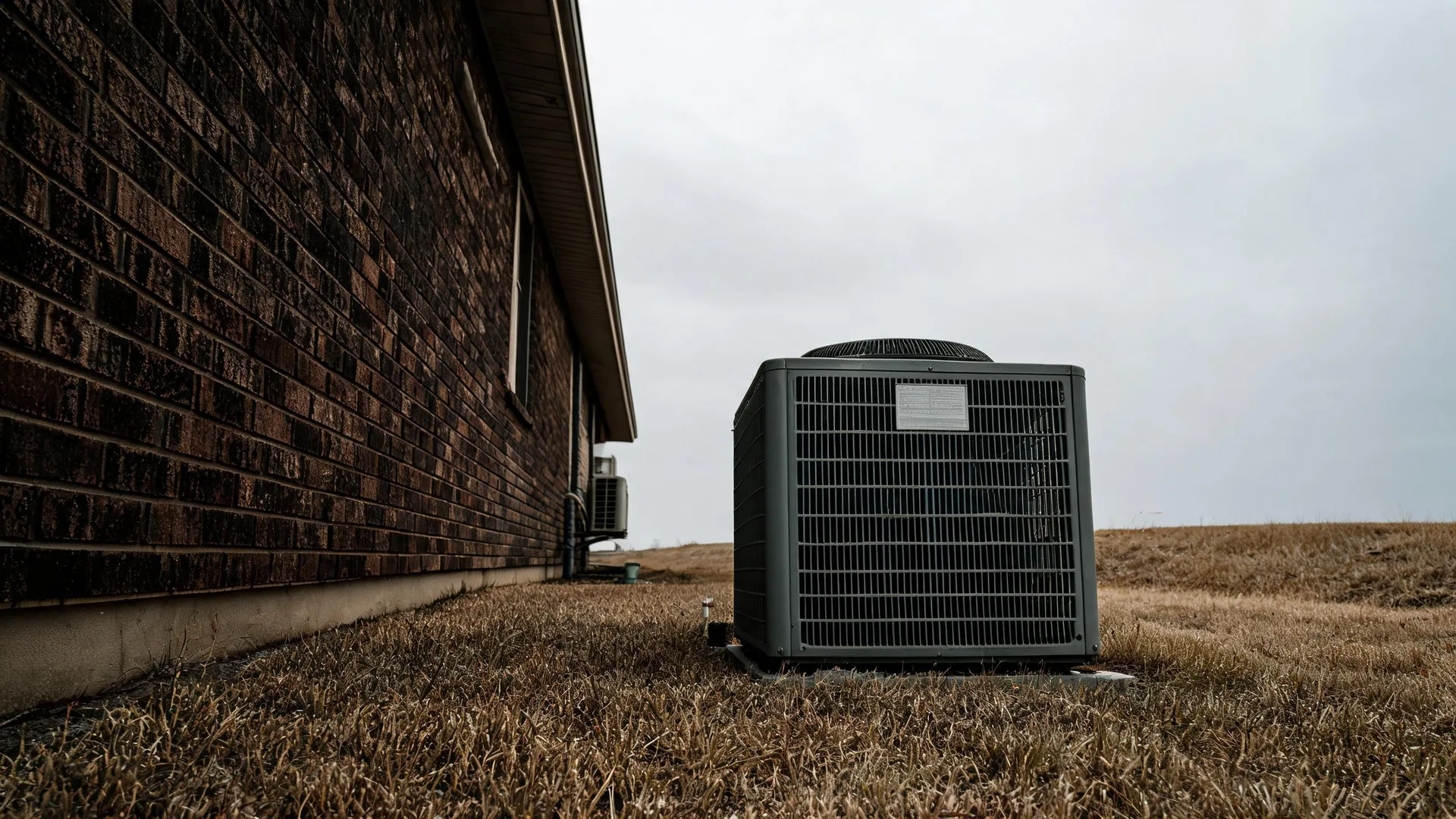
A Central AC system that stops cooling in Pushmataha County has almost certainly worn out, not weathered out. 63 severe weather events were recorded in Pushmataha County, Oklahoma between 2015 and 2024. At that rate, severe weather is an occasional event here, not a standing condition, so a contractor opening a unit is looking first at compressor age, refrigerant charge, and electrical contacts that have simply logged their miles. A homeowner who assumes storm damage drove the failure will likely pay to treat the wrong thing.
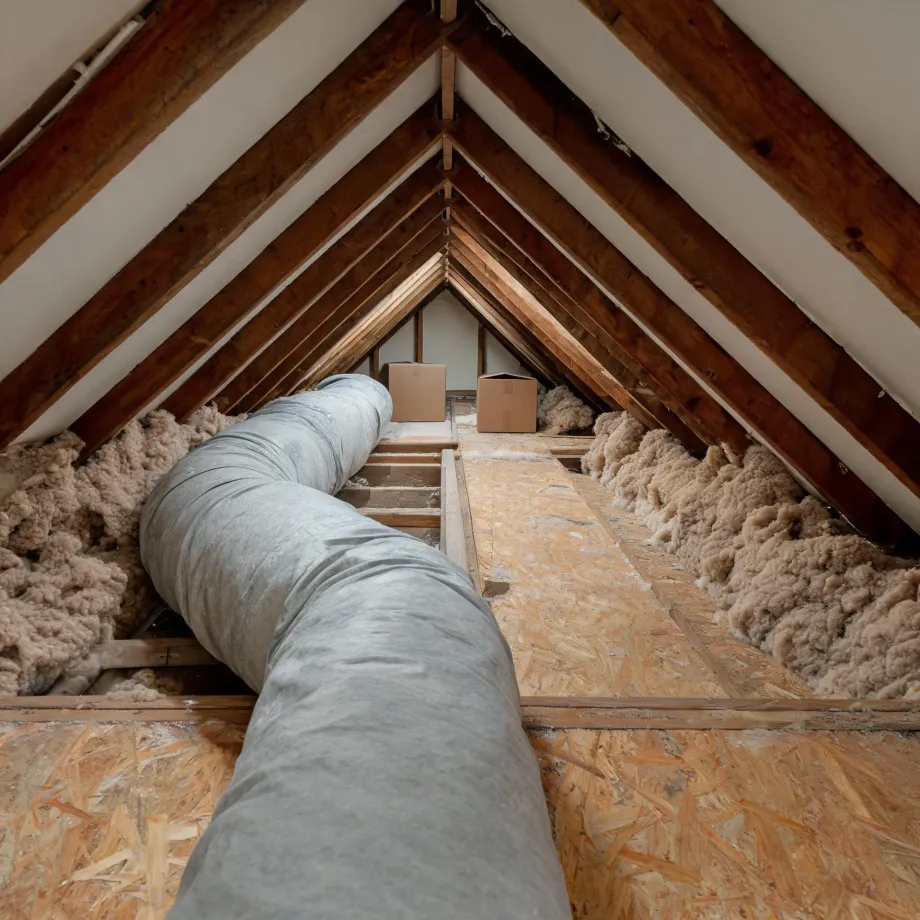
Ductwork in a house this old has seen more than one cooling system come and gone through it. Half the homes in Pushmataha County, Oklahoma were built in 1982 or earlier (2020-2024 ACS 5-year). When a unit fails and a contractor opens it, the immediate question is whether the components it takes are still manufactured or have moved to special-order status, and that answer shapes the repair more than the failure itself does. A compressor or a control board in equipment running in stock this old can sit in a parts category that suppliers are phasing out, which turns a straightforward repair into a sourcing problem before any labor begins.
The Parts of a Central AC a Contractor Checks During Repair
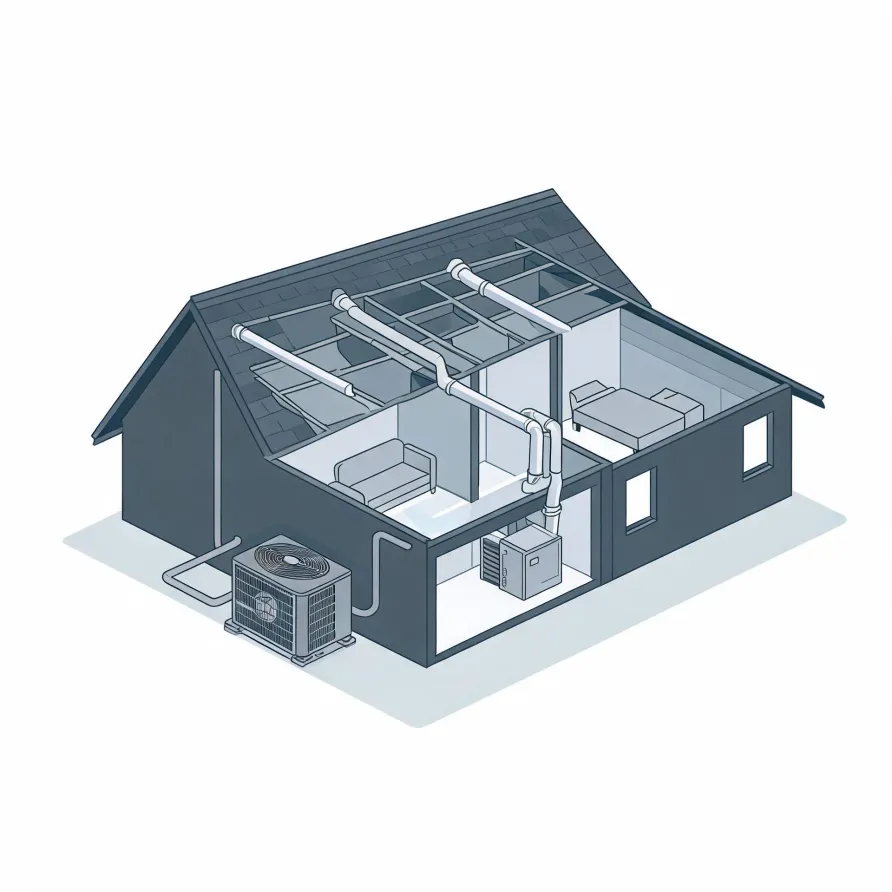
The outdoor condenser unit sits outside the house, usually on a concrete pad beside the foundation, and houses the compressor and condenser coil. These are where refrigerant is pressurized and heat is shed. When the system runs but does not cool, or shuts off unexpectedly, a contractor starts here.
Inside the house, the air handler holds the evaporator coil and the blower fan. The evaporator coil pulls heat out of the air moving across it, and the blower pushes that air through the home. A refrigerant line set connects the two units, and a metering device near the indoor coil controls refrigerant flow. Each of these is a point a contractor will check when symptoms point inside.
The drawing shows the general layout of a central AC system, and a licensed contractor determines what applies to your specific installation.
Get matched in Pushmataha CountyPushmataha County, by the numbers
63 severe weather events were recorded in Pushmataha County, Oklahoma between 2015 and 2024.
NOAA National Centers for Environmental Information, Storm Events Database, bulk CSV export, events 2015-01-01 through 2024-12-31.Half the homes in Pushmataha County, Oklahoma were built in 1982 or earlier (2020-2024 ACS 5-year).
U.S. Census Bureau, 2020-2024 American Community Survey 5-Year EstimatesPushmataha County, Oklahoma holds 5,708 housing units (2020-2024 ACS 5-year).
U.S. Census Bureau, 2020-2024 American Community Survey 5-Year EstimatesOwners occupy 74.9% of the occupied homes in Pushmataha County, Oklahoma (2020-2024 ACS 5-year).
U.S. Census Bureau, 2020-2024 American Community Survey 5-Year EstimatesCodes & Standards Covering Central AC Repair in Pushmataha County, Oklahoma10 sourced rules and standards
What Happens During an HVAC Repair in Pushmataha County
Split-system central air conditioners rated below 45,000 Btu/h manufactured on or after January 1, 2023 must meet a federal minimum of 13.4 SEER2.
Split-system central air conditioners rated at or above 45,000 Btu/h manufactured on or after January 1, 2023 must meet a federal minimum of 13.4 SEER2.
Split-system central air conditioners manufactured between January 1, 2015 and December 31, 2022 had to meet 13 SEER, the metric that preceded SEER2.
Single-package central air conditioners manufactured on or after January 1, 2023 must meet a federal minimum of 13.4 SEER2.
Space-constrained central air conditioners manufactured on or after January 1, 2023 must meet a federal minimum of 11.7 SEER2.
Federal efficiency standards for split-system central air conditioners and heat pumps are set on each certified combination of outdoor unit and indoor coil rather than on the outdoor unit alone.
Residential and light commercial air conditioning and heat pump systems assembled in the field, including mini-splits and unitary systems, may not be installed on or after January 1, 2025 using a refrigerant with a global warming potential above 700.
A field-assembled system whose specified components were all manufactured or imported before January 1, 2025 carries no installation compliance date under the refrigerant restrictions and may still be installed.
Licensing and Legal Requirements in Pushmataha County, Oklahoma
An Oklahoma mechanical licence is valid statewide, and a contractor licensed by a local authority who works only in that locality is not required to hold the state licence at all.
Oklahoma requires a Construction Industries Board licence for mechanical work: nobody may do or advertise mechanical work as a journeyman or contractor without the right licence.
Severe Weather Events in Pushmataha County
Weather puts direct stress on cooling equipment: power fluctuations, sustained heat, and pressure swings all add up to wear that shows up as repair calls. How hard the weather pushes in Pushmataha County shapes how hard the equipment works, and that makes it relevant to any conversation about Central AC repair here.
63 severe weather events, 2015–2024. Source: NOAA National Centers for Environmental Information, Storm Events Database.